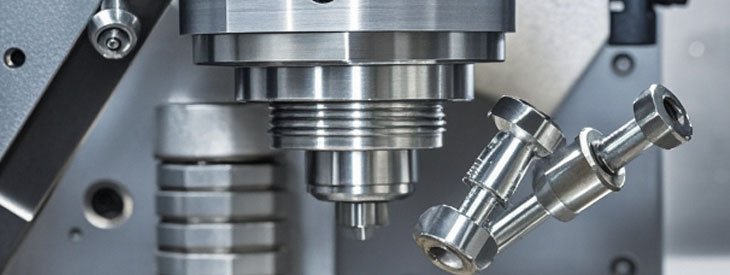
The housing protects the coil and moving components of a solenoid valve and also provides the dimensional reference for assembly. Its processing quality therefore affects sealing, magnetic performance and service life.
I. Material selection
Select stainless steel, low-carbon steel, aluminium or another alloy according to corrosion resistance, magnetic properties, strength and the working medium. The grade and incoming material condition should be traceable.
II. Machining accuracy
The inner diameter, outer diameter, concentricity, flange flatness and assembly features must be controlled to the drawing. Deep drawing and secondary machining should be planned together so that accumulated tolerances remain stable.
III. Sealing treatment
Sealing faces must be free from burrs, cracks and deep draw marks. Groove dimensions and surface roughness should match the selected seal, and leak testing should be completed where required.
IV. Processing technology
The drawing ratio, tooling radii, lubrication and intermediate annealing determine whether the housing can be formed without thinning or wrinkling. Surface treatment must also be compatible with the base material and final operating environment.
V. Quality inspection
Inspection normally includes appearance, dimensions, material verification, coating thickness, cleanliness and sealing performance. Control plans and gauges should be established before mass production.
In conclusion, reliable solenoid valve housings depend on coordinated control of material selection, machining accuracy, sealing, manufacturing technology and inspection.
Leave a Comment