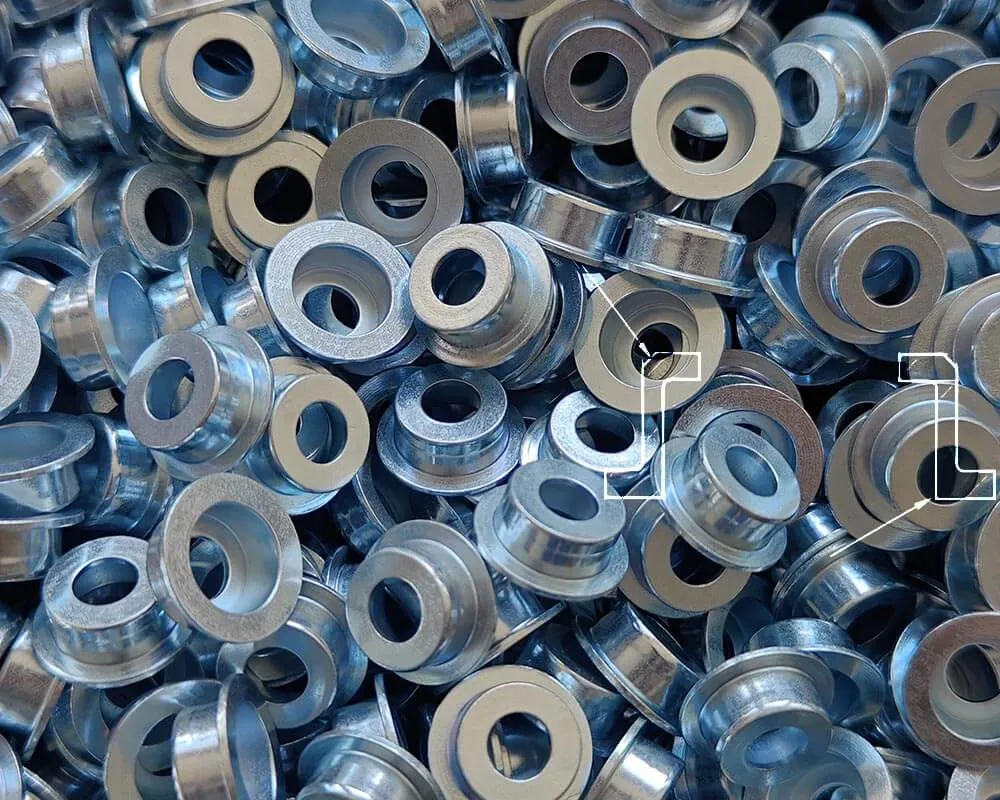
Extrusion is a manufacturing process that involves forcing raw material through a die to create a specific shape with a consistent cross-sectional profile.
What is extrusion with sharp corners
In deep drawn stamping, extrusion with sharp corners is a common technique used to create sharp edges and corners on metal materials. This process involves shaping metal sheets through a die to induce plastic deformation under stress, thus forming the desired shapes. Extrusion with sharp corners is typically employed in the production of parts requiring sharp edges or intricate details, such as boxes, containers, or housing.
When performing extrusion with sharp corners, considerations must be given to material flow and die design. Proper material selection and processing parameters help prevent cracking or deformation when forming sharp corners. Die design is also crucial, taking into account the geometry of the sharp corners and the direction of material flow to ensure product quality and precision.
Our Expertise
Extrusion with sharp corners plays a significant role in manufacturing, enabling the production of parts with complex geometries and fine details. Through meticulous design and process control, this technique facilitates efficient production and ensures product quality, delivering customized parts for various industrial applications.
Employing an extrusion forming device, the procedure involves extruding the outer R fillet of the product and bending the flange’s R fillet to form a right angle. This method compresses larger fillets into smaller ones or sharp angles to meet the product’s processing specifications. Conventional stamping devices can solely generate R fillets larger than the material thickness, lacking adequate safety measures within.
Previously, when soft stretching components were bent at the R angle, due to deep stretching, the product’s R angle had to be enlarged initially, and then gradually shrunk to meet the required R angle. However, during the shrinking of the R angle, material flow towards the outer side occurred due to simultaneous material extrusion from the upper and lower dies, resulting in the shrinking of the R angle not achieving the expected effect.
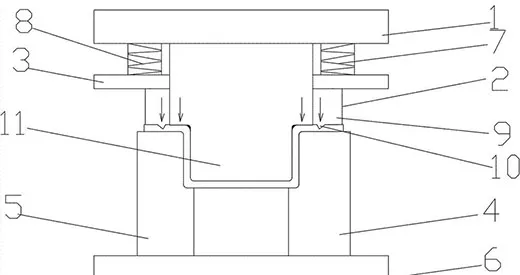
Small R angles serve distinct purposes, facilitating tighter fits with mating components when the outer R is diminutive. Smaller bending R angles are conducive to mating with sealing rings, preventing air and liquid leakage. These unique applications impose heightened demands on stamping and deep drawing processes, typically achievable solely through machining, albeit at a high cost and with reduced production efficiency.
Leveraging its proprietary technology, Balford raises and bends products to achieve smaller R angles, ensuring a flatter and more parallel plane.
Leave a Comment