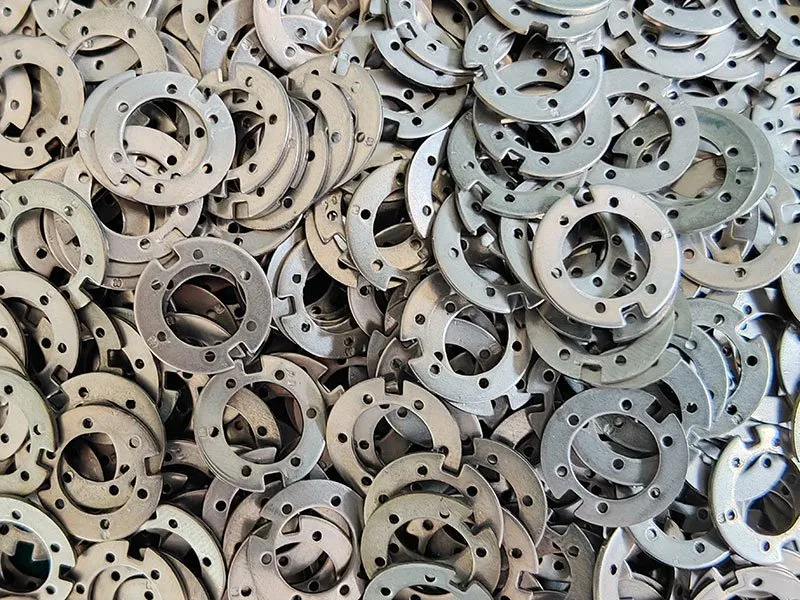
The design of stamping washers is a comprehensive process involving multiple aspects such as material selection, process analysis, and tooling structure design. Here is an overview of the design of stamping washers:
I. Material selection
The material selection for stamping washers should be determined based on specific application scenarios and requirements. Common materials include carbon structural steel (such as Q235), stainless steel, aluminum alloy, etc. These materials need to possess good punchability, sufficient strength, and good surface quality.
II. Process Analysis
1. Production batch size: Depending on the production batch size, select an appropriate stamping process plan. For mass production, compound toolings or progressive toolings can be used to enhance production efficiency.
2. Material thickness: The thickness of the material will affect the choice of stamping process and tooling design. Thinner materials may be easier to punch, but the strength and rigidity of the tooling also need to be considered.
3. Accuracy Requirements: The accuracy requirements for the washer encompass dimensional accuracy and shape accuracy. Based on these accuracy requirements, determine the appropriate tolerance range and select the suitable tooling manufacturing method.
III. Tooling Structure Design
1. Tooling type: Based on the results of process analysis, select the appropriate tooling type. For mass production, compound toolings or progressive toolings are preferred.
2. Design of male and female toolings: Male and female toolings are key components in toolings, and their design directly affects the dimensional accuracy and surface quality of stamped parts. The edge dimensions of male and female toolings need to be calculated and determined based on the actual dimensions and tolerance requirements of the parts.
3. Unloading mechanism: The design of the unloading mechanism should ensure that the stamped parts can be smoothly removed from the tooling while avoiding damage to both the tooling and the stamped parts. Common unloading mechanisms include elastic unloading plates and stripping devices.
4. Material Guiding and Positioning Mechanism: To ensure the dimensional and positional accuracy of the stamped parts, it is necessary to design appropriate material guiding and positioning mechanisms. These mechanisms should be capable of precisely guiding the sheet metal into the tooling and maintaining its stability during the stamping process.
IV. Selection of stamping equipment
The selection of stamping equipment should be determined based on the magnitude of the punching force and the size of the tooling. The punching force is the force applied by the tooling to the sheet metal during the stamping process, which determines the tonnage of the required stamping equipment. When selecting stamping equipment, factors such as equipment precision, stability, and ease of operation should also be considered.
V. Design Steps
1. Determine the shape and dimensions of the stamping parts: According to product requirements, draw the drawing of the stamping parts and mark the dimensions and tolerance requirements.
2. Process analysis: Conduct a process analysis of the stamping washers to determine the appropriate stamping process plan and tooling type.
3. Tooling structure design: Based on the process analysis results, design the structural form of the tooling, dimensions of the male and female toolings, unloading mechanism, material guiding and positioning mechanisms, etc.
4. Calculating the punching force and selecting the stamping equipment: Based on the size of the tooling and the magnitude of the punching force, select the appropriate stamping equipment.
5. Drawing tooling drawings: Based on the tooling design results, draw the general assembly drawing and part drawings of the tooling.
6. Manufacturing and debugging: Manufacture toolings according to the tooling drawings, conduct debugging and trial punching, and ensure the quality of the stamped parts and the reliability of the toolings.
6. Precautions
1. Material utilization rate: During the design process, full consideration should be given to the utilization rate of materials to reduce waste and lower costs.
2. Tooling lifespan: Rationally designed tooling structures and the use of high-quality materials can enhance the lifespan and stability of toolings.
3. Safety: Strict adherence to safety operating procedures during the stamping process is essential to ensure the safety of personnel and equipment.
In summary, the design of stamping washer is a complex and meticulous process that requires comprehensive consideration of multiple factors to ensure the quality of the stamped parts and the reliability of the toolings.
Leave a Comment