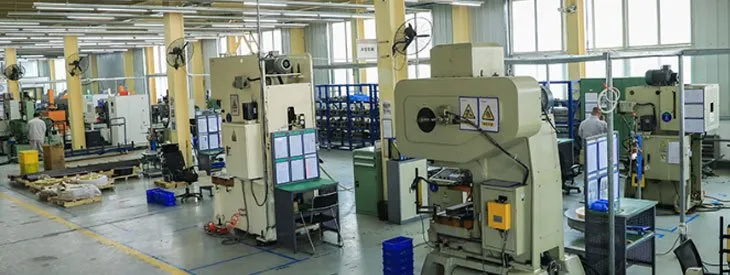
Precision stamping parts processing, as one of the key technologies of modern manufacturing, its importance is self-evident. Precision stamped parts are widely used in various fields, from daily electronic equipment to complex automobile manufacturing, are inseparable from these small parts.
So, what are the key technologies that need to be paid attention to when producing these precision parts?
In the processing of precision stamped parts, the first and foremost issue is to develop a reasonable process protocol.
Process regulations are technical documents to guide production, it must be economically rational, efficient and feasible. This includes determining the machining process, the type of machine tool to be used, the clamping method, the detection method, the machining allowance, the tool life and the working hour quota. Each step of the process needs to be accurately calculated and planned to ensure product quality.
Next, the machining process needs to be analyzed in depth.
The first is the checking of engineering drawings to ensure that the drawings are detailed and accurate, and to analyze whether the precision requirements, consistency and technical standards of the parts can reach the level of current production. Then it is the selection of raw materials, which directly affects the difficulty and cost of the machining process. In addition, it is also necessary to check the structural process performance of the part to confirm whether its structure can be economically and reasonably processed.
In the actual processing process, many problems will also be encountered, such as stamping molding rupture, bending stamped parts common problems. The solutions to these problems often need to be determined on a case-by-case basis, but usually involve material selection, mold design, equipment adjustment and other aspects. For example, in order to solve the problem of stamping molding breakage, it may be necessary to select a more suitable material or optimize the design of the die.
Plating of precision stamped parts is also an important aspect.
Taking nickel plating as an example, it can improve the corrosion resistance and aesthetics of the stamped parts, but at the same time, attention should be paid to controlling various parameters in the plating process to ensure the quality of the final product.
It is worth mentioning that precision stamping parts processing is not only a single production process, it also involves a number of links such as pre-design, post-surface treatment and packaging. Therefore, it is very important to choose a supplier who can provide one-stop service. Such a supplier can not only provide high-quality products, but also provide technical support and solutions throughout the production process.
The key technologies involved in the processing of precision stamped parts include the formulation of reasonable process protocols, detailed analysis of the machining process, effective solutions to the various problems encountered in the actual processing, and comprehensive post-processing and quality control. Only by grasping these key points can we ensure the high quality and performance of precision stamped parts.
Leave a Comment