Zhalong Wetland is located in the west of Songnen plain in Heilongjiang province Wuyuer River downstream, there is no obvious river, and connects to reed pond, and then flow into the Longhu Bubble, Lianhuan Lake, Nanshan Lake, finally disappear from Dumeng grassland. Established in 1979, Zhanglong became the provincial nature reserves. In April 1987 the state council approved it as a national nature reserves. In Nature Reserve lakes, rivers and water quality is pure, reed grass is rich, maintain a good ecological environment swamp, known as the “natural park” of bird and waterfowl and in 1992 was listed in the “world's important wetlands list”.
Zhalong Nature Reserve is China’s famous precious waterfowl protective area, located 30 km southeast of the city, with a total area of two hundred and ten thousand hectares. Due to low-lying terrain, river overflow to irrigate water reed, lake dotted with bubble, here is a natural paradise suitable for waterfowl birds breeding. According to statistics, Zhalong nature reserve has various kinds of two hundred and ninety-six kinds of birds. Especially in the majority with crane, the world have 15 kinds of cranes, our country has nine, and six kinds of cranes can be seen at Zhalong Nature Reserve (red-crowned cranes, white-naped crane, demoiselle crane, grey crane, white-head crane), therefore, Qiqihar has a laudatory name of “Crane Village”.
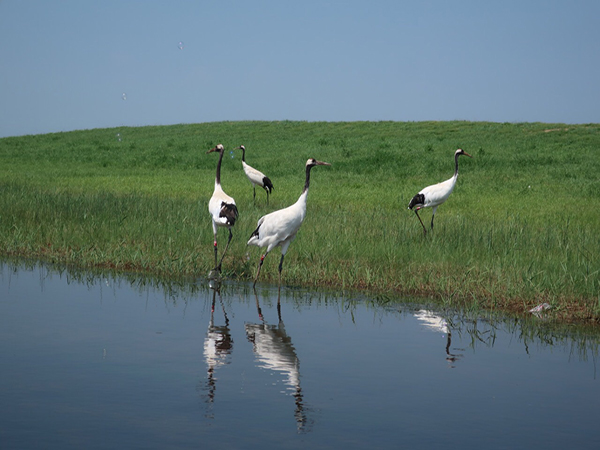
Zhalong Nature Reserve is mainly is to protect the wetland and a national protect red-crowned cranes and other wild animals. Across two area four counties, the wetland is Wuyue River downstream, the river overflow and become a large permanent weak alkaline freshwater marsh, made up of many small shallow lakes and vast meadow and grassland. Maximum depth of marsh is 0.75 meters, the maximum depth of lake up to 5 meters. This area breeds 46 species, 277 kinds of insects, 260 species of birds, 21 species of beast. Red-crowned cranes, white-naped crane, bald, family cranes, grey crane and white crane are national key protected first or second level animals. April to May in each year about 200 red-crowned cranes and other waterfowl habitat here, the number of crane is nearly 1000; they stay here to live and then continue to move north to Russia. Reed marshes and sedge is the main habitat of the red-crowned crane. Reed is high up to 1 ~ 3 m, which is difficult for human to enter, which created the conditions for these precious waterfowl to survive and reproduce.
What can you see at Zhalong Wetland?
Rare Birds
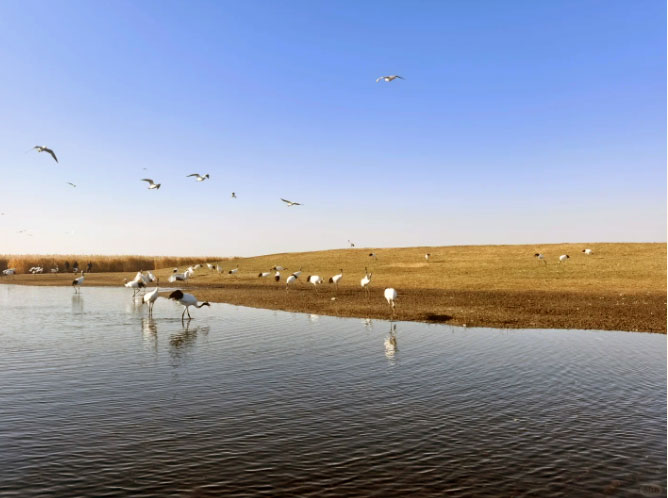
Zhalong Wetland is a world-renowned bird habitat, known as the "Hometown of Cranes." Of the 15 species of cranes in the world, 9 are found in China, and Zhalong Wetland is home to 6 of them: red-crowned cranes, Siberian cranes, white-naped cranes, white-crowned cranes, common cranes, and demoiselle cranes. Among them, the red-crowned crane is the most famous for observation. Zhalong is one of the world's few remaining important habitats for wild red-crowned cranes, with a population of over 400, accounting for about a quarter of the world's total. In addition, the area is home to numerous waterfowl such as geese, ducks, rails, and gulls, as well as grassland and wilderness birds like great bustards and demoiselle cranes, totaling over 260 bird species.
Wetland Landscape
As the largest wetland in Asia and the fourth largest in the world, Zhalong Wetland boasts vast reed marshes, crisscrossing waterways, and numerous lakes. Abundant aquatic plants and lush vegetation create a verdant natural landscape. Visitors can climb viewing platforms such as Wanghelou to enjoy panoramic views of the wetland and appreciate its vastness and grandeur.
Science Museum
Zhalong Wetland has a science museum where visitors can learn about the life cycle and migration routes of red-crowned cranes, as well as wetland ecological protection. It is suitable for parent-child study tours.
Travel Tips
1. April to May in each year, or August to September is the best season for bird watching.
2. Travel this scenic spot need at least 3 days.
3. Red-crowned cranes are elegant with long ears; recognition method is their overhead have a vermillion scarlet. Try not to take food to feed them, for the wild cranes; the artificial feeding would harm them.
4. You can rent a boat on the lake for a spin; look at the wild waterfowl is also very good.
How to Get There
Taking bus in the first department store of Qiqihar, the driving hour is approximately one hour for 10 Yuan. In addition, in the tourist season, the station also has a special train to the scenic spot. If rent a car, 150 Yuan/a half-day, drive less than 1 hour.
New opened special route is from urban areas to reserve (via the train station), and about half an hour a bus, 15 Yuan ticket fare. From the railway station to reserve for the first train at 8:30 in the morning, the last returned bus for about 3 o’clock in the afternoon.
Best Travel Time to Zhalong Nature Reserve
April and May
This is the egg-laying and hatching season for red-crowned cranes, offering a rare opportunity to observe crane nests and the hatching process. It's also the peak season for migratory birds, so in addition to red-crowned cranes, you can see many other waterfowl returning from their southward migration. Temperatures are around 15-25℃, making for comfortable weather, and there are relatively few tourists. In addition, rhododendrons bloom in May, and the wetland reeds are just sprouting green, creating a fresh and pleasant landscape.
June to August
This is the peak season for wetland scenery, with endless reed beds lush and green. You can also experience the fun of boating through the reeds. During this time, young cranes are growing up, and red-crowned cranes are highly active. The frequency of crane release performances in the scenic area reaches its peak, with four releases daily from June 15th to August 31st and during Golden Week holidays, offering even more viewing opportunities. Furthermore, the cool climate makes it a good choice for escaping the summer heat.
September-October
The reeds in the wetlands turn golden yellow, creating a magnificent scene against the azure sky—the golden period for photography. This is also the time when red-crowned cranes prepare for their southward migration, offering opportunities to see large flocks of cranes gathering. There are also many other migratory bird species, making it a perfect time to capture the beautiful scenery of cranes blending seamlessly with the autumn wetlands.
November-March of the following year
Although temperatures often drop to -30℃, the red-crowned cranes dance among the snow-covered wetlands, creating a unique and photogenic scene. During this time, the scenic area arranges three crane release performances daily, and the number of tourists is significantly reduced, allowing for a quieter appreciation of the interplay between cranes and the snow-covered landscape. However, it is essential to prepare adequately for the cold before visiting.

 Ask a Question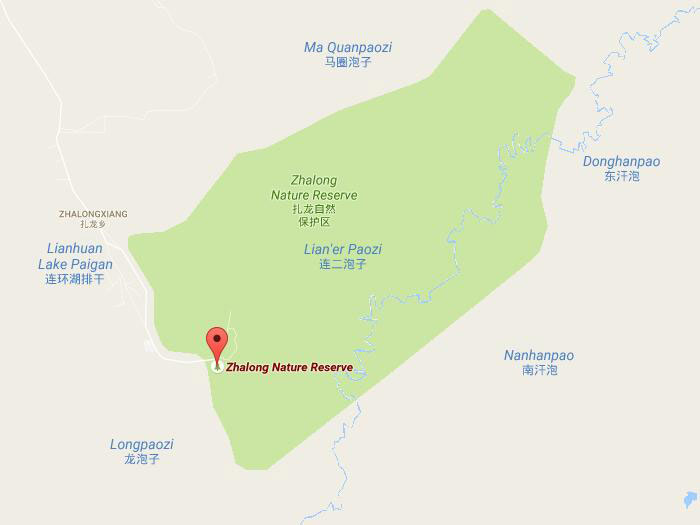



 English