Your China & Yunnan Travel Experts

 Ask a Question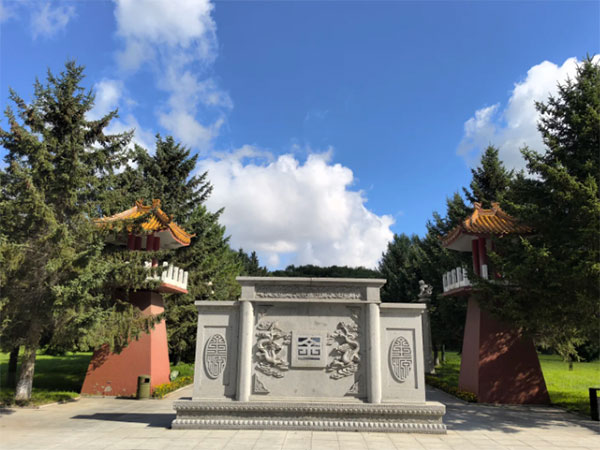
E'cheng District, Harbin, Heilongjiang Province.
Jin Dynasty relics.
Shangjing Huining Prefecture in Harbin was the capital of Jin Dynasty from 1115 to 1234. It is a national key cultural relic protection unit.
Shangjing Huining Prefecture witnessed four emperors from Jin Taizu (Wanyan Aguda) being called emperor to the Hailing Emperor (Wanyan Liang) ruling for 38 years. The Noon Gate, Imperial City and palace are well preserved and the outer city wall, jar city, corner building and protecting river still exist.
To the end of November, 2002, the archeologist had excavated the site of Zhaori Palace about 10,000 square kilometers. It was known from the archeological excavation that the site of Zhaori Palace is located in southeastern direction. It is made up of main palace, corridor and back palace. Two sides of the main palace connect with the cloister. The distance between the cloisters of two sides is about 184 meters, framing the square structure by palace gate, cloisters and main palace. There are tactic large-scale poles, separating the palace into nine rooms. The inner five are main palace. This is coincident with the Chinese Emperors' hierarchy system in the ancient architecture system.
The Jin Shangjing Huiningfu Ruins are open to the public free of charge. However, the nearby Jin Shangjing History Museum charges 20 yuan for admission, and the Jin Taizu Mausoleum Site Park charges 5 yuan for admission.
The history of Shangjing Huiningfu is closely tied to the rise and development of the Jin Dynasty (1115-1234), founded by the Jurchen people.
In 1115, Wanyan Aguda, Emperor Taizu of the Jin Dynasty, established his state and set up the capital near the Anchuhu River, initially named "Huangdi Zhai" (Emperor's Stockade). In 1138, Emperor Xizong of the Jin Dynasty officially designated this place as "Shangjing Huiningfu", formalizing its status as the imperial capital.
In 1153, Emperor Hailingwang of the Jin Dynasty moved the capital to Yanjing (present-day Beijing) and downgraded Shangjing Huiningfu to a regular administrative region, simply called "Huiningfu". Later, in 1173, Emperor Shizong of the Jin Dynasty restored its title of "Shangjing" to honor the dynasty's founding roots.
After the fall of the Jin Dynasty, the site served as a post station during the Yuan and Ming dynasties, and in the Qing Dynasty, the city of Alchuka was built nearby, making it a continuous witness to regional historical changes.
Located in the western part of the southern outer city, it was the political center of the Jin Dynasty, with the following key components:
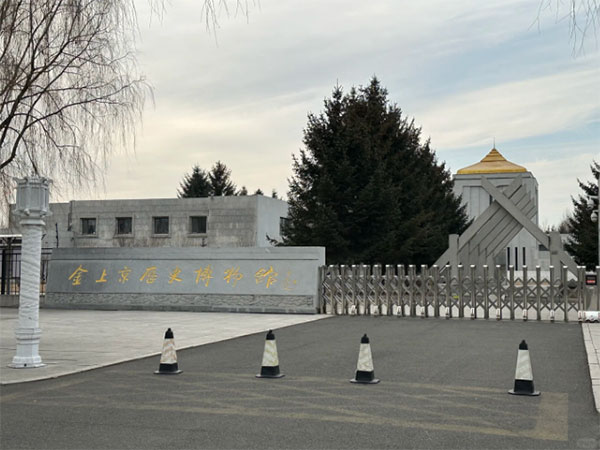
The Jin Shangjing History Museum is the only museum in China dedicated to showcasing the history and culture of the Jin Dynasty. It is a national second-level museum and a national AAAA-level tourist attraction. Its predecessor was the Acheng County Museum, established in 1961. After several adjustments, the new museum officially opened in 1998 at No. 49 Jinyuan Road, Acheng District, Harbin City. The museum is located east of the Jin Shangjing Huiningfu Site and south of the Mausoleum of Emperor Taizu of Jin, Wanyan Aguda.
The museum is open from 9:00 to 16:30 every Tuesday to Sunday (last entry at 16:00), and closed on Mondays (except public holidays). Admission is free and reservations can be made by phone at 0451-53773079, through the WeChat official account, or the "QuLongjiang" platform.
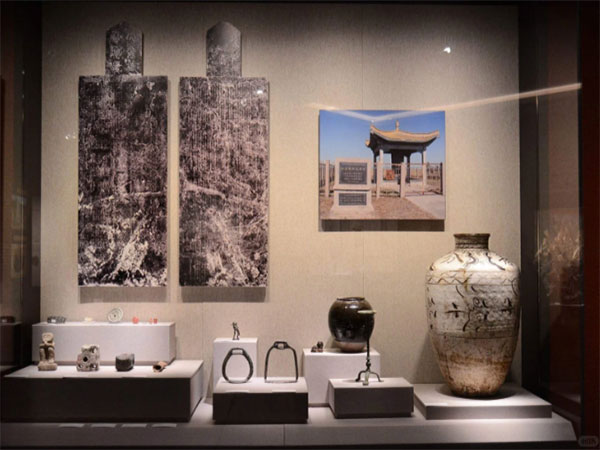
The museum has 9 main exhibition halls and 6 auxiliary halls. The main halls (including "Tracing Jin’s Origins," "Dominating the North," "Governing with Confucianism," and "The Prosperity of Shangjing") systematically present the Jin Dynasty’s historical development, political system, cultural characteristics, and the rise and fall of its early capital, Shangjing Huiningfu. The 6 auxiliary halls focus on specific themes:
The museum regularly hosts temporary exhibitions in collaboration with other institutions to promote cultural exchange. For example, in April 2025, it jointly held "Appreciating Excellent Mirrors – Fine Bronze Mirrors of the Jin Dynasty" with Ankang Museum. This exhibition featured 120 carefully selected Jin Dynasty bronze mirrors, covering 7 categories (e.g., dragon-patterned, double carp-patterned, and figure-story mirrors), fully demonstrating the artistic wisdom and cultural style of the Jurchen people.
If you take public transport from downtown Harbin: First, take a long-distance bus from Harbin Railway Station or Harbin West Railway Station to Acheng District (buses run frequently, taking about 1-1.5 hours). After arriving in Acheng District, transfer to local buses (such as Acheng Bus No. 2 or No. 6) to the "Jin Shangjing History Museum" stop, or take a taxi/scooter from the bus station to the museum (the ride takes about 10-15 minutes). If you drive by yourself, set the museum’s address as your navigation destination; it’s about 60-70 kilometers from downtown Harbin, and the journey takes roughly 1.5-2 hours, with parking spaces available near the museum.

From on request

From on request

 English