Your China & Yunnan Travel Experts

 Ask a Question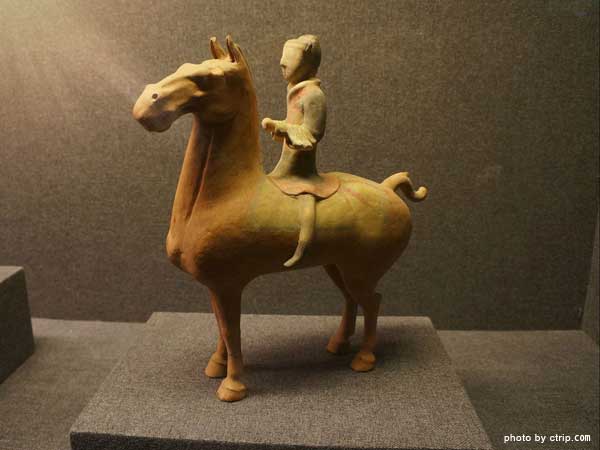
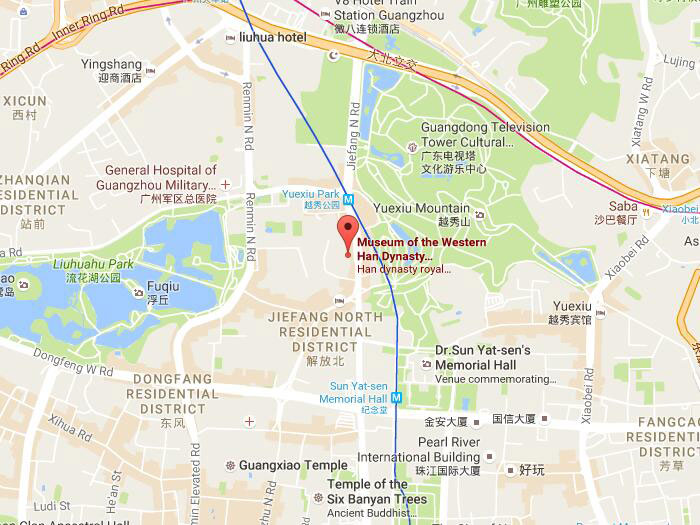
867 Jiefang North Road, Yuexiu District, Guangzhou, Guangdong Province, China
A good site to admire ancient cultural relics of Western Han Dynasty
Western Han Nanyue King Tomb Museum houses the 2,000-year-old tomb of the Nanyue King - Zhao Mo, in Guangzhou of China. Zhao Mo was the second kind of Nanyue, ruled from 137 BC to 122 BC. And this tomb was discovered in downtown Guangzhou in 1983. As the witness of change and development of Guangzhou City, the Western Han Nanyue King Tomb Museum has a history more than 2,100 years. This tomb was found in 1983, and is known as the largest stone chamber tomb with painted sarcophagus of Han Dynasty found south of the Five Ridges of China now. Then it was officially open to the public in 1988.
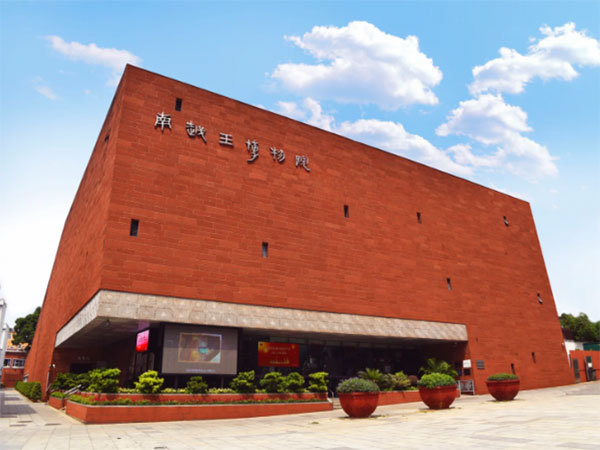
Compared with other tombs of princes and kings during the Han Dynasty, this tomb has many unique features. Its burial chamber combines the forms of both vertical shaft tombs and cliff cave tombs. Located near the city of Panyu at the time, it contains 15 sacrificial victims, a number and high status rarely seen in royal tombs of the same period. Furthermore, the burial artifacts show connections to multiple cultural regions, including the Nanyue, Ouluo, Qin, Han, Chu, and Xiongnu.
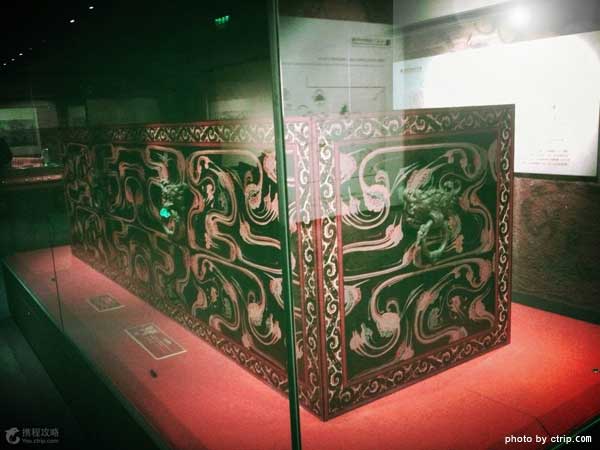
The tomb is made up of 750 huge stones with colorful murals. The tomb is nearly 11 meters long and over 12 meters wide. It is divided in seven parts, with a front chamber, east and west wing rooms, the main coffin chamber, east and west side rooms, and a back storage chamber.
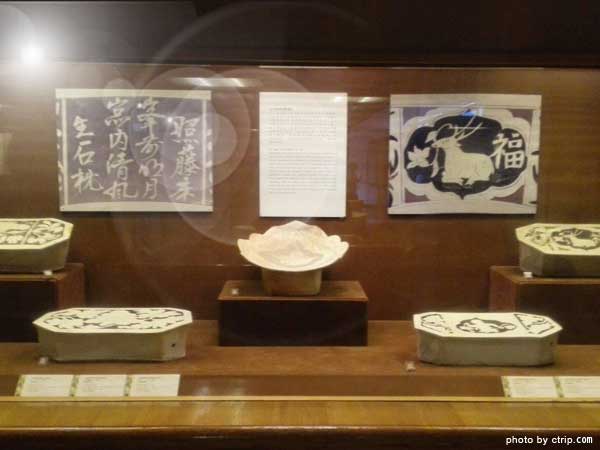
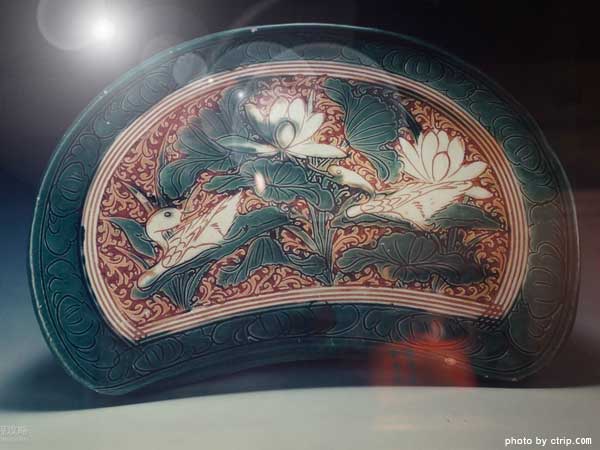
Taking the Western Han Nanyue King Tomb Museum as the center, the whole museum covers a total area of 14,000 meters, mainly used to display Nanyue King Tomb site and its relics. A comprehensive exhibition building stands at the east of the tomb, and the integrated display building at the north. The Integrated display building, the protected tomb areas and the main comprehensive exhibition building are connected with each other by cloister. Now there are ten exhibition halls in the museum. The Western Han Nanyue King Tomb Museum was designed based on the structure of tomb that is unearthed in 1983, serving as a protection and famous for its elegant appearance. The unearthed cultural relics of southern Yue Kingdom are displayed in the main building. You also have a chance to see the rare porcelain pillow donated by Yang's couple.
The whole complex building won six architectural awards.
The Golden Seal of Emperor Wen
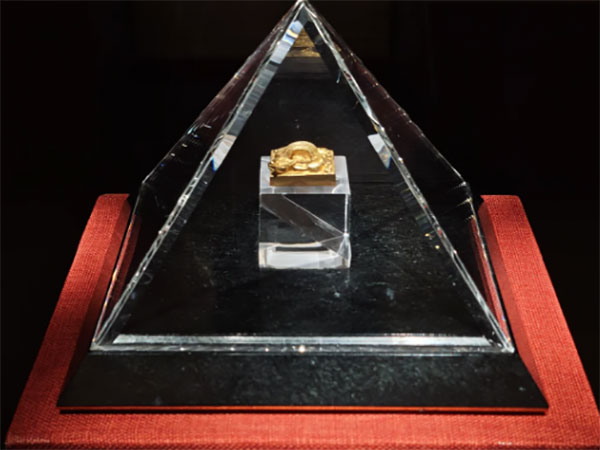
Unearthed from the tomb of Zhao Mo, King Wen of Nanyue, this is the largest Western Han Dynasty gold seal discovered in archaeological excavations to date. It contains 98% gold, with a side length of 3.1 cm, a width of 3 cm, a height of 1.8 cm, and a weight of 148.5 grams. The inscription reads "Emperor Wen's Imperial Seal" in seal script, and the seal knob features a vividly shaped coiled dragon pattern, breaking with the regulations for imperial seals during the Qin and Han dynasties. This gold seal is direct material evidence of Zhao Mo's usurpation of the throne and his claim to the title "Emperor Wen." Its exquisite craftsmanship and well-organized inscription not only possess high artistic value but are also core artifacts for studying the political system and historical status of the Nanyue Kingdom.
The silk-threaded jade suit
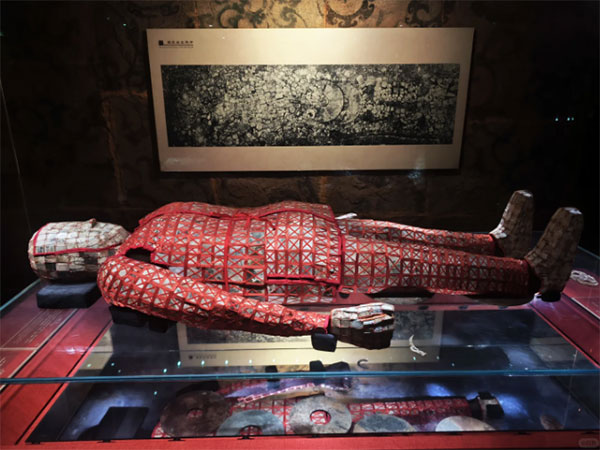
unearthed from the tomb of the King of Nanyue, Zhao Mo, it is the only complete set of jade suits with silk-threaded weaving found in China so far. It is also a rare treasure with distinct regional characteristics in the jade suit system of the Han Dynasty. The entire suit is composed of 2,296 pieces of smooth jade, meticulously woven together with fine silk threads. It covers six major parts: the head cover, the upper body suit, the sleeve covers, the gloves, the pant legs and the shoes, completely enveloping the body of the tomb owner. Different from the common gold-threaded and silver-threaded jade suits in the Central Plains, it uses silk threads as the weaving material. It not only absorbs the core concept of "jade burial" in the Central Plains' funeral culture but also retains the unique style of handicrafts in Lingnan. It not only showcases the exquisite jade processing and weaving techniques of the Nanyue Kingdom but also serves as an important physical evidence of the cultural integration between Han and Yue, providing irreplaceable value for the study of the funeral system in the Han Dynasty and cultural exchanges in the Lingnan region.
Bronze Juyou (句鑃)
Unearthed in 1983 from the east side chamber of the tomb of Zhao Mo, King Wen of Nanyue, there are eight pieces in total, weighing 191 kilograms. The largest piece is 64 centimeters tall, and the smallest is 36.8 centimeters tall. The surface is inscribed with the seal script "Made by the Music Bureau in the ninth year of Emperor Wen's reign." This inscription not only reflects the cultural influence of the Nanyue Kingdom in establishing a Music Bureau, modeled after the Central Plains regimes, but also embodies the management system of "marking the craftsman's name on the object," providing valuable material for the study of the Nanyue Kingdom's handicraft system and ritual music system. As an ancient percussion instrument, it requires a fixed base for striking and can produce two pitches. It played a crucial role in important ceremonial occasions such as sacrifices and banquets, and is an important representative of the court ritual music culture of the Nanyue Kingdom.
The chime bells and chime stones
unearthed from the east side chamber of the tomb of King Wen of Nanyue along with the bronze gou bao, belong to the category of large-scale suspended musical instruments used in the imperial court. As a core musical instrument set in the Central Plains' ritual and music system, the discovery of the chime bells and chime stones in the tomb of the King of Nanyue demonstrates that the Nanyue Kingdom not only imitated the Central Plains in its political system but also deeply drew upon Central Plains culture in its court ritual and music construction. This set of instruments is exquisitely crafted, with a wide range, and was used in solemn occasions such as sacrifices, court assemblies, and banquets. It directly reflects the cultural exchange and integration between the Nanyue Kingdom and the Central Plains, providing important material evidence for the study of the music culture and ritual and music system of the Lingnan region during the Han Dynasty.
The Gilded Bronze Door Knob with Animal Head
A representative artifact showcasing the deep integration of Nanyue Kingdom's handicrafts and Central Plains culture. This bronze door knocker employs exquisite gilding techniques, its entire surface gilded, allowing it to retain its magnificence even after more than two thousand years. The animal head's form is majestic and dignified, with delicate and exquisite details in the eyes and mane, exhibiting typical Central Plains bronze ware decorative style. As a decorative component on ancient doors, it not only possesses practical function but also carries decorative and symbolic meaning, directly reflecting the Nanyue Kingdom's absorption and borrowing of Central Plains architectural decorative art. It is an important artifact for studying the Nanyue Kingdom's handicraft level and its cultural exchange with the Central Plains.
Wangmu Exhibition Area
Royal Palace Exhibition Area
From on request
From $ 364
From $ 569

 English