Your China & Yunnan Travel Experts

 Ask a Question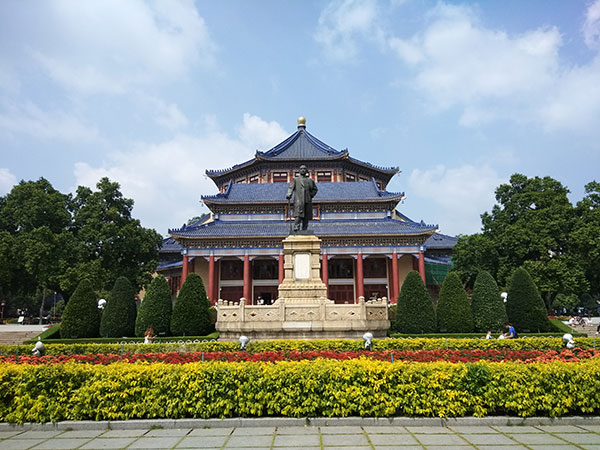
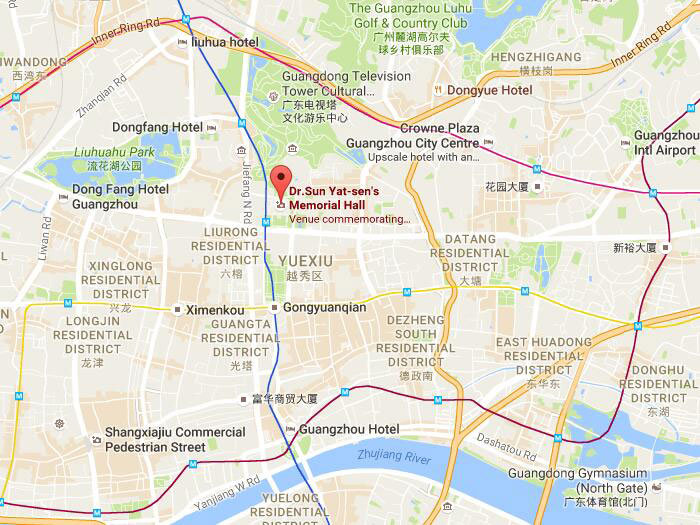
259 Dongfeng Middle Road, Yuexiu District, Guangzhou, China
One of the most popular attraction in Guangzhou
The construction of the Sun Yat-sen Memorial Hall in Guangzhou is primarily to commemorate the historical achievements of Dr. Sun Yat-sen, the pioneer of China's modern democratic revolution. He established revolutionary regimes in Guangzhou three times, and the city was an important base for his revolutionary activities. The construction of the memorial hall is not only a permanent commemoration of his great contributions to overthrowing the feudal imperial system and advocating democratic republic, but also a way to embody the respect of the people of Guangzhou and overseas Chinese for him, and to serve as a vehicle for passing on patriotism and national sentiment.Meanwhile, after Sun Yat-sen passed away in 1925, there was a lack of large venues dedicated to commemorating him. The construction of the memorial hall filled this gap, serving as a venue for public activities such as gatherings and performances. Furthermore, its location on the former site of the Presidential Palace where Sun Yat-sen served as the Extraordinary President of the Republic of China further connects the commemorative significance with his revolutionary footprints.
Sun Yat-sen (12 November 1866-12 March 1925) was a Chinese revolutionary, first president and founding father of the Republic of China, and medical practitioner. Dr. Sun Yatsen, the founder of Guomintang which over threw the Qing monarchy, made Guangzhou his headquarters during the 1920's. As the foremost pioneer of the Republic of China, Sun is referred to as the "Father of the Nation" in the Republic of China (ROC), and the "forerunner of democratic revolution" in the People's Republic of China (PRC). Sun played an instrumental role in the overthrow of the Qing dynasty during the years leading up to the Double Ten Revolution.
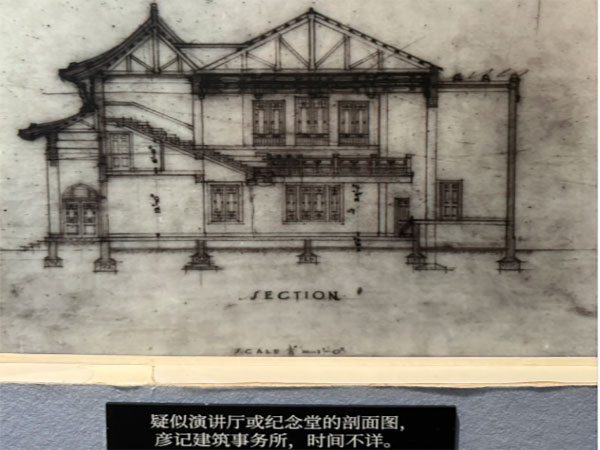
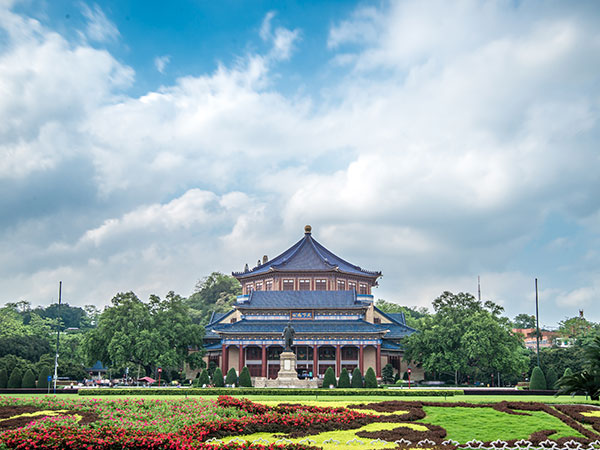
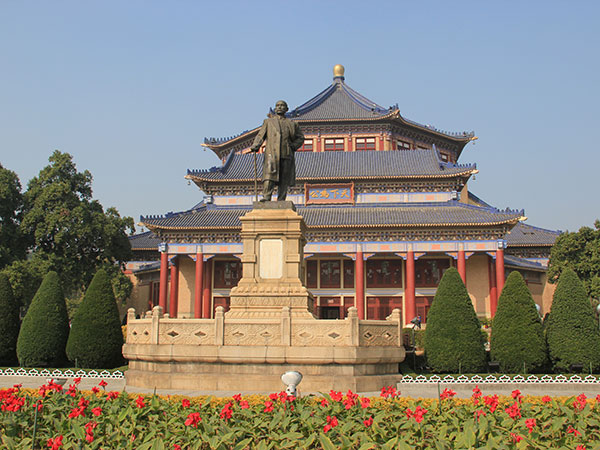
The Guangzhou Sun Yat-sen Memorial Hall is modeled after Song Dynasty palace architecture, boasting a unique architectural style. Its octagonal pyramidal roof, paired with blue glazed tiles and red doors, windows, and pillars, creates a striking and eye-catching effect. The interior utilizes a steel and reinforced concrete structure, with eight columns concealed in the walls supporting a massive steel truss, achieving a large-span space without any obstructions from the columns. It is a perfect fusion of architectural art and engineering technology. Its functional layout combines commemoration and practicality, integrating functions such as memorial, tourism, conferences, and performances. It not only carries the historical significance of commemorating Dr. Sun Yat-sen but also meets the needs of various public activities, making it a landmark building in Guangzhou that combines cultural value with practical function.
Sun Yat - sen, also known as Sun Wen, was a pivotal figure who reshaped China's modern history. In his early years, he witnessed the corruption of the Qing Dynasty and the aggression of foreign powers, which made him determined to launch a revolution. He spent nearly 40 years engaging in revolutionary activities around the world, and overseas Chinese were an important force supporting his revolution, so he once praised "Overseas Chinese are the mothers of the revolution". In 1905, he united several revolutionary groups to establish the Tongmenghui, the first modern bourgeois political party in China, and the Three Principles of the People he proposed became the core idea of the revolution: Nationalism aimed at overthrowing the Qing Dynasty and realizing national independence; Democracy advocated establishing a democratic republic where state power belongs to the people; Livelihood focused on solving people's living problems such as land issues.
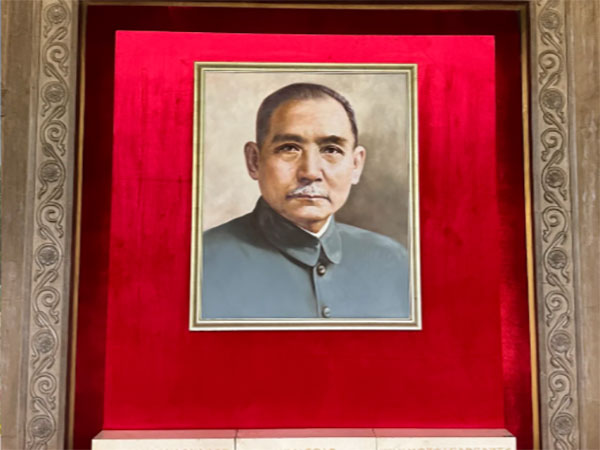
The 1911 Revolution initiated under his leadership was a milestone. It not only brought down the Qing Dynasty but also put an end to the feudal autocracy that had existed for more than 2,000 years in China. After that, he founded the Republic of China and served as the interim president, issuing more than 30 decrees conducive to democratic politics and capitalist development in just three months, including the Provisional Constitution of the Republic of China, which was the first legal document with the nature of a bourgeois republican constitution in China. In his later years, he actively promoted cooperation with progressive forces and adjusted his revolutionary strategies in time. He also put forward the "Industrial Plan", envisioning building China into a modern powerful country with complete transportation and industrial systems. Beyond China, he cared about the national liberation movements of oppressed nations around the world, advocating mutual support among these nations in their struggles against oppression, which made his influence go beyond national borders.
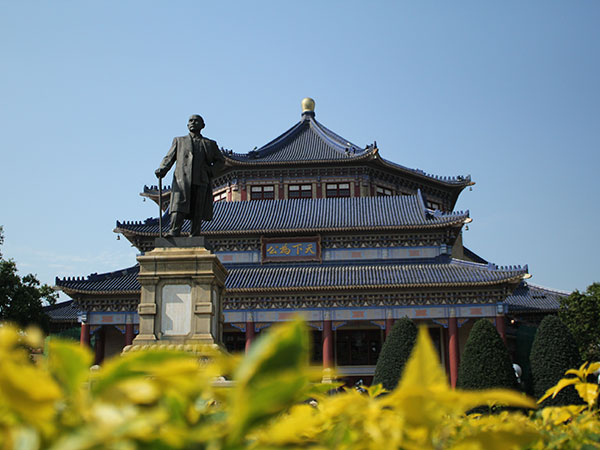
Admire the memorial hall’s iconic octagonal palace-style architecture, a brilliant blend of traditional Chinese design and modern engineering. The striking blue glazed tile roof (symbolizing "clear sky" in Sun Yat-sen’s ideals) contrasts beautifully with red doors and columns, while upturned eaves exude classic elegance. Inside, the 30-meter-span column-free grand hall is a marvel—no pillars block the view, supported by hidden steel trusses. The dome features exquisite blue murals with golden cloud patterns, and natural light streams through high windows, creating a solemn yet spacious atmosphere that showcases the perfect integration of architectural art and technology.
Take photos with the imposing Sun Yat-sen bronze statue in the square, cast in 1998. Dressed in a Zhongshan suit and holding a book, the statue stands tall with the full text of "The Outline of National Reconstruction" inscribed on its base. At the main entrance, admire the golden plaque "Tian Xia Wei Gong" (The World Belongs to All) — Sun Yat-sen’s own handwriting. Inside the lobby, the "Prime Minister’s Will" plaque and the couplet "The revolution is not yet successful; comrades must continue their efforts" evoke a profound commemorative mood. Don’t miss the historical exhibition hall (when open) to view precious relics like Sun Yat-sen’s manuscripts and original meeting records.
Stroll through the memorial hall’s serene campus, where nature and history harmonize. Walk along the 1,000-meter ancient tree path, and marvel at the 300-year-old "Kapok King" near the north gate—its bright orange-red blossoms in March-April perfectly complement the hall’s blue tiles, a iconic Guangzhou spring scene. Discover the unique "tree embracing tree" spectacle, where banyan and kapok branches intertwine. When white orchid trees bloom, the air fills with a delicate fragrance, offering a peaceful escape from the city bustle. The lawns and decorative stone balustrades also provide ideal spots for relaxation and quiet contemplation.
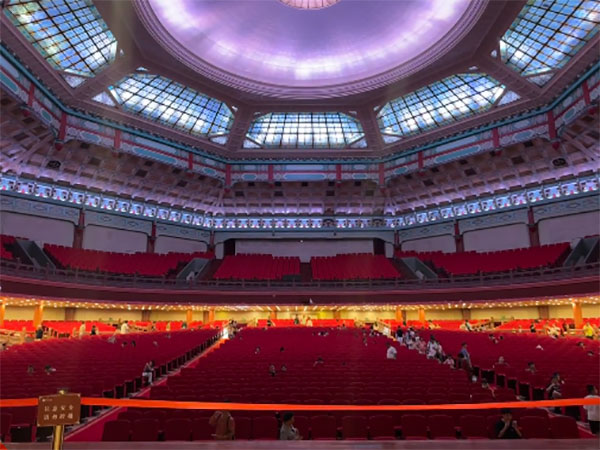
Immerse yourself in cultural experiences by watching performances in the hall, renowned for its excellent acoustic effects. Check the schedule in advance to enjoy concerts, Cantonese opera, or other shows in this century-old venue—an unforgettable combination of art and history. Try the AR digital interaction: scan specific locations via the official WeChat mini-program to view 3D animations of the building’s structure, decomposing its complex design. You can also interact with restored historical scenes and figures, making the hall’s history and architecture more vivid and engaging for visitors of all ages.
Participate in special commemorative ceremonies held on important dates, such as Sun Yat-sen’s birth anniversary (November 12) and death anniversary (March 12). These events honor his legacy with speeches, performances, and rituals that reflect his spirit of patriotism and revolution. Occasionally, thematic exhibitions are held to explore Sun Yat-sen’s life, revolutionary career, and enduring influence. These exhibitions feature historical photos, documents, and interactive displays, allowing you to gain a deeper understanding of his contributions to China’s modernization and the timeless value of his ideas.
From on request
From $ 364
From $ 569

 English