Larch forest in the Great Khingan Mountains is part of the northern Eurasia coniferous forest, is the continuation of the south part which belong to the coniferous forest in the southern East Siberia. Down part of mountain is dense brown forest soil, the upside of mountain is brown coniferous forest soil, all present acidic reaction. The vegetation here has obvious vertical zoning phenomenon. At an altitude of 600 meters below the valley is modern Mongolian larchen forest. Other trees are black birch, aspen, linden, northeast China ashtree, amur cork tree, etc. Understory shrubs are two lespedeza, hazelnuts, mandshurica, etc.
Geography
The Great Khingan Mountains is important mountains in northeast China. Heilongjiang south is the source of Ergun River and the cradle main tributary of Nenjiang River. From the Heilongjiang River, move towards north-east and north-north to east direction; end in the south of Xar Moron River valley. Between northern latitude 43°- 53°30 ', east longitude 117 ° 20 '- 126 °. It is about 1200 kilometers, 200-300 km wide, covers an area of 8.44 square kilometers. Most part is 1100 to 1400 meters above sea level. High Mountain is asymmetrical, and it is high in northwest but southeast is low with flat east and steep west, flatly transit to the Mongolian plateau of its west, the east steep side is down to the northeast plain step by step, the mountain is present a image of wide north but narrow south. With general Lesser Khingan Mountain is bounded in Nenjiang river valley, but also can be dividing as Beian-Aihui Line.
Climate
Great Khingan Mountain elevation is about 600 to 1000 meters; there are some mountains near 1400 meters. Average annual temperature is 1.2 ℃, below 5 ℃, the average July temperature is 16 to 20 ℃, the annual accumulated temperature (for the sum of daily average temperature which is higher than 10 ℃) for 1100-1700 ℃, frost-free period of 70 to 100 days, annual rainfall is 400-600 mm. Because of the low temperature growing environment, air relative humidity is bigger. Suitable for forest growth, here is China's only growing area of cool temperature zone of deciduous conifers (larch), larch forest here has a large coverage and of a pure consistence.
Best time to go
The best time to visit the Larch Forest in the Great Khingan Mountains is summer (June-August) and autumn (September-October), when you can experience totally different forest landscapes.
1. Summer (June-August): Summer Resort and Greenery
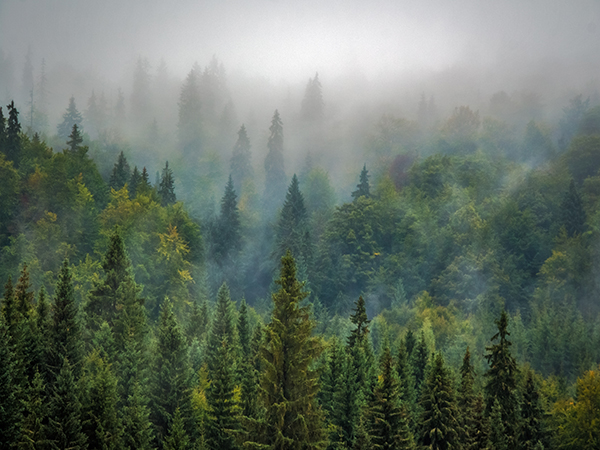
- The climate is pleasant, with an average temperature between 15-22℃. It serves as a natural summer resort, helping you escape the intense heat in southern China.
- The forest enters a period of vigorous growth. Larch trees are covered with dense green leaves, and wildflowers bloom under the forest, creating a vibrant overall scene.
- It is suitable for outdoor activities like hiking and camping. You can also spot forest animals such as squirrels and birds, offering a strong ecological experience.
2. Autumn (September-October): Colored Forest and Autumn Charm
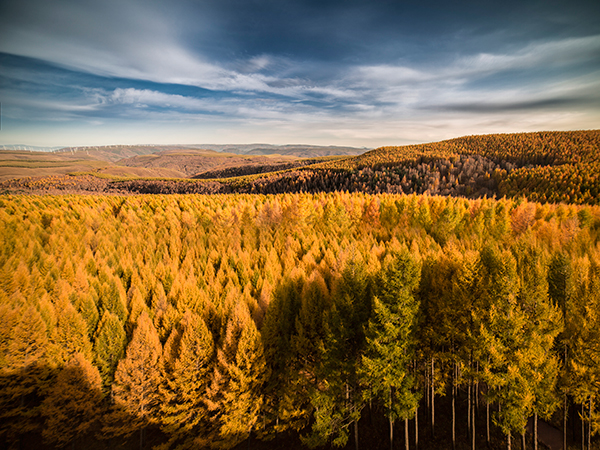
- This is the most representative season for the larch forest. Larch leaves gradually turn golden, turning the entire forest into a "golden ocean" with a strong visual impact.
- The climate is dry and crisp, with mostly sunny days and sufficient light. It is perfect for photography, allowing you to take atmospheric photos of the autumn forest easily.
- In late autumn (mid-late October), early snow may fall in some areas. The golden larches paired with a small amount of snow add more layering to the landscape.
1. Mohe City
-
Arctic Village Scenic AreaA national 5A-level scenic spot, it is the northernmost village in China and an observation point for the aurora borealis, polar days, and polar nights. It features many "northernmost" attractions, such as China's North Pole and the First Outpost of Northern China.
-
Longjiang First Bay Scenic AreaLocated in the northwest of Mohe City, it is a 30-kilometer-long "Ω"-shaped bend naturally formed by the Heilongjiang River (China-Russia border river). With a majestic landscape, it is a national 4A-level scenic spot.
-
May 6th Fire Memorial MuseumA national 3A-level scenic spot, it uses rich exhibits and scene restorations to show the entire process of the "May 6th" forest fire in the Great Khingan Mountains in 1987, with important educational significance.
-
Evenk Reindeer ParkLocated at No. 1 Arctic Avenue, Arctic Town, Arctic Village, it allows visitors to get close to reindeer and learn about the folk culture of the Evenk people.
2. Jiagedaqi District
-
Baiquan Valley Ecological Tourism Scenic Area24 kilometers away from downtown Jiagedaqi, it is named after the Baiquan River. With a forest coverage rate of 89%, it preserves Quaternary glacial relics such as the "Glacial Erosion Great Wall" and is one of the first national forest health base pilots.
-
Cold Temperate Botanical GardenA national 4A-level scenic spot, it has a large number of cold temperate plants planted, making it an ideal place to learn about the plant resources of the Great Khingan Mountains.
-
Beishan Forest ParkA national 3A-level scenic spot located in the northern part of the urban area. Visitors can enjoy the original scenery here and pay tribute to the Monument to Railway Heroes.
3. Huma County
-
Ludingshan Scenic AreaA national 4A-level scenic spot, it became famous for Jin Yong’s novel The Deer and the Cauldron. Legend has it that it was the fiefdom of Wei Xiaobao, allowing visitors to experience the integration of martial arts culture and natural beauty.
-
Huashan Boundary River Tourism ResortA national 3A-level scenic spot, the section of the Heilongjiang River here has beautiful scenery, making it a great place to enjoy the boundary river landscape.
-
Baiyinnai Oroqen Ethnic Culture Tourism AreaA national 3A-level scenic spot, it offers visitors the chance to experience the folk culture of the Oroqen people and feel the unique charm of ethnic minorities.
4. Tahe County
-
22nd Post Station Tourism Scenic AreaA national 4A-level scenic spot, it was an important stop on the ancient post road. It retains many historical relics, allowing visitors to appreciate the post station culture of that era.
-
18th Post Ancient Post TownA national 3A-level scenic spot, it was a key node on the ancient post road. It has a rich historical and cultural heritage and offers unique views of Oroqen ethnic culture.
-
Oroqen Ethnic Customs ParkA national 3A-level scenic spot, it displays the Oroqen people’s way of life, ethnic costumes, and traditional handicrafts, serving as a window to understand Oroqen culture.
Transport
Most visitors go to the Greater Khingan Mountains region, the most important is to visit to “the arctic village” at Mohe. Usually tourists arrived in Harbin by train, then take train from Harbin to Jiagedaqi for about 12 hours, and then from Jiagedaqi transfer to train more than 10 hours arrived at Mohe Township, more than two hours to Los ancient river village
Accommodation
Jiagedaqi, the capital of the Greater Khingan mountains region, is equipped with a variety of commercial hotel and authority guest house, accommodation is more convenient. At Mohe county Xilinji town there is Tourist Administration, where can take tourists to visit the arctic village, but Xilinji town has no hotels and guest houses.

 Ask a Question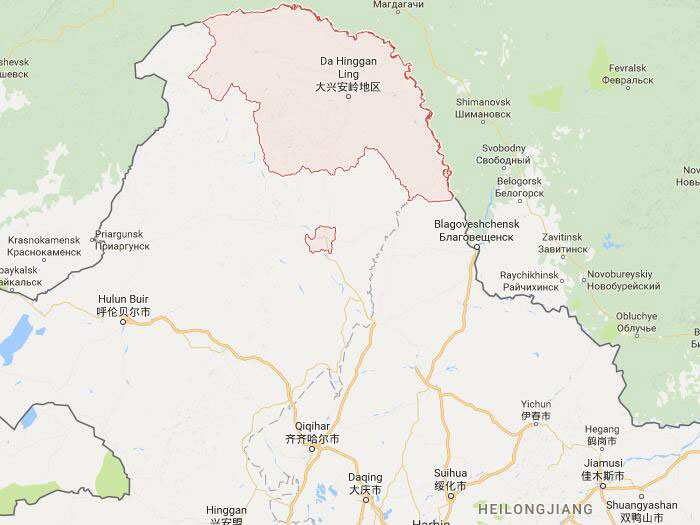


 English