Your China & Yunnan Travel Experts

 Ask a Question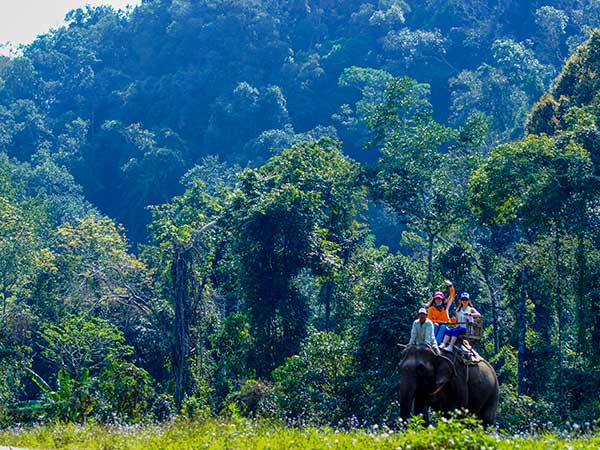
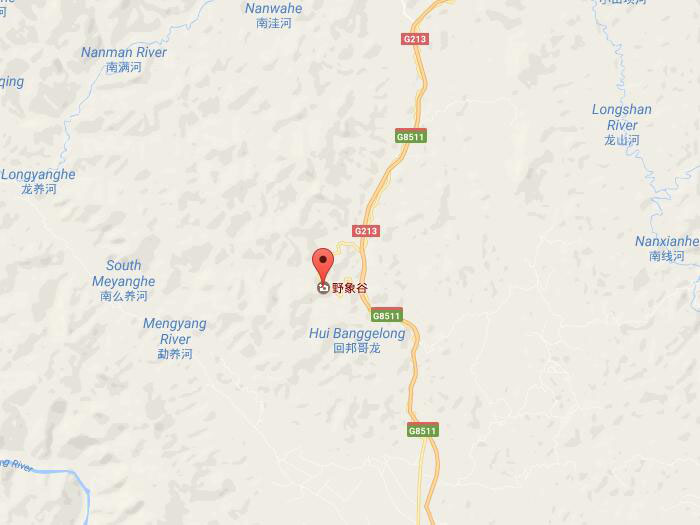
213 national road, Mengyang Town, Jinghong, Xishuangbanna Dai Autonomous Prefecture, Yunnan, China.
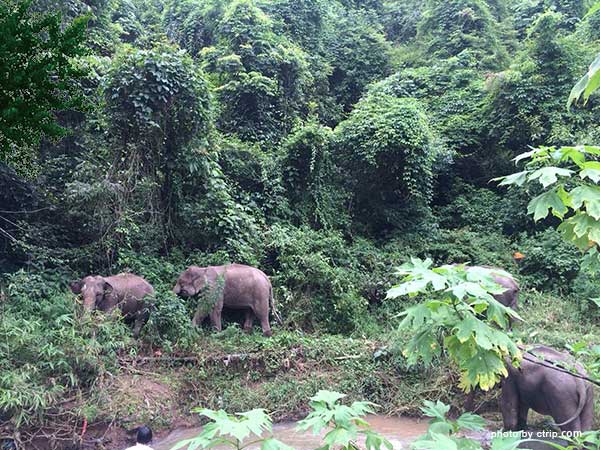
Good place to close to wild elephant.
Convenient traffic, unique tropical scenery and wild elephant observing, which make this park one of the most popular sites in Xishuangbanna nowadays.
The park is characterized by low mountains, gentle hills, and wide valleys, with an elevation ranging from 747 to 1,055 meters. Rivers and streams crisscross the area, and the vegetation changes with altitude — including tropical monsoon forests, evergreen broad-leaved forests, and bamboo groves. The forest coverage reaches an impressive 96%.
Currently, the valley is home to around 50 herds totaling 300–500 wild Asian elephants, along with other rare wildlife such as wild buffalo, giant lizards, pythons, green peacocks, hornbills, pig-tailed macaques, rhesus monkeys, black bears, pangolins, and large civets. The region also supports a vibrant ecosystem of butterflies, birds, and amphibians.
Major facilities include the Aerial Elephant-Viewing Walkway, Rainforest Sightseeing Cableway, Asian Elephant Museum, and Elephant Science Park, allowing visitors to observe elephants safely and learn about rainforest ecology without disturbing the animals.
Aerial Elephant-Viewing Walkway
Officially opened on February 5, 2016, this high-altitude walkway allows visitors to experience the rainforest from above while observing wild elephants roaming freely below. Designed as a fully enclosed elevated loop, it embodies the eco-friendly tourism concept of “elephants walk on the ground, humans tour in the air.” The structure enables visitors to enjoy panoramic rainforest views while minimizing human impact on wildlife.
Rainforest Sightseeing Cableway
Stretching approximately 2,063 meters, the Rainforest Cableway offers a 35-minute single-way journey through the lush canopy. From above, travelers can admire the layered rainforest landscape, intertwined vines, and dense foliage. With a bit of luck, you may even spot wild elephants foraging or playing beneath the cableway — a once-in-a-lifetime view of rainforest life from the sky.
Asian Elephant Museum
Built in 2008 and renovated in 2023, the Asian Elephant Museum covers an area of 800 square meters and consists of four themed exhibition halls:
Focusing on the scientific study of Asian elephants, the museum presents a comprehensive overview of their origin, evolution, physiology, ecology, and behavior. It also highlights China’s achievements in elephant rescue, breeding, and conservation.
Asian Elephant Rescue and Breeding Center
The Asian Elephant Rescue and Breeding Center in Xishuangbanna is part of China’s National Forestry Key Projects and one of 15 major species rescue programs implemented in Yunnan. It remains the only research base in China dedicated exclusively to the rescue and breeding of Asian elephants.
Elephant Science Park
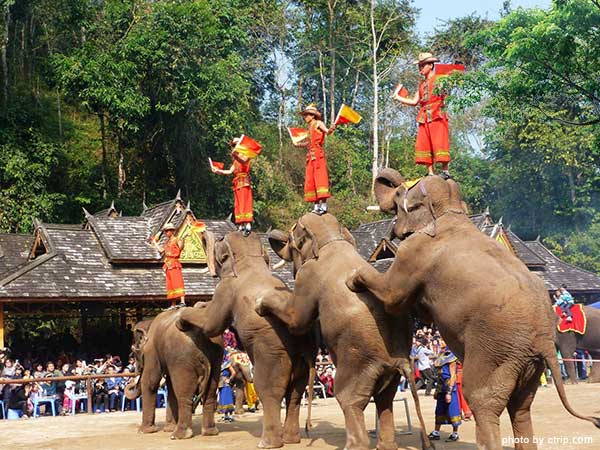
At the Elephant Science Park, visitors can observe elephants’ natural behaviors up close and learn about their daily habits, emotional intelligence, and conservation status. The park promotes public awareness of wildlife protection and the importance of biodiversity and rainforest conservation.
Butterfly Garden
The Butterfly Garden focuses on tropical and subtropical butterfly species, including swallowtails, ringlets, nymphs, and pierids. The park currently raises 48 species and breeds over 300,000 butterflies annually. Visitors can watch the life cycle of butterflies — from caterpillar to cocoon to colorful adult — and even experience butterflies gently resting on their hands amid a flurry of vibrant wings.
Rainforest Theater
The Rainforest Theater features ethnic song-and-dance performances inspired by Dai and other hill tribes’ myths and folklore. Using handmade traditional instruments and costumes, performers showcase the cultural diversity and artistic traditions of Xishuangbanna through lively, music-filled shows.
Best Time to See Wild Elephants: The best elephant-watching season in Wild Elephant Valley runs from December to April, when wild elephants are most active and frequently appear near the observation areas and rivers.
Tickets: Adult Ticket: 60 RMB per person
Transportation: From Jinghong City, visitors can take a direct bus to Wild Elephant Valley. The journey takes about 1 hour. Shuttle services are also available at the scenic area entrance.
Route 1 (Approx. 3 hours)
Snake and Lizard Park → Butterfly Garden → Orchid Garden → Rainforest Elephant Encounter / Elephant Interaction / Elephant Health Check → Rainforest Sightseeing Cableway → Phase II Aerial Elephant Walkway → Asian Elephant Museum → Phase I Walkway → End of Tour
Route 2 (Approx. 4 hours)
Snake and Lizard Park → Butterfly Garden → Orchid Garden → Elephant Encounter / Interaction / Health Check → Rainforest Sightseeing Cableway → Phase II Aerial Walkway → Asian Elephant Museum → Phase I Walkway → Rainforest Restaurant → End of Tour
Route 3 (Overnight, 15:00–Next Day 10:00)
Snake and Lizard Park → Butterfly Garden → Orchid Garden → Phase II Aerial Walkway → Rainforest Dinner → Rainforest Overnight Stay → Morning Rainforest Yoga → Breakfast → Phase II Walkway → Asian Elephant Museum → End of Tour
Route 4 (Overnight, 15:00–Next Day 10:00)
Snake and Lizard Park → Butterfly Garden → Orchid Garden → Elephant Encounter / Health Check → Rainforest Dinner → Phase II Walkway → Rainforest Overnight Stay → Morning Yoga → Breakfast → Phase II Walkway → Asian Elephant Museum → End of Tour
From $ 317

 English