Your China & Yunnan Travel Experts

 Ask a Question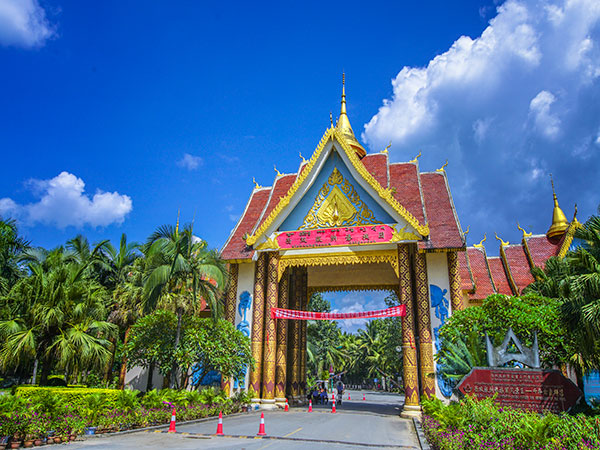
Olive Dam, Jiangcheng, Pu'er, Yunnan, China
Good place to experience Dai minority folk custom in Xishuangbanna.
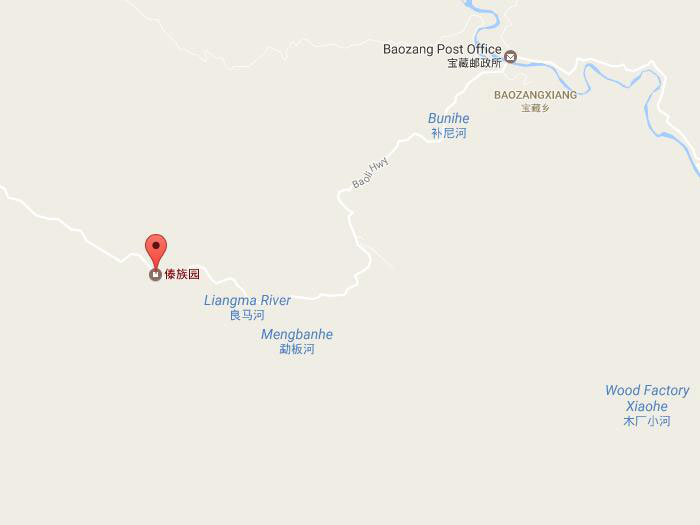
Ganlanba Dai Minority Park (Chinese name: 橄榄坝傣族园) is located in the southeast direction of Jinghong. It is a dwelling place for Dai minority people cause they have lived there generations to generations. Thus, the dense Dai minority culture can be found here.
Basic Information
Ganlanba can be a representative to experience both the minority culture and the tropical atmosphere. Because Ganlanba with the lowest altitude which is about 530m in Yunnan, it is the hottest place. The hot climate makes Ganlanba as a rich fruits production area. Ganlanba in Xishuangbanna culture means “the imperial gardening village”. Inside it, there are two large villages called Man Chun Man (means flowers village) and Man Ting (means fruits village) separately. No matter which village you choose to visit, you can appreciate the typical Myanmar temple pagoda and Dai bamboo house.
Locals give the title “the feather of peacocks” to describe Ganlanba. They regard Ganlanba as the peacock which is spreading its tail, it is a place with shining colors. Those bright Dai minority villages are looked like the decoration of the spreading tail.
Ganlanba is the nickname of the Meng Han Dam which is located in the middle reach of Langcang River in Xishuangbanna. Meng Han means the rolling place of clothes. It is said that, when Sakyamuni had his tour in Xishuangbanna to spread Buddhism, locals of Ganlanba put white clothes on the ground to expressed their hospitality of him. But the white clothes was not enough to cover the whole Sakyamuni’s route in Ganlanba. So locals rolled the former period and used to put forwards to continue the road. Sakyamuni was so touch by this behavior. So he named this place to remember the honesty people here, thus it got the name “Meng Han”.
1. Cultural Experience
Ganlanba is the only scenic area in Xishuangbanna that comprehensively showcases Dai religion, history, culture, customs, architecture, clothing, and cuisine.
Visitors can immerse themselves in authentic Dai village life — join in folk dances, taste traditional Dai-style food, and experience the profound Theravada Buddhist culture that has been passed down for generations.
2. Natural Landscape
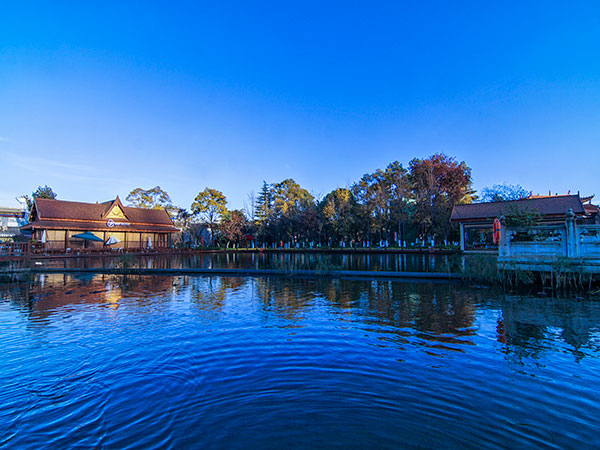
The park is filled with delicate bamboo houses, ancient temples and pagodas, banana and coconut plantations, and lush lotus ponds.
It perfectly combines tropical natural beauty with humanistic charm, creating a tranquil subtropical countryside atmosphere. The scenic views of palm trees, tropical fruits, and glistening waterways make it a paradise for photography enthusiasts.
3. Cultural and Folk Activities
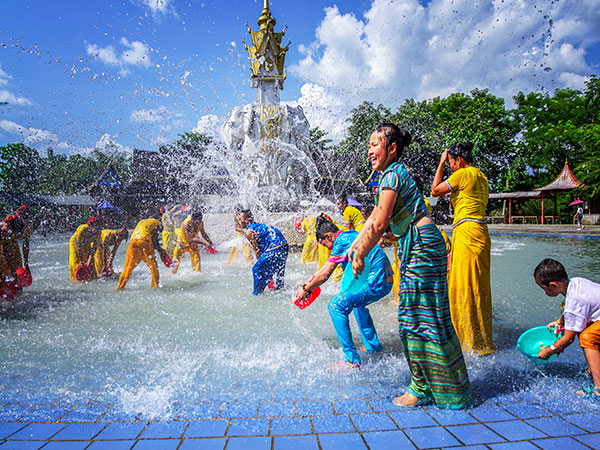
The park features a grand Water-Splashing Square, hosting two daily water festival sessions (2:00–2:40 p.m. and 3:40–4:20 p.m.). Visitors can join the joyful “splash for happiness” celebration for free — a symbolic ritual meaning “wash away bad luck and welcome blessings.”
Several peacock dance shows are performed daily. You can watch the elegant birds spreading their colorful feathers and enjoy traditional Dai dances symbolizing beauty, peace, and good fortune.
A special area is dedicated to Dai intangible cultural heritage, including palm-leaf scripture engraving, pottery making, ancient papermaking, Dai boxing, traditional Dai dances, and elephant-foot drum performances. Visitors can join hands-on workshops to experience the crafts personally.
【Important Dai minority dwelling place】 - Ganlanba is one of the important Dai minority dwelling areas in Xishuangbanna, The splendid Dai minority culture constructs Ganlanba as an ethnic kingdom in Yunnan. Aiming to spread the unique culture to the world, Dai people had built some interesting folk villages. And inside these villages, the joyful activities between tourists and Dai people bring each one the deep memory.
【A big fruit garden】 - Ganlanba is a big fruit garden with rich fruit types. The most famous ones include coconut, pineapple, watermelon, banana, and tamarind fruit. The coconuts and pineapples selling in Jinghong are majorly produced in Ganlanba.
【The unique rubber forest scenery】 - the rubber forest is decorated by the tall and slim coconut grove. Ganlanba is one of the leading places to produce rubber.
【Dai minority villages】 - Ganlanba consists of 5 villages, about 300 families. Locals here are hospitality and still keeping their own living style. When you walk on the lane during the evening, you may hear the melody of Lusheng and the rhythm of Xiangjiao Drum.
Manchunman Buddhist Temple: Built in 582 AD, this is the first Theravada Buddhist temple in Yunnan, marking the introduction of the faith into China. With its exquisite decorations, graceful Dai-style architecture, and tranquil ambiance, it serves as the spiritual heart of Ganlanba.
Manting White Pagoda: Dating back to 538 AD, this ancient pagoda complex enshrines Shakyamuni Buddha statues and showcases classic Dai religious architecture. It’s a must-visit site to appreciate the intersection of history, religion, and local art.
Border Wharf: A filming location for movies such as Operation Mekong, the wharf allows visitors to overlook the China–Myanmar border or take a speedboat ride along the river (extra fee required). It’s a perfect spot to witness the majestic flow of the Lancang River.
Lotus Camp (Summer Lotus Area): Visitors can explore the lotus ponds by mini train, bamboo raft, or rubber boat, enjoying the refreshing scent of lotus blossoms and the peaceful rural scenery — especially beautiful during summer.
Half-Day Classic Tour (3–4 hours):
Entrance → Manchunman Buddhist Temple → Manting White Pagoda → Water-Splashing Square (join the first water-splashing session) → Intangible Heritage Experience Zone → Exit.
Full-Day In-Depth Tour (6–7 hours):
Morning: Follow the half-day route + village home visit for Dai family experience.
Afternoon: Visit Border Wharf (optional speedboat ride, ¥299/person) → Peacock Garden → Evening Bonfire Party (extra ticket required, includes buffet and lantern-floating activity).
From Jinghong, you can take a regular bus to Menghan (Ganlanba) from the Xishuangbanna Passenger Station. The journey takes about 1.5 hours and costs around ¥17.
For a more flexible and comfortable trip, it is recommended to hire a car or join a local Yunnan day tour, which often includes hotel pick-up, guided service, and water-splashing experience.
Wear comfortable shoes — the park is large and involves plenty of walking.
Dress modestly when entering temples — avoid sleeveless tops or shorts.
Bring extra clothes and a waterproof bag if you plan to join the water-splashing festival.
Best visiting time: November to April, when the weather is pleasant and festival activities are frequent.
From $ 317

 English