Your China & Yunnan Travel Experts

 Ask a Question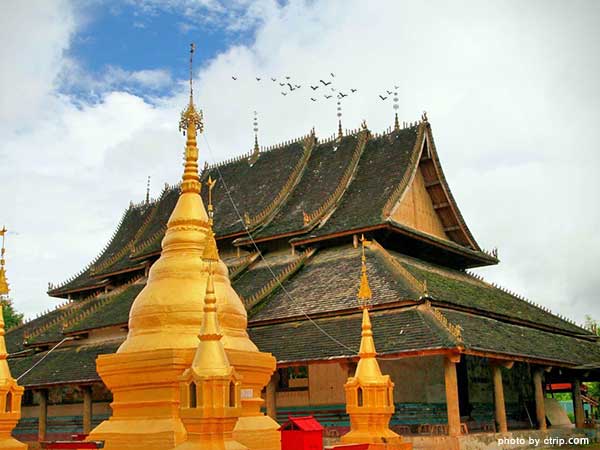
Jingzhen, Mengla County, Xishuangbanna Dai Autonomous Prefecture, Yunnan Province, China.
Ancient Buddhism architecture in Xishuangbanna.
Jingzhen Octagonal Pavilion (Chinese name: 景真八角亭), an famous ancient Buddhism architecture in China, is one of the most important cultural relics in Xishuangbanna. Located in the Jingzhen Village, about 14km away from Mang Hai County, this pavilion is called Octagonal Pavilion which means a place to hold the holy religious ceremony.
Visitor Information
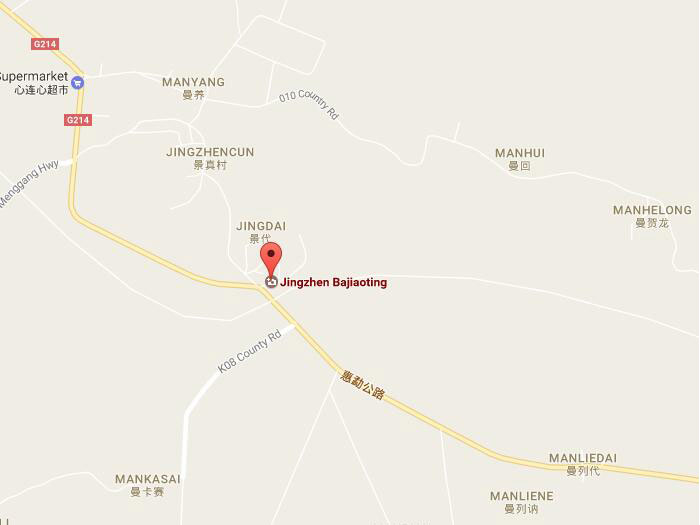
· Address: Jingzhen Village, Menghai County, Xishuangbanna Dai Autonomous Prefecture, Yunnan Province, located beside G214 National Highway on Jingzhen Hill.
· Opening Hours: 8:00 a.m. – 6:00 p.m. (subject to local arrangement).
· Tickets: Free admission, but note that some nearby areas may charge a small fee; please confirm in advance.
Built in 1063, Jingzhen Octagonal Pavilion was once a part of the Jingzhen central Buddhism pagoda called “Wa La Zha Tan”. It is said that this pavilion was built for worshiping of the Buddha Sakyamuni and based on the shape of his golden silk hat. In the ancient time, it served as a meeting spot. During the 15th and 30th each month in Dai minority calendar, monks would come together to Jingzhen Octagonal Pavilion to have the religious events, or any other large ceremonies. In 1988, Jingzhen Octagonal Pavilion was listed as the National key cultural relics protection unit.
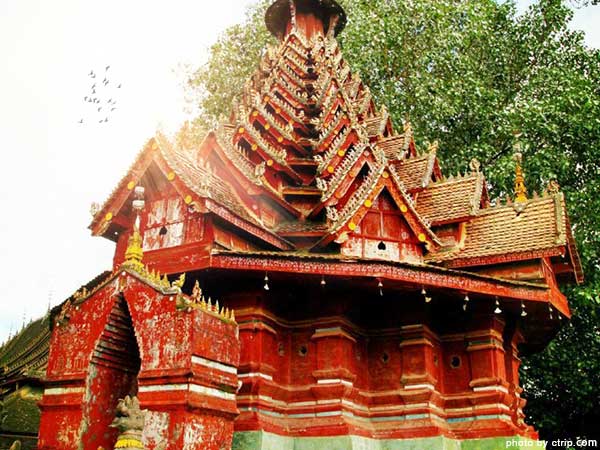
Jingzhen Octagonal Pavilion is a Buddhism pavilion built on the top of mountain. With brick materials, it is in a height of 21meters, 31 sides, 32 corners. On the wall, there are 31 carving pictures which are all about elephants, lions, tigers, etc. And the mirrors and colored glassed are inlayed outside the layout of the pavilion. The room of the pavilion is 6.4-meter-width and 2.5-mete-height. There are 24 sides wall that decorated with golden patterns. The top of the pavilion is wooden material. Each pavilion angle has an elaborate carvings such as golden chicken, phoenix, etc. The Octagonal Pavilion is the typical Buddhism architecture in Xishuangbanna, absorbing the southeastern Asian style as well as the traditional Chinese ancient architectural factors.
The Pavilion
The Octagonal Pavilion stands on the top of the hill with an elegant brick-and-wood structure, 21 meters high, featuring 31 sides and 32 corners. On its walls, 31 exquisite reliefs of elephants, lions, and tigers form a continuous gallery. The outer walls are inlaid with mirrors and colorful glass pieces that glisten beautifully in the sunlight. Inside the hall, which is 6 meters wide and 2.5 meters high, the 24 inner walls are painted with intricate golden patterns.
The pavilion’s roof is a wooden conical structure with a multi-layered eave design supported by 12 beams, each 10 meters long, forming a ten-tiered octagonal tower. The roof tiles overlap like fish scales, while each corner is decorated with carvings of golden roosters, phoenixes, and brightly painted flowers. At the top sits a lotus canopy and a wind bell that produces a pleasant sound in the breeze. The whole structure is shaded by century-old Bodhi trees, adding serenity to its sacred atmosphere.
The Pavilion Hall
The hall has four doors facing east, south, west, and north, each painted with distinctive Dai-style patterns. The main entrance is arched, with a small shrine above it enshrining a bronze statue of Sakyamuni Buddha. On the two red wooden doors, carvings of the Dai-style sunflowers and twin dragons twisting their tails can be found. A wooden ladder connects to the stone steps in front, guarded by a lion and a dragon on each side. The lion shows a fierce look while the dragon raises its head and swings its tail — both vivid and lifelike.
Liusha River
To the southeast of the Octagonal Pavilion flows the clear Liusha River. It is said that the tragic Dai legend The Gourd Letter happened here — the gourd floating down the river once saved the people of Jingzhen, but also led to the burial of Princess Nanmuhan and her husband Zhao Han near the pavilion.
Jingzhen Lake
To the west lies Jingzhen Lake, where, according to legend, Prince Zhaoshutun met the Peacock Princess Nanmuhenna — the beloved characters from the Dai epic Zhaoshutun and Nanmuhenna.
Buddhist Pagoda
About two kilometers north of the pavilion, a tall Buddhist pagoda stands on the mountain top, facing the Octagonal Pavilion from afar. Together, they form a harmonious and sacred architectural pair across the lush landscape.
Ancient Bodhi Tree
Between Jingzhen Temple and the Octagonal Pavilion stands a massive Bodhi tree, centuries old, with a trunk so thick that it takes several people to encircle it. The dense leaves and towering branches create a tranquil scene that perfectly complements the elegant pavilion.
From Jinghong Bus Station, take a bus to Menghai County, then transfer to a bus heading for Mengzhe. After about 20 minutes, you will reach the area near Jingzhen Octagonal Pavilion. It is also possible to hire a car or join a local tour for a more comfortable journey.
· Best Visiting Time: On sunny days, visitors can enjoy a panoramic view of the surrounding villages from Jingzhen Temple and appreciate the harmony between the Octagonal Pavilion and the natural scenery. In the morning mist, the pavilion appears more mysterious and ancient.
· Recommended Route: Start from the parking area at the mountain foot, walk up to Jingzhen Temple, pass the ancient Bodhi tree and Lingmu Pagoda, and finally reach Jingzhen Octagonal Pavilion. Plan at least 1–2 hours to admire the architecture and the tranquil environment.
· Tips: Dress modestly when entering temples, keep quiet, and do not touch relics. Some areas may be closed for maintenance — please follow local guidance.
Jingmai Mountain Tea Culture Museum: Located near Jingzhen Octagonal Pavilion, it offers a chance to learn about Pu’er tea cultivation, production, and history — a great stop for tea lovers.
Wengji Ancient Village and Nuogan Village: Both are traditional Dai villages near the pavilion. Visitors can walk through bamboo stilt houses, taste authentic Dai cuisine, and experience the simple yet vibrant ethnic lifestyle.
From $ 317

 English