Your China & Yunnan Travel Experts

 Ask a Question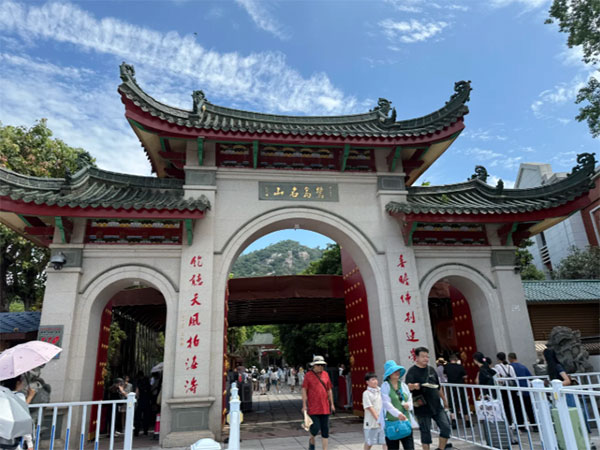
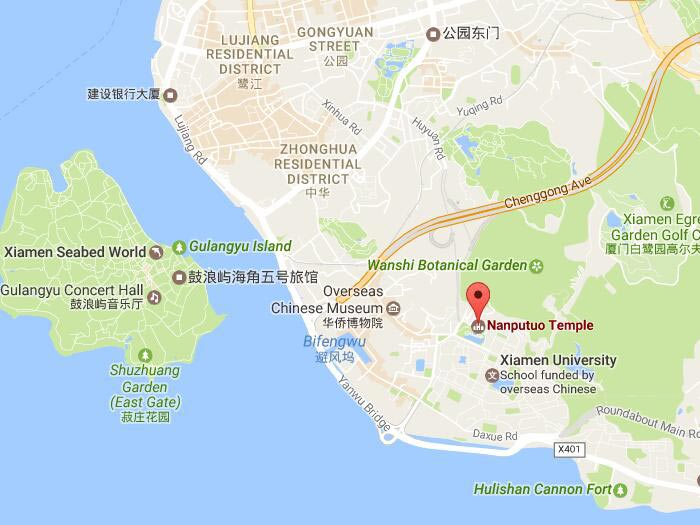
515 Siming South Rd., Siming District, Xiamen, Fujian Province, China
A famous Buddhist temple founded in the Tang Dynasty
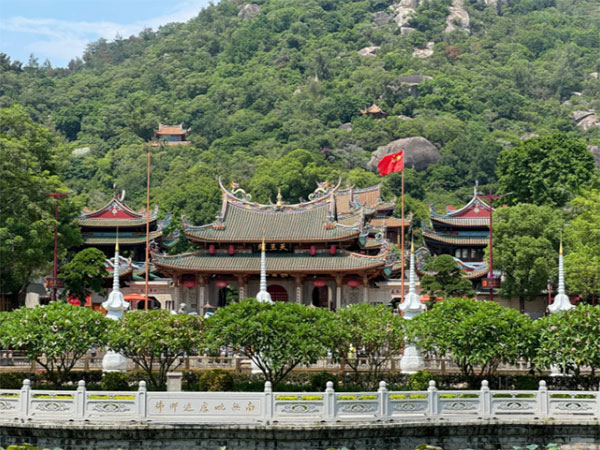
Perched at the foot of Wulao Peak in southern Xiamen Island, South Putuo Temple (Nanputuo Temple) is more than just a Buddhist sanctuary—it’s a cultural landmark blending millennia-old history, exquisite architecture, and serene natural scenery. Adjacent to the prestigious Xiamen University and backed by lush, craggy peaks, the temple draws both devout pilgrims and curious travelers, offering a peaceful retreat from the city’s bustle while telling the story of Fujian’s Buddhist heritage.
South Putuo Temple’s roots stretch back to the Tang Dynasty (618–907 AD), when it was first established as a small hermitage for Buddhist monks. Over the centuries, however, it faced repeated destruction—from wars to natural disasters—leaving only fragments of its early glory. Its modern form owes much to the 23rd year of the Kangxi Reign (1684 AD) of the Qing Dynasty, when local officials and believers raised funds to rebuild it on a grander scale.
The temple’s name carries special meaning: it pays homage to Mount Putuo in Zhoushan, Zhejiang Province—a sacred mountain dedicated to Guanyin (Goddess of Mercy), the bodhisattva of compassion. As South Putuo Temple also centers its worship on Guanyin and sits south of Mount Putuo, it adopted the “South Putuo” moniker to honor this spiritual connection. Since its Qing-era reconstruction, the temple has undergone careful renovations (most recently in the 20th century) to preserve its heritage, becoming one of the most important Buddhist temples in southern Fujian and a national key cultural relic protection unit today.
Spanning 258,000 square meters (about 36 football fields) with a total floor area of 21,270 square meters, the temple follows the classic “axisymmetric” layout of Chinese Buddhist temples—each hall and structure aligned along a central north-south axis, creating a sense of order and reverence. What makes it unique, though, is its integration with the hillside terrain: buildings rise gradually with the slope of Wulao Peak, giving the complex a layered, majestic presence.
2.Key Structures to Explore
Mountain Gate (Shanmen)
The temple’s entrance is marked by a simple yet elegant gate, flanked by stone lions (a symbol of protection in Chinese culture). Above the gate hangs a wooden plaque inscribed with “South Putuo Temple” in bold calligraphy—said to be written by a famous Qing Dynasty scholar. Passing through the gate, you’ll step into a courtyard lined with ancient banyan trees, their thick roots and sprawling canopies shading visitors from the sun.
Hall of Heavenly Kings (Tianwang Dian)
The first major hall on the central axis, this space is dedicated to the Four Heavenly Kings—four Buddhist deities guarding the four directions. Inside, a giant statue of Maitreya Buddha (the “Laughing Buddha”) sits in the center, his round belly and wide smile symbolizing happiness and generosity. Behind Maitreya stands a statue of Weituo, a guardian deity holding a pestle, representing the temple’s spiritual protection. The hall’s beams are carved with intricate patterns of clouds and lotus flowers (a symbol of purity in Buddhism), and the walls are adorned with murals depicting Buddhist stories.
Main Hall (Daxiong Baodian / Hall of Sakyamuni Buddha)
The heart of the temple, this grand hall houses three towering statues: Sakyamuni Buddha (the founder of Buddhism) in the center, flanked by Amitabha Buddha (lord of the Western Pure Land) and 药师 Buddha (Buddha of Healing). Each statue is over 6 meters tall, carved from camphor wood and gilded with gold leaf, glowing softly in the light of hundreds of oil lamps. The hall’s ceiling is decorated with a giant dragon mural, its scales shimmering with colored paint—a rare feature in Buddhist temples, adding a touch of imperial grandeur. Pilgrims often kneel here to pray, offering incense sticks (available for free at the temple’s entrance) and whispering wishes for health, happiness, or peace.
Hall of Great Compassion (Dabei Dian)
Dedicated to Guanyin, the temple’s patron bodhisattva, this hall is a highlight for many visitors. Its centerpiece is a 1,000-Hand Guanyin Statue—crafted from bronze and inlaid with small jade pieces, standing 8 meters tall. The statue’s 1,000 hands (each holding a different sacred object, from lotus flowers to scrolls) represent Guanyin’s ability to help all beings in need. The hall’s walls are lined with small niches holding tiny Guanyin statues, donated by believers over the years, creating a “wall of compassion” that feels deeply spiritual.
Sutra House (Cangjing Ge)
Located behind the Hall of Great Compassion, this two-story building is a treasure trove of Buddhist culture. It houses over 50,000 volumes of Buddhist scriptures, including rare hand-copied versions of the Tripitaka (the core Buddhist canon) and ancient woodblock prints from the Ming and Qing dynasties. The Sutra House also displays Buddhist relics, such as a fragment of Sakyamuni Buddha’s hair (said to be over 2,000 years old) and a jade Buddha statue gifted by a Thai monastery. Visitors are welcome to browse the ground floor (the upper floor is reserved for monks’ study), though photography is not allowed to protect the ancient texts.
Bell Tower & Drum Tower
Flanking the central axis (one on the east, one on the west), these two towers are identical in design—each with a curved roof and red wooden beams. Every morning at 6 AM and evening at 6 PM, monks ring the temple bell (weighing over 3 tons) and beat the drum, their deep, resonant sounds echoing through the valley. The bell and drum are not just for ritual: their rhythms are meant to remind practitioners of the “impermanence of life” and the importance of mindfulness.
Benevolence Tower & Universally Shining Tower
Standing at the temple’s northern edge (near Wulao Peak), these two stone pagodas are over 20 meters tall, each with seven stories. Built in the Qing Dynasty, they are decorated with carvings of Buddhist symbols (lotuses, Buddha’s footprints) and inscriptions of sutra verses. The towers are said to “guard” the temple from evil spirits, and their symmetry adds to the complex’s balanced beauty.
Vegetarian Cuisine at Nanputuo Temple
The vegetarian cuisine at Nanputuo Temple is a benchmark of vegetarian culture in southern Fujian. Its noodles are renowned for being "light yet rich, simple yet subtly fragrant", aligning with the Buddhist principle of "abstaining from killing and protecting life", while also embodying the local pursuit of the natural flavors of ingredients. It has become a must-try specialty for many visitors.
The vegetarian noodles at Nanputuo Temple are often made with handcrafted alkali noodles or whole wheat noodles, which are chewy and springy, both durable in cooking and capable of fully absorbing the flavors of the broth. The broth is the soul of the vegetarian noodles. It is usually made by simmering ingredients such as soybeans, mushrooms, dried bamboo shoots, black fungus, and daylily flowers for several hours over low heat. No meat or artificial additives are used. The broth is clear and bright, with a naturally sweet and fresh taste, and a warm and sweet aftertaste when consumed.
From $ 512
From on request

 English