Your China & Yunnan Travel Experts

 Ask a Question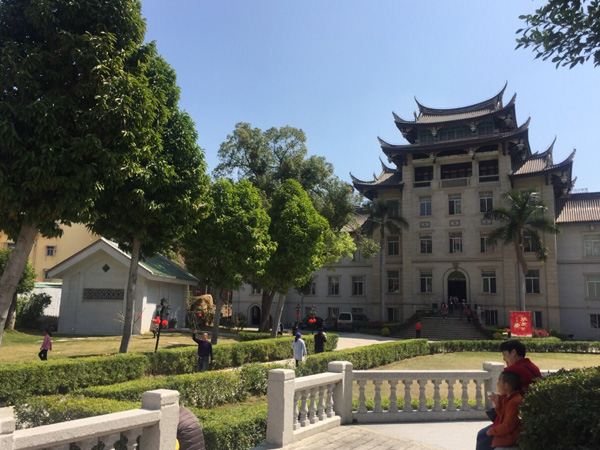
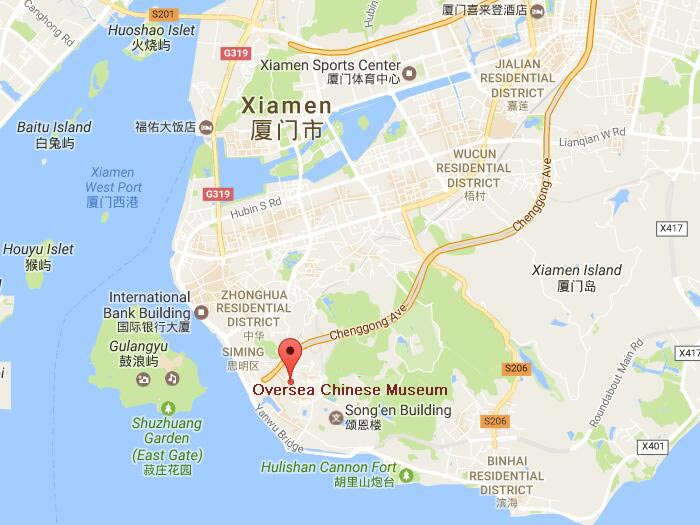
West of Siming South Road, Siming District, Xiamen, Fujian Province, China
Great place to learn about the life of early Chinese migrant workers to other parts of the world, especially South East Asia
The Overseas Chinese Museum (full name: China Overseas Chinese Museum), located at 493 Siming South Road, Xiamen, was initiated in 1956 by the renowned leader Mr. Tan Kah Kee, hailed as “the banner of overseas Chinese and the glory of the nation.” It stands as China's first national thematic museum dedicated to systematically showcasing the history of overseas Chinese, funded entirely by overseas Chinese donations.
Spanning approximately 60,000 square meters, the museum complex features a majestic main building designed by renowned architect Academician Guan Zhaoye. The six-story structure blends Min Nan architectural elements with Nanyang influences, its white granite facade embodying both elegance and the resilient, pure spirit of the overseas Chinese community.
The museum houses nearly 7,000 precious artifacts and historical documents, with the most valuable being the “Qiaopi” archives (included in UNESCO's Memory of the World Register), which chronicle the livelihoods and emotions of overseas Chinese, and the personal belongings of Mr. Tan Kah Kee. Three core exhibition halls follow the thematic threads of “Venturing Beyond Borders,” “Overseas Citizens,” and “Illuminating History.” They vividly trace the overseas Chinese community's journey across oceans, their pioneering struggles in foreign lands, and their integration into local societies. More profoundly, these exhibits showcase their unwavering devotion to their homeland—no matter where they roamed, their hearts remained rooted in their native soil, steadfastly supporting China's construction and development.
The museum's inception traces back to an initiative proposed by patriotic overseas Chinese leader Tan Kah Kee in 1956. He envisioned establishing a monument to commemorate the history and spirit of the overseas Chinese community. However, the project was subsequently shelved for nearly four decades due to historical circumstances, only to be revived after China's reform and opening-up. With the support of the central government and the All-China Federation of Returned Overseas Chinese, the museum was designed by architect Guan Zhaoye, an academician of the Chinese Academy of Engineering. The building was completed in 2005 and officially opened in 2008, fulfilling Mr. Tan Kah Kee's long-cherished wish.
Since its inception, it has been positioned as a national thematic museum under the administration of the All-China Federation of Returned Overseas Chinese. Its collection, built from scratch, now encompasses nearly 20,000 precious artifacts, with a core focus on Mr. Tan Kah Kee's personal relics and the “qiaopi” archives. The expansion project completed in 2014 further upgraded its exhibition facilities and service capabilities.
Today, this museum, situated in a renowned overseas Chinese homeland, stands as the premier venue showcasing the grand narrative of Chinese migration, struggle, and patriotism. It serves not only as an enduring testament to Mr. Tan Kah Kee's legacy but also as an indispensable cultural landmark connecting the emotions of Chinese people worldwide and preserving our collective memory.
“Qiaopi” Archives (Memory of the World)
This is the museum's most distinctive and emotionally resonant exhibit. These “silver-letter envelopes”—letters sent by overseas Chinese to their hometowns—serve not only as remittance receipts but also as heartrending historical testimonies. The paper bears witness to hardship, longing, and a sense of duty to homeland and family, offering a vivid history unmatched by any textbook.
Special Exhibition on Mr. Tan Kah Kee
As the museum's founding advocate, the life of Tan Kah Kee—the “Overseas Chinese Flag”—takes center stage. Visitors can view original blueprints for Xiamen University and Jimei Academy, handwritten letters, personal belongings, and other precious artifacts, offering profound insight into his noble character and patriotic devotion embodied in his “devotion of wealth to education.”
Immersive storytelling of the global history of overseas Chinese
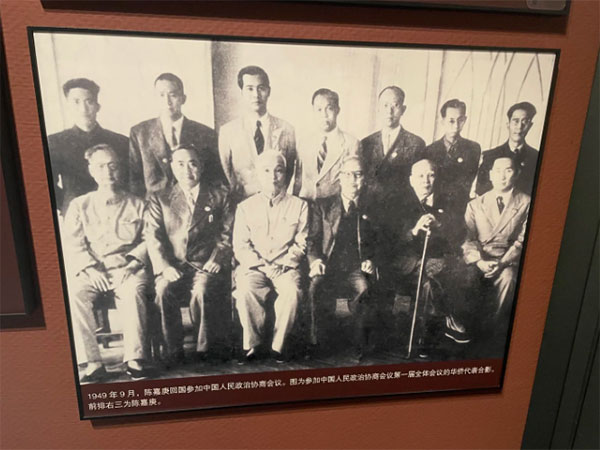
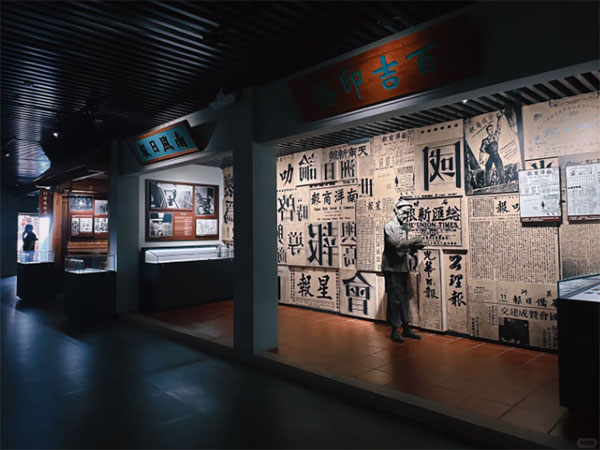
Following the themes of “Venturing Abroad,” “Citizens of the Diaspora,” and “Illuminating History,” the exhibition systematically showcases the history of Chinese migration and struggle—from “going south to Southeast Asia” to reaching the world—through extensive authentic historical photographs, artifacts, scene reconstructions, and multimedia. It highlights their indelible contributions during pivotal historical periods such as the Xinhai Revolution, the War of Resistance Against Japan, and the founding of New China.
Grand Architecture and Thematic Art
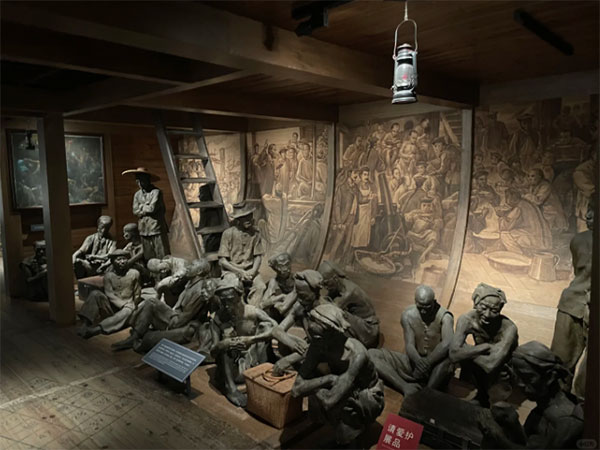
The museum building itself blends Min Nan and Nanyang styles with majestic grandeur. Large-scale thematic reliefs, oil paintings, and sculptures—such as the group portrait “Overseas Chinese Leaders”—possess powerful artistic resonance, serving as exceptional backdrops for photography and reflection. Immerse yourself in recreated settings like the lower decks of early migrant laborers' ships, old Nanyang street shops, and Chinatown archways—transporting visitors back in time to witness history firsthandRich. Interactive Experiences & Souvenirs:Interactive installations in select areas let you personally experience “qiaopi” (overseas remittance letters) rubbing, creating a unique keepsake to take home.
You may choose to get off at the Overseas Chinese Museum Station, which is directly opposite the museum entrance. Bus routes serving this stop include Route 1, Route 15, Route 21, Route 45, Route 71, and Route 841.
Alternatively, you may choose to get off at “Xiamen University West Village Station.” From there, it's about a 5-minute walk to the museum. Bus routes passing through this station include routes 20, 22, 29, 47, 86, 87, and 92.
Currently, no Xiamen subway line directly serves the museum vicinity. Take the subway to Zhenhai Road Station, then transfer to one of the aforementioned buses or take a taxi.
Additionally, taking a taxi or using ride-hailing services offers a convenient direct route to the museum. Within Xiamen city, apps like DiDi Chuxing or Gaode Taxi, or hailing a taxi directly, are both very convenient. Simply enter “China Overseas Chinese Museum” or “Overseas Chinese Museum” as your destination. The journey takes approximately 15 to 20 minutes from Xiamen Railway Station and about 30 to 40 minutes from Gaoqi International Airport.
The museum's excellent location makes it ideal for combining with visits to nearby attractions.You can first visit Nanputuo Temple or Xiamen University (reservations required), then walk approximately 10-15 minutes to the museum.After visiting the museum, it's also very close to the Shapowei Art District or Ding'aozai Cat Street, and continuing on to the Yanwu Bridge viewing platform for sea views is also convenient.
From $ 512

From on request

 English