Your China & Yunnan Travel Experts

 Ask a Question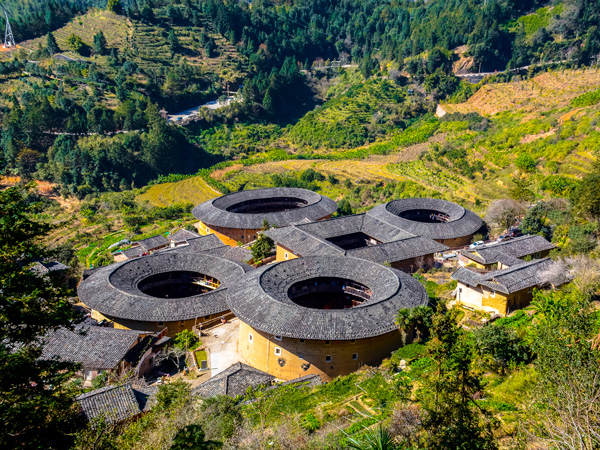
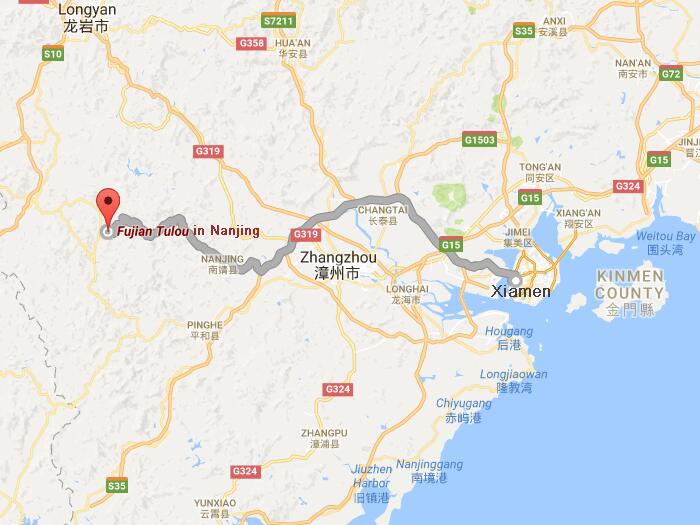
Nanjing County, Zhangzhou City, Fujian Province, China
Unique Rammed Earth Building in China with hundreds of years' history
Tulou or earth building is a unique and mysterious Hakka architecture with a thick earth wall enclosure found only in the mountainous areas in southwestern Fujian province bordering Guangdong in Southern China.
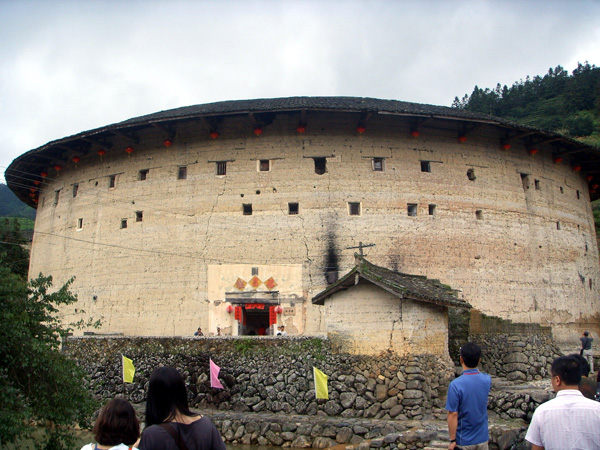
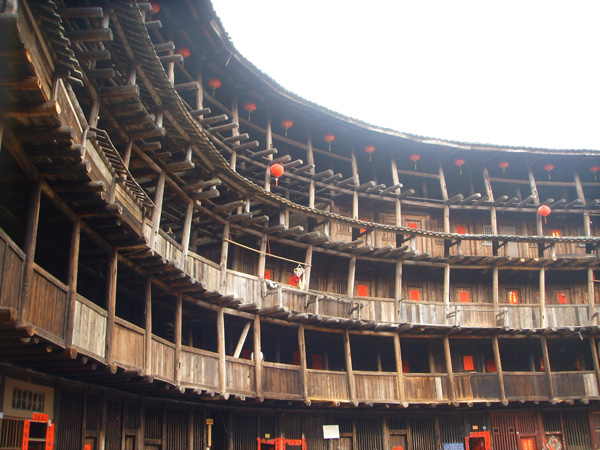
Tulou is usually an enclosed buildings, mostly square or circular in configuration, with a very thick earth wall which is up to 6 feet thick and wooden skeletons, from three to five stories high, housing up to 80 families. These earth buildings have only one entrance, guarded by 4-5 inch thick wooden doors reinforced with an outer shell of iron plate. The top level of these earth building have gun holes for defensing against bandits. What is amazing about these earth buildings is the fact that in spite of the earth wall, some of them are more than 700 years old, surviving through centuries of natural elements, including earth quakes, yet still standing solid. There are more than 20,000 earth buildings to be found in southern China.
Nanjing County in Xiamen, got this name in 1365 under the jurisdiction of Zhangzhou City. It lies in the south of Fujian Province, west of Zhangzhou City, along the middle and upper reaches of the Jiulong River. At the end of Song Dynasty, Han people began to settle in the area and built Tulou. As Tulou are extremely common in Nanjing, nobody can tell the exact year when the first Tulou appeared. However, according to the existing record, the Liu Family built a square building called Jiguang Building in Xiaban Village in Shuyang Township.
Tulou buildings are generally made of earth, wood, and other natural materials. The thick earthen walls provide not only structural support but also defense against potential threats such as bandits. The buildings often rise three to five stories, with a single entrance reinforced by heavy wooden doors and iron plating. The top floors of these buildings were traditionally equipped with gun holes, allowing residents to defend themselves. Despite their massive earth walls, these buildings are surprisingly durable, with some still standing after centuries of use.
Tulou, the iconic earthen structures of Fujian Province, are a unique form of communal living architecture with profound historical and cultural roots. Their development is intrinsically linked to the migration and settlement of the Hakka (Kejia) and Minnan people in southern China. From the 4th to the 12th centuries, waves of Han Chinese migrated southward to escape war and social unrest in the Central Plains. Upon arriving in the mountainous border regions of Fujian, Jiangxi, and Guangdong, these settlers needed dwellings that could provide defense against bandits, wild animals, and local conflicts. This necessity, combined with the availability of local materials like clay, bamboo, and wood, led to the evolution of the fortified Tulou.
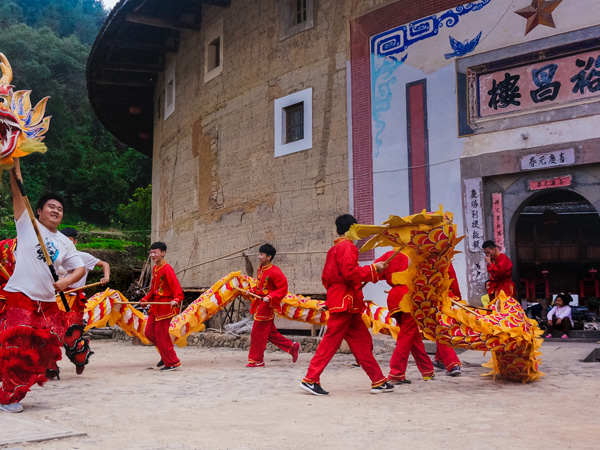
Culturally, Tulou are a physical embodiment of Confucian clan culture and egalitarian ideals. Designed as large, enclosed fortresses, they housed entire clans—sometimes hundreds of people sharing the same surname—for generations. The circular or square shape, with rooms of identical size facing a central courtyard, symbolized unity, equality, and collective security. The ancestral hall at the center was the spiritual and social heart, emphasizing reverence for ancestors and clan cohesion. This inward-facing design fostered a self-sufficient, tightly-knit community where resources were shared and responsibilities were collective. Tulou were not just homes; they were self-contained ecosystems and micro-societies that preserved language, customs, and social structures through centuries.
The historical significance of Tulou was globally recognized when "Fujian Tulou" was inscribed as a UNESCO World Heritage Site in 2008. They are celebrated as exceptional examples of a building tradition that reflects a specific harmonious interaction with the environment and a unique form of communal living. Today, they stand as monumental testaments to Chinese adaptive ingenuity, clan-based social organization, and the enduring legacy of the Hakka and Minnan cultures, transitioning from fortified clan residences to cherished cultural landmarks.
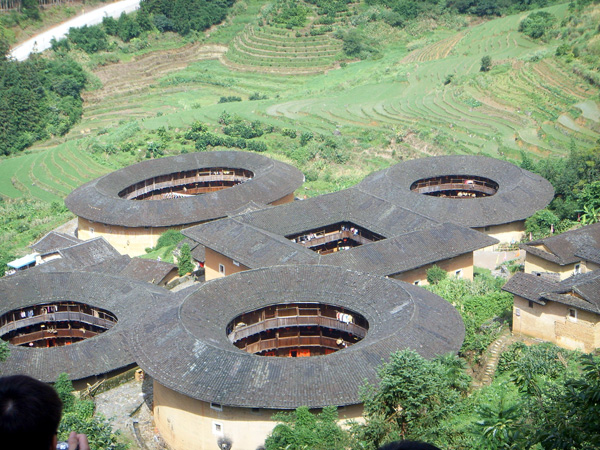
Nanjing County, located in the southern part of Fujian Province, is home to a high concentration of Tulou. Towns like Shuyang, Meilin, Chuangchang, Nankeng, Kuiyang, and Hexi are known for their Tulou clusters. These buildings, built along the Jiulong River, offer a glimpse into the architectural and cultural evolution of the region. The Tulou in Nanjing are not just architectural marvels; they are also material representations of the traditional family-oriented ideology deeply embedded in Chinese culture. The ancient sites of Banpo in Xi'an also showcase similar clan-based societal structures, highlighting the widespread influence of these ancient building styles.
The Tian Luo Keng (Snail Pit) Tulou Group is one of the most famous Tulou groups in the Nanjing region. Located in Shuyang Township, it consists of a central square earth building surrounded by four round Tulou buildings, forming a unique quincunx (five-pointed star) pattern. The arrangement is often described as "four dishes with a soup," symbolizing the central building as the soup and the surrounding buildings as the dishes. The layout of these buildings reflects the strong sense of unity and interconnectedness within the Hakka community.
The five Tulou in the Snail Pit Village are
Buyun Building (Reaching the Cloud Building): This square-shaped earth building is the centerpiece of the group, built in 1796. With three stories, it has 26 rooms per floor and a circular corridor surrounding the rooms. Although it was burnt down by bandits in 1936, it was rebuilt in 1953 following its original design.
Hechang Building: A three-story round Tulou that stands nearby, offering a similar layout and design.
Zhenchang Building: Also a three-story round Tulou, built in 1930, with 26 rooms per floor, it mirrors the traditional Tulou structure.
Ruiyun Building: Constructed in 1936, this building adds to the collection of round Tulou in the village.
Wenchang Building: The most recent addition, built in 1966, with three stories and 32 rooms per floor.
These Tulou provide a fascinating insight into the evolution of Tulou architecture over time, showcasing the blend of traditional craftsmanship with more modern construction techniques.
The best times to visit Yongding Tulou are spring (March to May) and autumn (September to November). The climate is most pleasant during these months: spring brings lush greenery, misty clouds, and the chance to witness traditional folk activities like "making large fortunes"; autumn offers clear skies, cool breezes, and is ideal for hiking and photographing the Tulou and the autumn harvest.
While summer (June to August) offers the most vibrant greenery, be prepared for heat, rain, and potential typhoons; bring adequate protection against heat and rain. Winter (December to February) sees fewer tourists, but the Lunar New Year atmosphere is strong, allowing you to experience unique Hakka customs. However, the mountainous terrain can be damp and chilly, so dress warmly.
From $ 512
From on request

 English
