Your China & Yunnan Travel Experts

 Ask a Question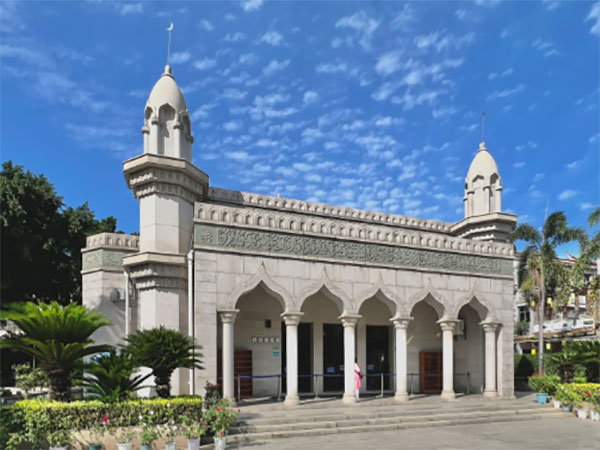
108 Middle of Tumen Jie, Licheng District, Quanzhou City, Fujian Province, China
It is the earliest existing and the oldest with the Arab architectural style of the Islamic Temple in China. It is one of the shrine of Muslims
Qingjing Mosque, literally known as the Pure and Clean Mosque, was built in 1009 on present-day Tumen Street in the city of Quanzhou, Fujian, China, covering an area of 2,500 square meters (27,000 square feet). As the oldest existing mosque with the Arab architectural style in Xiamen, even in China and well known to the Islamic world, it was designed after the mosque in Damascus of Syria and built with pure granite.
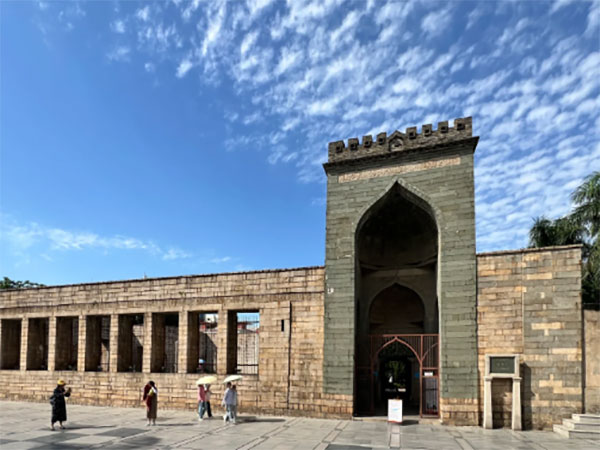
This mosque features with a gate, the Fengtian Hall, and the Mingshan Hall. Facing south, the gate is made of diabase & white granite and consists of four conjoined archways. Its pointed-arch portal, 20 meters high, has three layers. The outer and middle layers are similar to the caisson ceiling in Chinese ancient architecture. The vaulted inner layer took on the architectural style of ancient Arab. It is clear that architecturally, the mosque is a combination of Chinese and Islamic styles. Standing under the vault, one can realize the time-honored cultural exchanges between China and foreign countries. Many of the gate's domes are carved with hanging lotus, symbolizing the respect for purity and sanctity. Each carved lotus is surrounded by a web of liernes, which add depth to the carvings. A platform on the roof of the gate allows worshipers to watch the moon and decide when Ramadan begins.
To the east of the gate are two stone tablets recording the reconstruction of the mosque in the Yuan (1271-1368) and the Ming (1368-1644) dynasties. Another stone tablet is located just near the gate, engraved with the imperial edict of Zhu Di - the third emperor of the Ming Dynasty. He spread this edict to protect the Mosque and the followers of Islam in China.
Facing south (aligning with the qibla, the direction of Mecca, as per Islamic customs), the Grand Gate is the mosque’s most striking landmark, crafted from durable diabase and white granite. It stands 20 meters tall and consists of four conjoined archways, forming a symmetrical and majestic facade. Its pointed-arch portal, a classic element of Arab architecture, is divided into three layers: the outer and middle layers mimic the "caisson ceiling"—a sunken panel design commonly seen in Chinese imperial palaces and ancient temples—while the innermost layer features a vaulted structure typical of ancient Arab mosques. This layered design not only creates a visually stunning contrast but also reflects the deep cultural integration behind the mosque’s construction.
Beneath the vault, the space resonates with a quiet grandeur; standing here, one can almost feel the weight of centuries of cultural exchanges between China and foreign lands. The gate’s domes are adorned with exquisitely carved hanging lotus patterns—borrowed from Chinese Buddhist symbolism, where the lotus represents purity and sanctity. Each lotus carving is surrounded by a web of delicate liernes (decorative arches), which add depth and intricacy to the stonework, blending Islamic geometric aesthetics with Chinese decorative art. Additionally, a flat platform on the gate’s roof serves as a "moon-watching terrace," a vital feature for Islamic worship: in ancient times, religious scholars would observe the crescent moon here to determine the start of Ramadan and other important Islamic festivals.
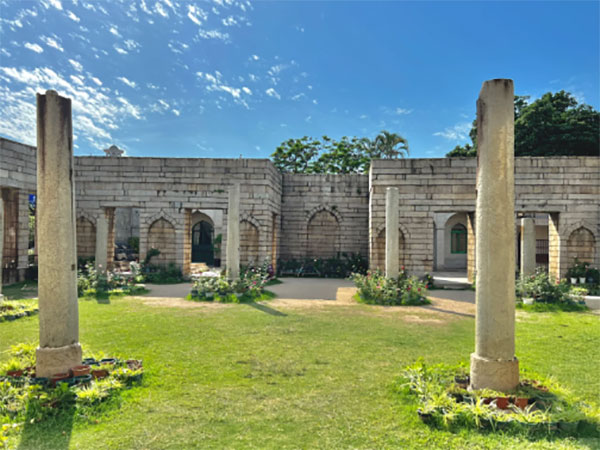
Once the heart of the mosque’s religious activities, Fengtian Hall was originally designed to accommodate hundreds of worshippers for collective prayers. Its layout draws inspiration from the Umayyad Mosque in Damascus, featuring a long, rectangular shape with rows of sturdy granite columns supporting the roof (the roof was later destroyed by a typhoon in the late Ming Dynasty and never fully restored). The remaining stone columns, carved with simple yet elegant geometric patterns—avoiding figurative motifs in line with Islamic art principles—still stand tall, offering a glimpse of the hall’s former grandeur.
Though now in partial ruins, the hall retains a sense of solemnity. Walking among the columns, visitors can imagine the scene of Arab merchants and local Muslim believers gathering here for Friday prayers during the Song and Yuan dynasties, their voices echoing through the space as they prayed together. The hall’s stone walls, weathered by time, also bear traces of the mosque’s long history, recording the ebb and flow of Quanzhou’s maritime trade and the persistence of Islamic culture in the region.
Adjacent to Fengtian Hall, Mingshan Hall was built in the Ming Dynasty to replace the damaged main prayer hall, and it embodies a more pronounced Chinese architectural style. Unlike the Arab-influenced Fengtian Hall, Mingshan Hall adopts a traditional Chinese courtyard layout, with a tiled roof, wooden beams carved with floral motifs, and a compact, intimate space that caters to smaller-scale prayer gatherings. This shift in design reflects the deepening integration of the local Muslim community into Quanzhou’s culture, as Chinese craftsmen took over the mosque’s maintenance and infused it with familiar local architectural elements while preserving its religious function.
Near the Grand Gate, three historical stone tablets add further depth to the mosque’s story. Two tablets to the east of the gate record the mosque’s reconstruction in the Yuan (1271-1368) and Ming (1368-1644) dynasties, detailing how wealthy Arab merchants and local believers funded repairs to keep the sacred site intact. The third tablet, placed close to the gate, bears the imperial edict of Zhu Di, the Yongle Emperor of the Ming Dynasty. Carved in formal Chinese calligraphy, the edict explicitly orders the protection of Qingjing Mosque and the rights of China’s Muslim community, prohibiting local officials from interfering with their religious practices. This tablet is a rare and precious official document, witnessing the Ming government’s policy of religious tolerance and the mosque’s important status in ancient society.
Qingjing Mosque’s existence is inseparable from Quanzhou’s role as one of the world’s great maritime trade hubs during the Song and Yuan dynasties. Known as "Zayton" to Arab, Persian, and European merchants, Quanzhou was a gateway for goods like silk, porcelain, and tea to flow west, while spices, pearls, and ivory arrived from Southeast Asia, the Middle East, and Africa. Alongside these goods came thousands of Arab and Persian merchants, who settled in Quanzhou, formed communities, and brought their religion, language, and culture with them.
In 1009, an Arab merchant named Sa’d ibn Abi Waqqas (though historical records vary slightly on the exact founder) funded the construction of Qingjing Mosque, modeling it after the mosques of his homeland to create a spiritual home for the growing Muslim community. Unlike later mosques in China, which often adopted Chinese temple-style architecture (such as the Great Mosque of Xi’an), Song-era coastal mosques like Qingjing retained strong Arab features—this was a deliberate choice, as merchants sought to maintain their cultural identity while conducting business in a foreign land.
During the Yuan Dynasty, Quanzhou’s prosperity reached new heights, and the mosque became a center of Islamic learning and diplomacy. Arab scholars and religious leaders visited regularly, while local Muslims held positions in the imperial government, facilitating trade between China and the Islamic world. The mosque’s reconstruction during this period, funded by wealthy merchant families, expanded its size and reinforced its status as a symbol of Sino-Arab friendship. Even as maritime trade declined in the late Ming Dynasty, the mosque remained a sacred site, protected by imperial edicts and the loyalty of local Muslims.
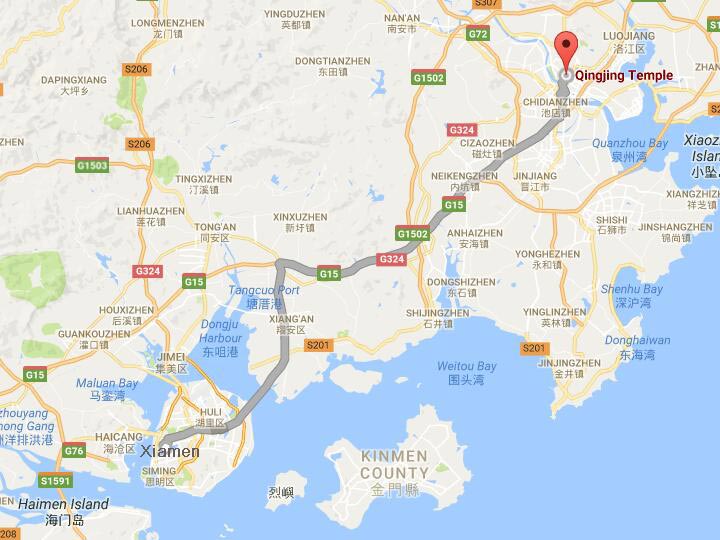
It is easily reached by public bus in Quanzhou. The nearest bus station includes Huaxiangkou Bus Station, Fuwenmiao Bus Station, or Guandimiao Bus Station. The most convenient way is to take a taxi.
From $ 512

From on request

 English