Your China & Yunnan Travel Experts

 Ask a Question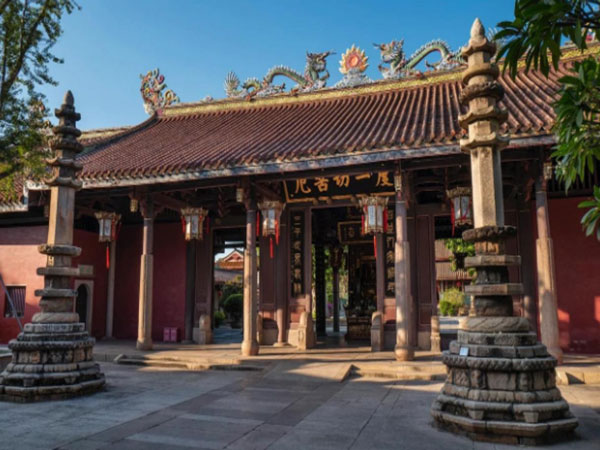
No. 32 Kaiyuan Road, Xiangqiao District, Chaozhou, Guangdong Province
famous Buddhist temple in Chaozhou
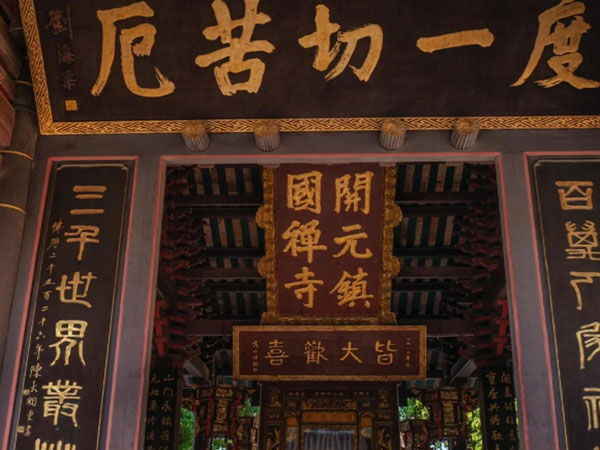
Standing quietly beside the lively ancient streets of Chaozhou, Chaozhou Kaiyuan Temple is the oldest, largest, and best-preserved Buddhist temple in eastern Guangdong. Officially named “Kaiyuan Zhenguo Chan Temple,” it is widely praised as the “No.1 Ancient Temple in Eastern Guangdong” and one of the most important thousand-year Buddhist monasteries in Lingnan.
Founded during the Tang Dynasty more than 1,200 years ago, Kaiyuan Temple is not only a sacred Buddhist site but also a treasure house of ancient architecture, stone carvings, religious relics, and Chaoshan cultural traditions. Hidden behind the bustling shops and snack stalls of Chaozhou Ancient City, the temple offers visitors a peaceful and spiritual world filled with red walls, ancient banyan trees, incense smoke, and elegant wooden halls.
Chinese Name: 潮州开元寺
Full Name: 开元镇国禅寺 (Kaiyuan Zhenguo Chan Temple)
Address: No. 32 Kaiyuan Road, Xiangqiao District, Chaozhou, Guangdong Province
Opening Hours: 07:00–12:00, 13:00–17:00 (last entry at 16:00)
Entrance Fee: Free
Free Incense: Visitors may receive three free eco-friendly incense sticks
Kaiyuan Temple is located in the heart of Chaozhou Ancient City, right beside the famous Paifang Street. Most hotels, restaurants, and attractions in the old city area are within walking distance.
Because of its central location, the temple is usually included in walking tours of Chaozhou Ancient City together with nearby attractions such as Guangji Bridge and Han Wen Gong Temple.
The origins of Kaiyuan Temple can be traced back to 738 AD during the Tang Dynasty. Before becoming Kaiyuan Temple, the site was originally known as Lifeng Temple during the Sui and early Tang periods.
During the reign of Emperor Xuanzong of the Tang Dynasty, imperial orders required important prefectures across the country to establish official temples named “Kaiyuan Temple.” Chaozhou’s temple was therefore renamed and expanded into an official Buddhist monastery.
Over the following dynasties, the temple underwent multiple renovations and name changes:
During the Yuan Dynasty, it was known as “Kaiyuan Wanshou Chan Temple.”
In the Ming Dynasty, it received the formal name “Kaiyuan Zhenguo Chan Temple.”
Since the Qing Dynasty, local people have commonly referred to it simply as “Kaiyuan Temple.”
In 2001, the temple was officially listed as a National Key Cultural Relic Protection Unit by the Chinese government.
Today, the temple preserves architectural features from the Tang, Song, Yuan, Ming, and Qing dynasties, making it one of the most historically valuable Buddhist sites in southern China.
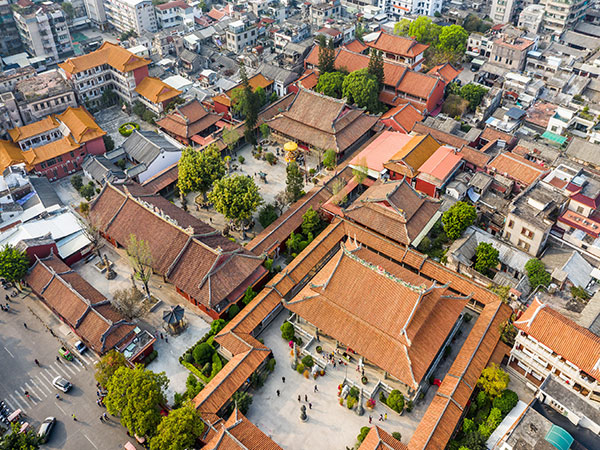
Kaiyuan Temple follows the traditional symmetrical layout of a Chinese palace-style monastery complex. Facing south, the temple is organized along a central axis with major halls arranged one after another.
The main structures include:
On the eastern and western sides are additional buildings such as guest halls, Guanyin Hall, ancestral halls, monks’ quarters, dining halls, and meditation rooms.
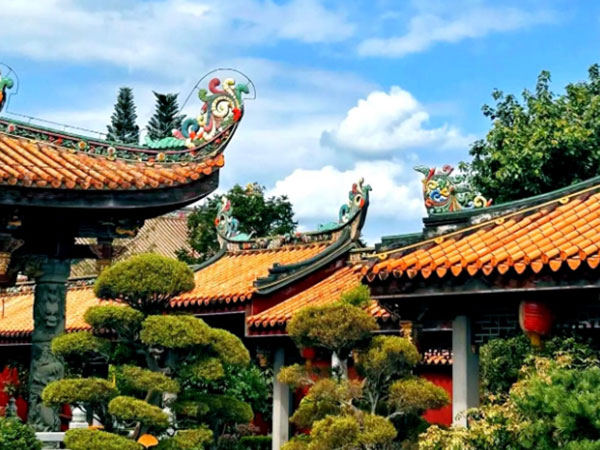
Unlike some heavily reconstructed temples, Kaiyuan Temple still retains a strong sense of historical authenticity. Walking through the courtyards, visitors can observe architectural details from different dynasties coexisting harmoniously within the same complex.
The Heavenly Kings Hall
One of the greatest treasures of Kaiyuan Temple is the Heavenly Kings Hall of Kaiyuan Temple.
This hall is considered one of the largest surviving Heavenly Kings Halls in China. Measuring eleven bays wide, it is especially famous for its pure wooden mortise-and-tenon structure, built without nails.
The hall’s complex “stacked bracket” system, with multiple layers of dougong brackets rising upward, demonstrates remarkable engineering wisdom from the Song Dynasty. Despite surviving centuries of typhoons, earthquakes, and wars, the structure remains stable today.
Inside the hall are statues of Maitreya Buddha, the Four Heavenly Kings, and Skanda Bodhisattva. In front of the hall stand four Tang Dynasty stone sutra pillars carved with Buddhist scriptures such as the “Buddha Crown Victorious Dharani Sutra.” These are among the oldest surviving Buddhist stone carvings in eastern Guangdong.
For architecture lovers, the Heavenly Kings Hall alone is worth the visit.
Mahavira Hall
The Mahavira Hall of Kaiyuan Temple is the central worship hall of the monastery. The hall features a double-eaved hip roof and preserves elements of Tang Dynasty timber-frame architecture. Its spacious interior, supported by ancient beam structures, creates a solemn and majestic atmosphere.
Inside are statues of the Buddhas of the Three Ages and the Eighteen Arhats. One particularly impressive treasure is the thousand-year-old wooden Thousand Buddha Pagoda, an extraordinary example of traditional Buddhist wood carving craftsmanship.
Another highlight is the group of 78 Tang and Song Dynasty stone carvings embedded into the terrace railings in front of the hall. These carvings depict stories from the life of Buddha, mythical beasts, and traditional decorative motifs, representing some of the finest ancient stone art in Chaozhou.
The Tang Dynasty stone sutra pillar in front of the hall is also regarded as one of the temple’s most important relics. Its muscular guardian figure carvings remain vivid after centuries of weathering.
Sutra Library and Ancient Banyan Trees
Behind the Mahavira Hall stands the Sutra Library, which houses many precious Buddhist scriptures.
Among its treasures is a complete edition of the Buddhist Canon granted by Emperor Qianlong of the Qing Dynasty, consisting of 724 cases and over 7,000 volumes. The library also preserves the famous “Huayan Blood Sutra,” hand-copied in blood by Master Zhicheng during the Republican period.
In front of the library stand two massive banyan trees dating back to the Song Dynasty. Their huge canopies provide shade across the courtyard and create one of the most photogenic scenes in the temple.
The combination of red walls, ancient trees, and quiet courtyards creates a timeless atmosphere that photographers especially love.
Great Compassion Hall
Located on the eastern side of the temple, the Great Compassion Hall was completed in 2005.
The hall is famous for housing 86 white marble statues representing different manifestations of Avalokitesvara (Guanyin Bodhisattva). It is regarded as China’s first hall dedicated to such a large collection of marble Guanyin statues.
The elegant sculptures and peaceful environment make this hall one of the temple’s most serene spaces.
For centuries, Kaiyuan Temple has served as the spiritual center of Buddhism in eastern Guangdong. Historically, the temple welcomed traveling monks, hosted Buddhist lectures, and organized major religious ceremonies. Because Chaozhou was an important port connected to the Maritime Silk Road, the temple also played a role in Buddhist cultural exchange between China and overseas regions.
The temple contains relics from multiple dynasties, including:
These cultural relics provide valuable materials for studying Chaoshan history, Buddhist culture, and traditional craftsmanship.
Even today, Kaiyuan Temple remains closely connected to local Chaoshan traditions. Important events such as the Bathing Buddha Festival, Lunar New Year blessing ceremonies, Lantern Festival lamp offerings, and Water-Land Dharma Assemblies attract both local worshippers and overseas Chaoshan communities.
Classic Central Axis Route (Highly Recommended)
Mountain Gate → Heavenly Kings Hall → Mahavira Hall → Sutra Library → Jade Buddha Hall
This route covers the temple’s most important buildings, relics, and architectural highlights.
While exploring, pay attention to:
Compared with the central halls, the eastern and western side areas are usually less crowded and ideal for appreciating the temple’s peaceful Zen atmosphere.
Photography Tips
Kaiyuan Temple is one of the best places in Chaozhou for traditional Chinese architectural photography.
The best lighting times are:
08:30–10:00 in the morning
16:00–18:00 in the late afternoon
At these times, sunlight softly illuminates the red walls, tiled roofs, and banyan trees, creating excellent conditions for photography.
The side courtyards are especially suitable for capturing quiet scenes of ancient architecture with fewer tourists.
Half-Day Route
Kaiyuan Temple → Paifang Street snacks → Guangji Bridge sunset and light show
After visiting the temple, travelers can explore Paifang Street to taste local specialties such as: Beef balls, Chaozhou rice rolls, Preserved fruit snacks etc.
Then walk about five minutes to Guangji Bridge to watch the famous floating bridge opening and evening light show.
Full-Day Route
Morning at Kaiyuan Temple → Afternoon at Han Wen Gong Temple → Evening at Guangji Bridge → Overnight near Paifang Street
This route combines religion, history, architecture, and night scenery, making it one of the best ways to experience Chaozhou Ancient City in one day.

 English