Your China & Yunnan Travel Experts

 Ask a Question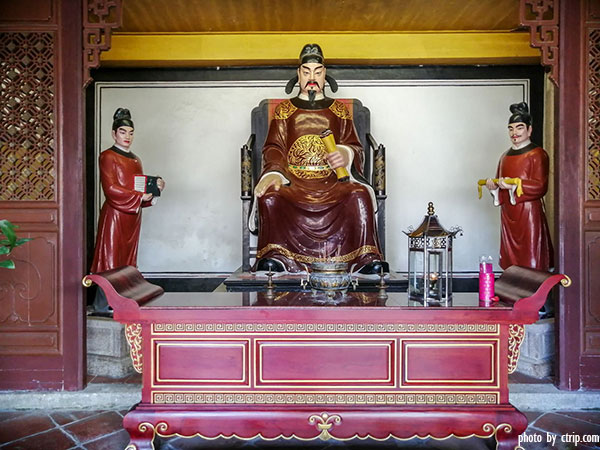
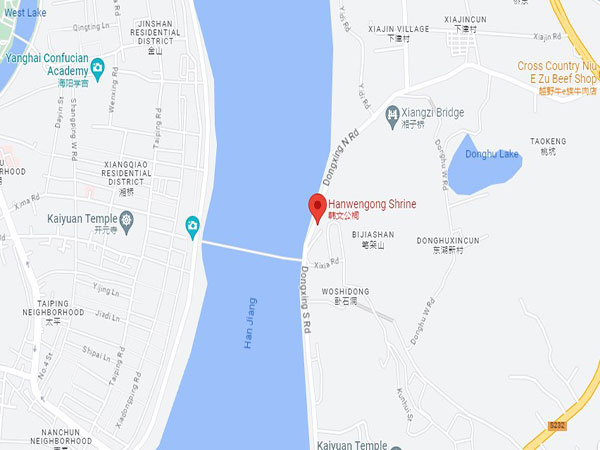
No. 18 Dongxing North Road, Xiangqiao District, Chaozhou City, Guangdong Province
A great place to enjoy the beautiful scenery of Chaozhou, must-see attraction in Chaozhou
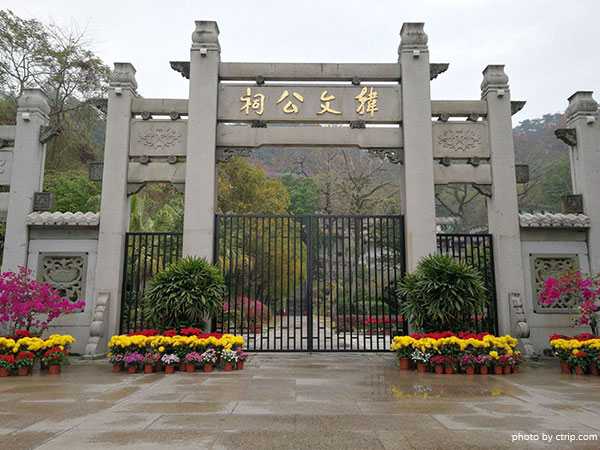
Located in Chaozhou, Guangdong province, Hanwen Gong Shrine (Hanwen gongci) is the oldest and best-preserved temple dedicated to Han Yu, a famous writer, thinker, and politician of the Tang dynasty (618-907 AD). Not only can you enjoy the essence of ancient Chinese architecture here, but also a great place to enjoy the beautiful scenery of Chaozhou.
Han Yu (768-824 AD) was one of the most influential figures in Chinese literary history. He was a master of prose and poetry, and a leader of the Classical Prose Movement, which advocated the use of simple and elegant language instead of the ornate and artificial style that prevailed at the time. He was also a Confucian scholar who promoted the revival of traditional values and opposed Buddhism and Daoism. He wrote many essays, poems, letters, and memorials on various topics, such as politics, education, morality, history, and art.
Han Yu was also a loyal and outspoken official who often criticized the corruption and incompetence of the court. He was famous for his memorial against the worship of Buddha's relics, which he considered to be superstitious and harmful to the state. Because of this, he was demoted to be the governor of Chaozhou, a remote and backward region in southern China.
However, Han Yu did not despair or resent his fate. Instead, he devoted himself to improving the conditions of Chaozhou and its people. He built schools, repaired waterworks, freed slaves, eradicated crocodiles, and promoted agriculture and handicrafts. He also introduced the advanced culture and learning of the central plains to this frontier area. He won the respect and admiration of the local people, who regarded him as their teacher and benefactor.
The Hanwen Gong Shrine was built to commemorate Han Yu's achievements and virtues. It was first established in 999 AD by Chen Yaozuo, a local official who admired Han Yu. It was originally located near the Confucian temple in the city center. In 1090 AD, it was moved to seven miles south of the city by Wang Di, another official who praised Han Yu. Su Shi, a famous poet and friend of Han Yu, wrote an inscription for the shrine.
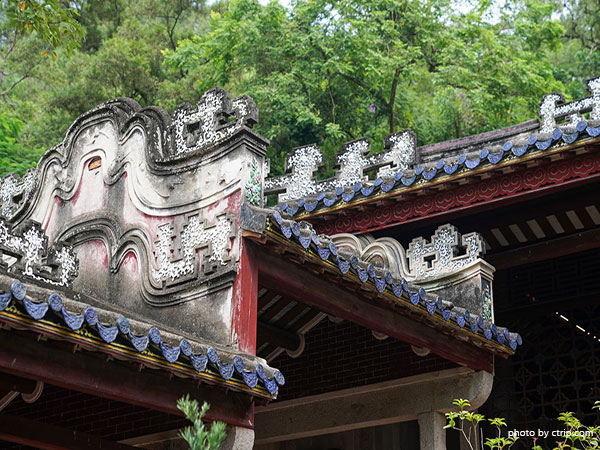
In 1189 AD, Ding Yunyuan, the governor of Chaozhou at that time, decided to relocate the shrine to its current location on the east bank of the Han River (named after Han Yu) at the foot of Bijiashan Mountain (also named after Han Yu). He chose this place because it was where Han Yu often visited and planted an oak tree during his stay in Chaozhou. The shrine has been renovated and expanded several times by later generations, but it still retains its original layout and style.
The shrine covers an area of about 20,000 square meters and consists of several buildings and gardens. The main building is the Grand Hall, where a statue of Han Yu sits in the center. On both sides of the hall are stone tablets with inscriptions by famous scholars from different dynasties. The overall architectural style is simple and elegant, solemn and dignified, and integrates the architectural style of tidal and Cantonese.
Located on the left side of the Grand Hall, Tianshui Garden is a Chinese style courtyard with compact layout and pleasant scenery. It was built in memory of Zhao De. It is a classical garden with pavilions, bridges, ponds, rockeries, and plants. It is said that Han Yu used to write poems and enjoy nature here. The garden also has a stone stele with a poem by Wang Dabao (a contemporary poet) praising Han Yu's oak tree.
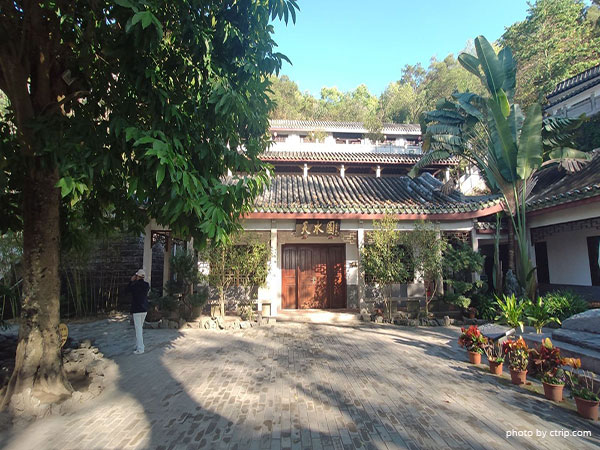
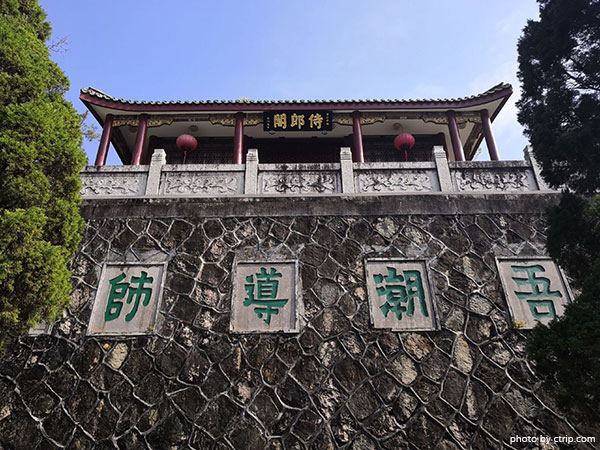
Another highlight of the shrine is the Shilang Pavilion (Minister Pavilion), which is located on top of Bijiashan Mountain behind the Grand Hall. It is a two-story wooden building that offers a panoramic view of Chaozhou city and the Han River. It is named after Han Yu's official title as Minister of Rites. It is also where Han Yu's oak tree stands today. The tree is over 1,000 years old and has a trunk diameter of 2.5 meters. It is considered to be a symbol of Han Yu's spirit and legacy.
Besides these main attractions, there are also other interesting places to explore at the shrine:
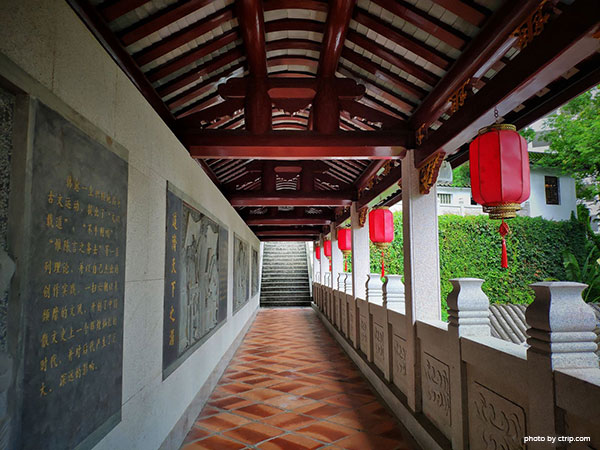
The "Tian Nan Bei Sheng" (Southern Monumental Gallery) is a long corridor with over 200 stone tablets from different periods engraved with poems and essays about Han Yu. It is an art corridor with great appreciation value.
The Han Yu Memorial Hall is a museum that displays Han Yu's relics, manuscripts, portraits, and introductions. The exhibition follows the deeds of Han Yu’s life of integrity and diligence as the main line, and incorporates various forms of Chaozhou folk art, such as Chaozhou embroidery, paper-cutting, clay sculpture, ceramics, songbooks, etc. The content is rich and vivid.
The shrine is easily accessible by public transportation. You can take the bus 104 or 110, Chaoan-Fenghuang (phoenix) line, Chaoan-Wenci line, and get off at Han Wen Gong Temple station
51-Step Pilgrimage Staircase: The entrance features a straight stone staircase with 51 steps, symbolizing Han Yu’s exile to Chaozhou at the age of 51. Each step reflects the respect of the local people for Han Yu. From the bottom of the stairs, you can photograph the Grand Hall against a blue sky—an ideal shot for travelers and photographers.
Grand Hall of the Shrine: The core building houses a seated statue of Han Yu. The beams and walls are adorned with inscriptions and plaques from renowned scholars, including phrases like “Reviving Literature Through Eight Dynasties” and “The Literary Ancestor for a Hundred Generations”. The walls feature light green bricks similar to those in Guangzhou’s Chen Clan Ancestral Hall, showcasing the craftsmanship of Lingnan architecture.
Millennium Stone Steles & Tian Nan Bei Sheng Corridor: The shrine preserves over 40 ancient steles from the Ming and Qing dynasties. Highlights include a reproduction of Su Shi’s calligraphy “Chaozhou Hanwen Gong Shrine Stele”, celebrated for both its literary and artistic value. The Tian Nan Bei Sheng Corridor, spanning 89 meters, contains contemporary inscriptions and calligraphy on red pillars and white walls, making it a perfect spot for photography in traditional attire.
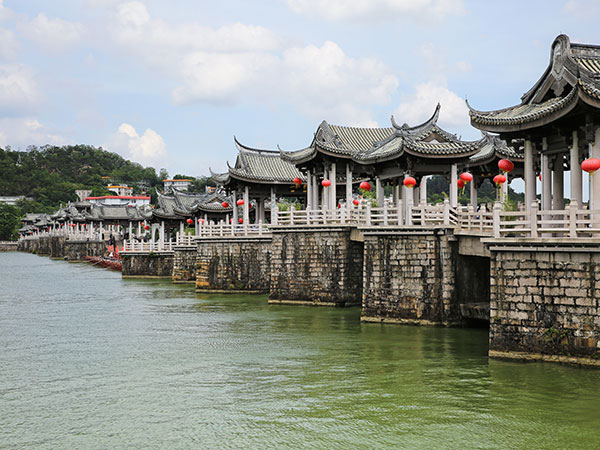
Shilang Pavilion (Minister Pavilion): As the highest point of Hanwen Gongci Shrine, climbing the pavilion provides unobstructed views of the Han River, Guangji Bridge, and Chaozhou Ancient City. It is especially photogenic at sunset, making it a top location for capturing the cityscape and river in a single frame.
Han Yu’s Oak Tree: One of the Eight Scenic Spots of Chaozhou, this ancient oak tree is associated with Han Yu. Historically, locals believed the flowering of the tree predicted success in the imperial examinations. The tree’s majestic form provides a perfect backdrop for traditional-style photos.
Recommended Tour Route
Entrance Staircase → Paifang Archway → Tian Nan Bei Sheng Corridor → Grand Hall → Han Yu Memorial Hall → Tianshui Garden → Shilang Pavilion → Yun Yuan Pavilion → Yao Zuo Pavilion → Return via Grand Hall

 English