Your China & Yunnan Travel Experts

 Ask a Question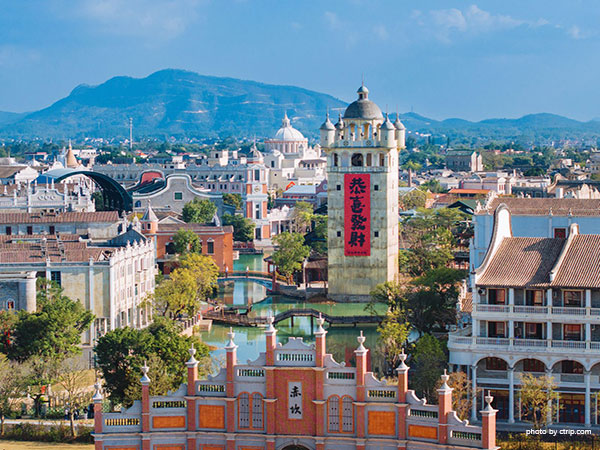
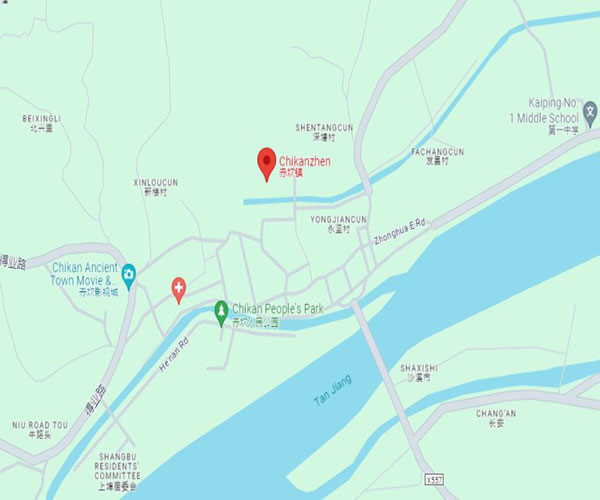
18 Guzhen Avenue, Chikan Town, Kaiping, Jiangmen City, Guangdong Province
The only ancient town in China themed around overseas Chinese culture; your ideal vacation spot in Guangdong.
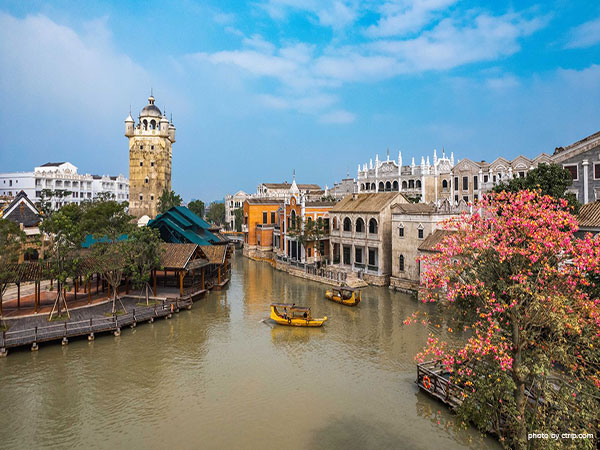
Chikan Overseas Chinese Town is a historical town themed around the culture of overseas Chinese. It is also a comprehensive tourist resort in Jiangmen City, Guangdong, offering sightseeing, leisure, business exhibitions, cultural creativity, and an authentic old town experience. The town is known for its large and well-preserved arcade buildings, rich overseas Chinese culture, vibrant street life, exciting cultural performances, and comfortable homestays and hotels, making it an ideal vacation spot in Jiangmen.
ChiKan Overseas Chinese Town, also known as ChiKan Ancient Town, is a well-preserved historical arcade town located in Kaiping, Jiangmen, Guangdong — famous as the hometown of many overseas Chinese.
Its history dates back to the mid-17th century, when two large clans settled here and formed a busy market town along the Tanjiang River. From the late 19th to early 20th century, many local people went abroad to make a living in North America and Southeast Asia. After achieving success, they returned with money and Western architectural ideas, building more than 600 arcade buildings in a unique Sino-Western style. These long, continuous arcade streets once made ChiKan a prosperous commercial and cultural center, known locally as “Little Canton”.
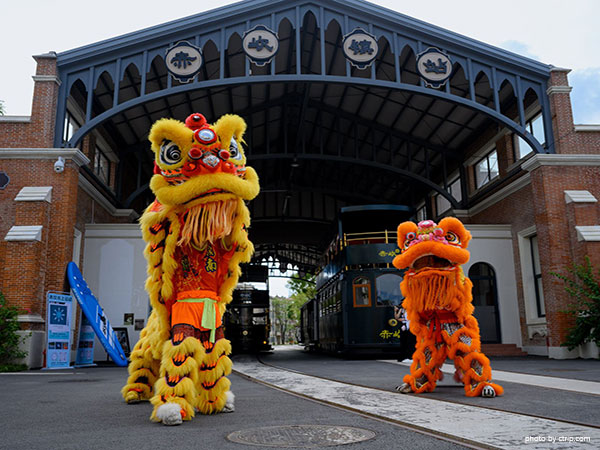
In recent years, the ancient town has been carefully restored and developed into a cultural tourism resort. Visitors can walk along the historic arcade streets, visit the century-old libraries built by overseas Chinese clans, enjoy traditional cultural performances, and experience the life and stories of early overseas Chinese. By day, it shows the charm of Lingnan architecture; by night, it becomes even more attractive with light shows, water screen performances and intangible cultural heritage displays.
Today, ChiKan is not only a popular tourist attraction but also a living museum of overseas Chinese culture, connecting the history of migration, hard work and hometown nostalgia.
Situ Family Library
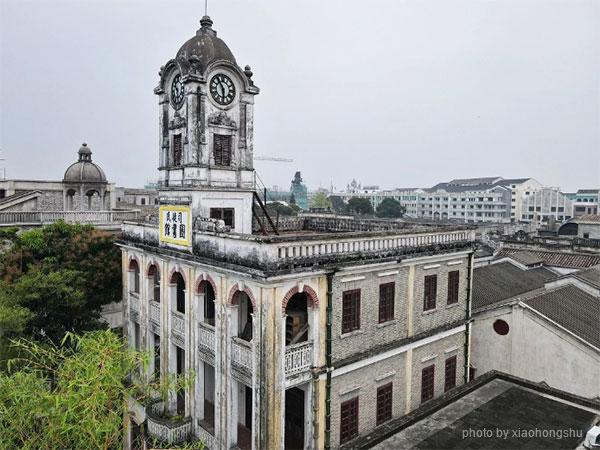
The Situ Family Library, one of the two iconic family libraries in Chikan, was completed in 1925 and is located at the eastern end of the Xiacheng District, on the banks of the Tanjiang River. The three-story Western-style building blends Portuguese influences with Lingnan traditions, featuring yellow walls and stained-glass windows, exuding elegance and solemnity. The clock tower on the roof houses a mechanical clock imported from Boston, USA, which has accurately kept time for nearly a century. The library houses nearly 30,000 books, including classics such as the *Siku Quanshu* and *Wanyou Wenku*, and also treasures such as the "Dragon" character handwritten by Empress Dowager Cixi. As the cultural center of the Situ family, it once founded the *Jiaolun Yuebao* (Monthly Journal of Education), symbolizing the overseas Chinese's emphasis on education and their connection to their homeland. It remains open to the public today, continuing its mission of knowledge dissemination and cultural transmission.
The Guan Clan Library
located across the river from the Situ Clan Library, was built in 1931 on the west bank of the Upper Town, covering an area of 709.5 square meters. A three-story reinforced concrete structure, the main entrance features two tall Roman columns, and a striking clock tower sits atop the building, creating an imposing overall appearance. It was built with donations of over 50,000 silver dollars from overseas Chinese in Canada, and the library's name was inscribed by a renowned modern calligrapher. The library houses over 16,000 books, including rare classics such as the Twenty-Four Histories, and also features an exhibition hall showcasing prominent members of the family. The architectural details blend Chinese and Western styles: Western arches and carved railings coexist harmoniously with Chinese courtyards and stucco decorations. The two libraries stand facing each other, their bells chiming in unison, creating a unique "cultural duet" that bears witness to the century-long rivalry and glory of the two families, symbolizing the pinnacle of overseas Chinese culture in the region.
European Style Street
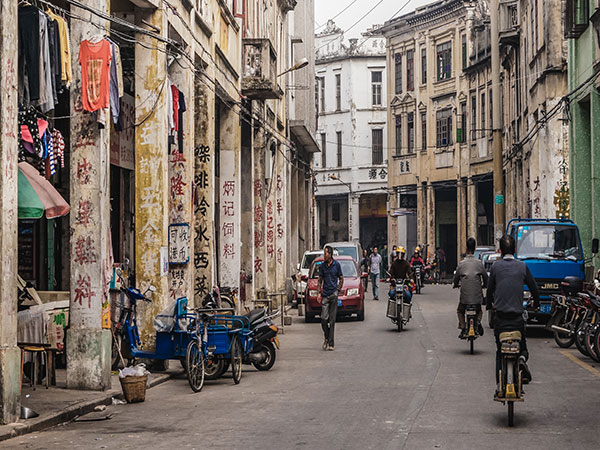
Chikandixi Road (European-style Street) is the essence of the ancient town, perfectly preserving its 1920s appearance. More than 600 arcade buildings stretch for 3 kilometers on both sides of the street, forming the largest and best-preserved cluster of arcade buildings in the country. Designed by returned overseas Chinese, the buildings blend European and American elements with Lingnan arcade architecture: Roman columns, Gothic spires, Baroque reliefs, and Chinese stucco, stained glass windows, and sliding doors intertwine, each building's facade unique. The ground-floor corridors, once bustling shops, still retain their original shop signs. Strolling here feels like stepping back a century to "Little Guangzhou," with classic streetlights, vintage trams, and weathered walls creating a nostalgic atmosphere—the perfect place to experience both Chinese and Western architectural art and the history of overseas Chinese.
Jinghui Building
Jinghui Building, located on the European-style street, is the Chikan History and Culture Museum and a landmark arcade building. Measuring 45 meters long and 5 meters wide, this three-story arcade structure is named after Zhang Jinghui, a renowned doctor from the Republic of China era. The first floor houses the arcade museum, displaying over 500 artifacts: 1920s stocks, early cash registers, Republic of China wedding items, and relics from the War of Resistance against Japan, vividly showcasing a century of history. The second floor retains the original appearance of Zhang Jinghui's former residence, displaying original Republic of China furniture and exuding an elegant overseas Chinese atmosphere. The building is a typical arcade residence: double living rooms, double bedrooms, an open staircase, vertical skylights, and a bridge-style courtyard design. It is the only place that comprehensively showcases the history of Chikan, from commercial prosperity to the daily lives of ordinary people, from the legends of overseas Chinese to the vicissitudes of the times, encapsulating a century of vicissitudes in the ancient town.
Film and Television City
Completed in 2005, Chikan Film City covers an area of 60,000 square meters and is a renowned film and television production base. Built in the style of the 20th-century Republic of China era, it faithfully recreates Lingnan market towns, Republican-era streets, shops, and courtyards, exuding a retro atmosphere. Thanks to its unique blend of Chinese and Western architectural styles, it has served as a filming location for over 80 films and TV series, including the “Goose City” scenes in Let the Bullets Fly, the martial arts sequences in *The Grandmaster*, and the bustling streets in *Drunken Master II*. The town preserves numerous classic settings, including a vintage government office, a money exchange, a theater, and shops, allowing visitors to take photos from the exact same angles as the stars. The film studio seamlessly blends with the ancient town, where authentic architecture intertwines with cinematic sets. It serves as both a natural film set and an immersive journey through time, vividly bringing to life the history of the overseas Chinese community and the charm of the Republican era.
Canada Village
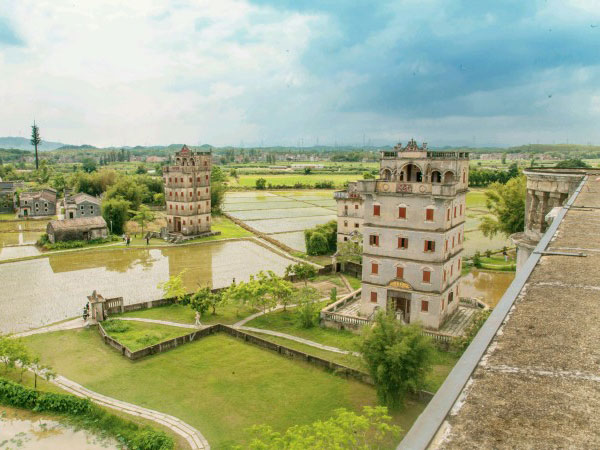
Canadian Village (Yaohuafang) is located beside National Highway 325. Built between 1923 and 1936 by overseas Chinese returning to their ancestral homeland, all 13 buildings were funded by the Canadian Chinese community. The village boasts a highly fusion of Chinese and Western styles: Roman columns, arched windows, maple leaf reliefs, and Chinese stucco, altars, and courtyards coexist. The "Four Good Buildings" (stilted buildings) at the village entrance and the Nanyang-style "Chunru" house are landmarks, with an 80-year-old betel nut tree in front bearing witness to the passage of time. The road design is scientific, with a higher central section and lower sides featuring drainage ditches. Due to the subsequent emigration of all residents to Canada, the village became almost entirely vacant, yet the buildings remain well-preserved, creating a unique "abandoned ancient village" landscape. It is a living example of overseas Chinese "returning to their roots" and "nostalgia for a foreign land," perfectly showcasing how overseas experiences reshape the architecture and culture of their hometown.
Arcade Buildings
The arcades (arcade buildings) of Chikan are the soul of the ancient town, with over 600 buildings stretching for about 3 kilometers along the Tanjiang River, Dixi Road, and Zhonghua Road. Built in the 1920s with funds raised by overseas Chinese, they blend traditional Lingnan style with European and Southeast Asian styles, making them a veritable "open-air architectural museum." The buildings are structured with shops on the ground floor and residences on the upper floors: the ground floor corridors serve as pedestrian walkways, providing shade and shelter from the rain; the second and third floors are living spaces. The facades are exquisitely beautiful: Baroque scrolls, Gothic spires, Roman arches, and Chinese stucco floral and bird motifs, stained glass windows, and roof tile decorations coexist. Almost every roof is unique: Western-style pitched roofs, Chinese "晋" (Jin) character tile roofs, Baroque decorative roofs, and inlaid stained glass wooden windows. The overall structure is magnificent yet rich in detail, representing the largest and best-preserved arcade building complex in China, bearing witness to the history of overseas Chinese struggle and cultural integration.
1. Boat Route: Starting from the entrance, there are three routes to choose from for touring: Entrance to Upper Town, Entrance to Lower Town, Upper Town to Lower Town;
2. Tram: Starting from the entrance, the route circles the outer streets of Chikan Old Town to appreciate the historical street scenery;
3. Walking Tour: From Traditional Handicraft Street to Culture Street, European and American Style Street, Fashion Shopping Street, Traditional Hotel Street, Workshop Street, and Nanyang Style Street, the tour integrates into the bustling street life along a historical timeline.
From Guangzhou Baiyun Airport to Chikan Old Town: Depart from Guangzhou Baiyun Airport to T2 Terminal Bus Station or T1 Terminal B3 Gate Airport Express Service Counter to buy tickets and take the bus. The route passes through Shuikou Bus Station and arrives directly at Kaiping Yici Bus Station. Take bus 606 to reach Chikan Old Town parking lot.
From on request
From on request
From $ 364

 English
