Your China & Yunnan Travel Experts

 Ask a Question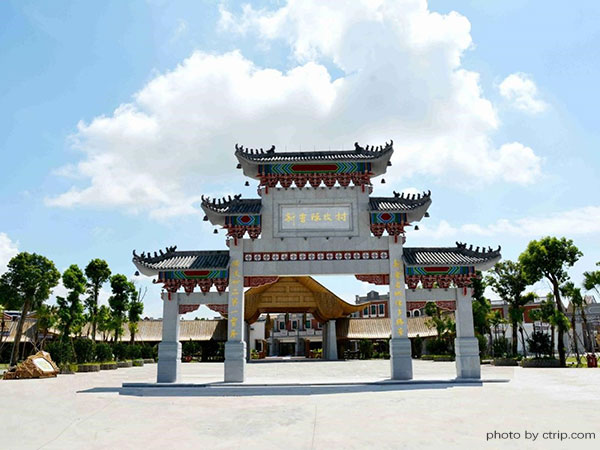
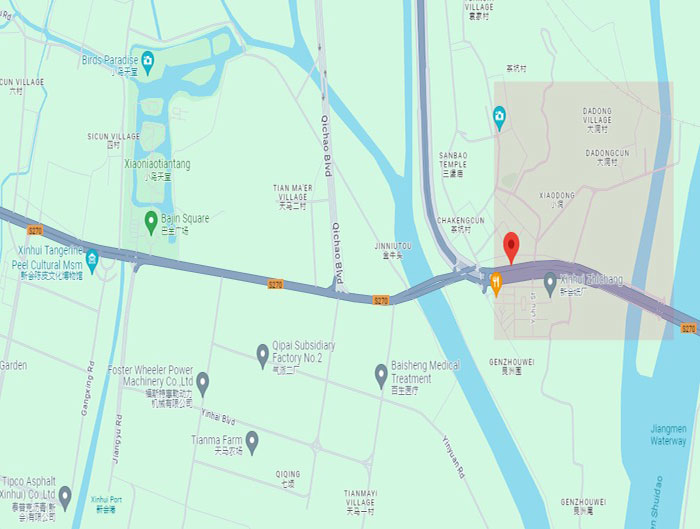
No. 9, East Yinhu Avenue, Xinhui District, Jiangmen City, Guangdong Province
Enjoy the beautiful scenery of Chenpi, taste the delicious dishes of Chenpi.
Jiangmen Chenpi Village, (also known as Tangerine Peel Village) located in Xinhui District of Jiangmen City, Guangdong Province, is a large-scale comprehensive enterprise that integrates Chenpi industry service platform, characteristic catering, leisure and health, and cultural tourism. It covers an area of 250,000 square meters. Jiangmen Chenpi Village takes "spreading Xinhui Chenpi culture to the world and sharing Chenpi health value" as its mission, and is committed to building an ecological platform for the integration of the three industries of Xinhui Chenpi. It is a national characteristic landscape tourism village.
Chenpi (陈皮) is a specialty of Xinhui, a district of Jiangmen city in Guangdong province, and has a history of over 700 years. It is a traditional Chinese product made from dried citrus peel, usually from tangerines or mandarin oranges. It is used as a seasoning in Chinese cooking and traditional medicine. It has a bitter and sweet flavor and a fragrant aroma. Chenpi is often soaked and rinsed before use, and sometimes the white pith is scraped off. Chenpi can be added to dishes such as soups, stews, stir-fries, desserts, and teas to enhance the flavor and health benefits.
In Xinhui, almost every household will dry Chenpi on the ground, hang it at the end of the stove, put it in the soup to add fragrance, and add it to the dishes to enhance the flavor. It can be said that the life of Xinhui people is surrounded by the fragrance of Xinhui Chenpi.
Chenpi Culture Experience Hall
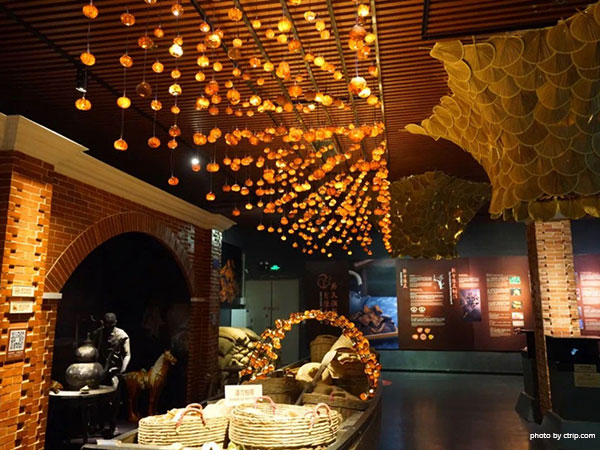
Chenpi Culture Experience Hall is located in Chenpi Village. It is a new immersive live-action film exhibition hall with Chenpi aroma as the theme, with an investment of more than 10 million yuan. Here, visitors can travel through thousands of years and feel the long history of Xinhui Chenpi culture. The hall has bamboo light tunnel, holographic projection, Chenpi Museum and other exhibition areas, showing the various aspects of Xinhui Chenpi, such as planting, processing, storage, trading, application, etc., as well as the historical stories, folk legends, intangible cultural heritage skills of Xinhui Chenpi, etc., making visitors feel the charm of Chenpi.
987 Food City
987 Food City is a food paradise that integrates Chenpi banquet and overseas Chinese characteristic cuisine, Chenpi cultural and creative, and commerce. Here, visitors can taste the varied and medicinal Chenpi banquet, as well as the local cuisine of Xinhui, such as fried river noodles, claypot rice, glutinous rice chicken, etc. At the same time, visitors can also buy various Chenpi products, such as Chenpi tea, Chenpi candy, Chenpi sauce, etc., as well as Chenpi cultural and creative products, such as Chenpi lanterns, Chenpi bookmarks, Chenpi handicrafts, etc.
Gangzhou Ancient Alley
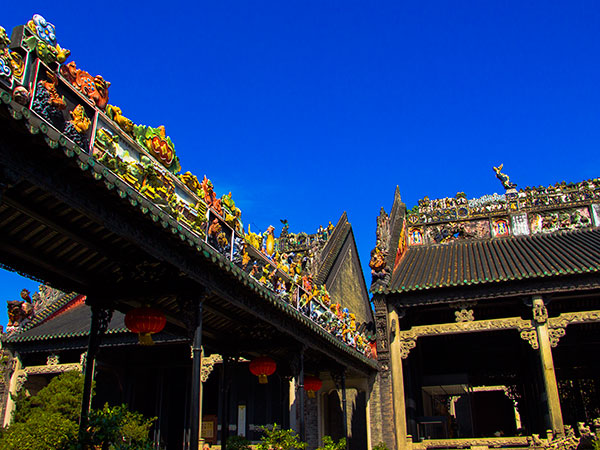
Xinhui, formerly known as Gangzhou, is a famous historical and cultural city in southern Guangdong. Gangzhou Ancient Alley is an ancient street area with the theme of showing the thousand-year history of Xinhui Chenpi and the regional culture of ancient Gangzhou. It fully excavates and displays the traditional historical stories, characteristic food culture, folk skills, historical stories, etc. of Xinhui, creating an interactive experience landscape with historical value, cultural color and folk characteristics. You can enjoy the ancient architecture, taste the ancient flavor snacks, watch the folk performances, participate in the cultural activities, and feel the ancient charm of Xinhui.
Baili Bamboo Forest Hall
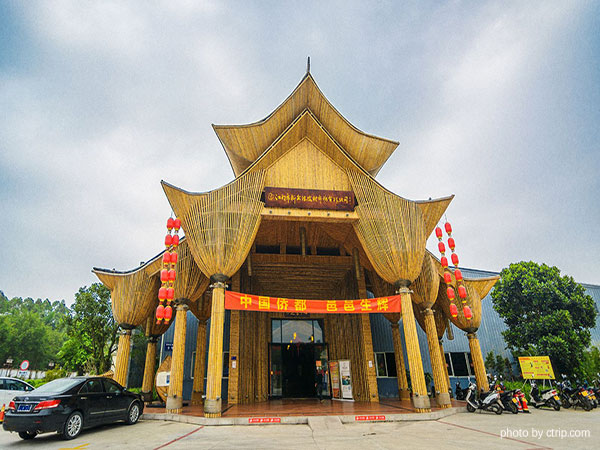
Baili Bamboo Forest Hall is a building that uses the ecological color and natural texture of bamboo materials, skillfully integrates the regional culture of Xinhui with the traditional garden aesthetics, and builds a bridge between the historical culture and business places of Xinhui Chenpi. The hall has Chenpi investment and trading center, Chenpi school, Chenpi tea art hall and other functional areas, providing visitors with professional Chenpi investment consultation, Chenpi knowledge popularization, Chenpi tea art appreciation and other services, allowing visitors to feel the value of Chenpi in the bamboo forest.
The best time to visit Chenpi Village is primarily during autumn/winter and spring. Autumn/winter (October to February of the following year) is the most ideal period, with cool temperatures and moderate humidity, perfect for outdoor activities. This is also the peak season for drying tangerine peels; villagers spread selected citrus peels out to dry in the sun, filling the village with a subtle citrus aroma and creating a unique rural landscape. Visitors can not only observe this traditional craft but also experience the fun of drying tangerine peel themselves, feeling the authentic rural life.
Spring (March to May) offers a different kind of beauty. Chenpi Village is vibrant in spring, with crops and fruit trees sprouting in the fields, covering the entire village in greenery. The air is fresh, and the sunlight is soft, making it perfect for photography and hiking. During this time, you can stroll along paths shaded by flowers and trees, enjoying the pastoral scenery and experiencing the village's tranquility and harmony with nature. Furthermore, there are relatively fewer tourists in spring, making the travel experience more leisurely and less crowded.
The cuisine of Chenpi Village fully embodies the unique aroma of dried tangerine peel and the rustic flavors of local farmhouses. Firstly, stewed chicken and duck with dried tangerine peel are the most representative local specialties. Chefs stew the meat with dried tangerine peel, resulting in tender, fragrant meat that possesses both medicinal value and a rich, rustic flavor. Secondly, candied tangerine peel and tangerine peel cake are sweet treats with a slightly sweet taste and a refreshing citrus aroma, perfect as souvenirs for friends and family or for personal enjoyment, allowing you to experience the diverse uses of dried tangerine peel in cooking. In addition, the village's farm-style dishes are worth trying, such as steamed fish, stir-fried vegetables, and tofu, made with fresh local ingredients, offering a naturally refreshing taste and allowing you to savor authentic rural flavors. In short, the food in Chenpi Village not only satisfies the palate but also allows visitors to better understand the important role of dried tangerine peel culture in local life.

From on request
From on request
From $ 364

 English