Your China & Yunnan Travel Experts

 Ask a Question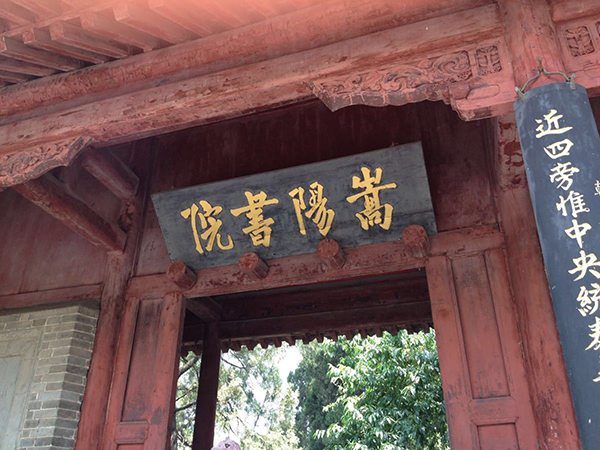
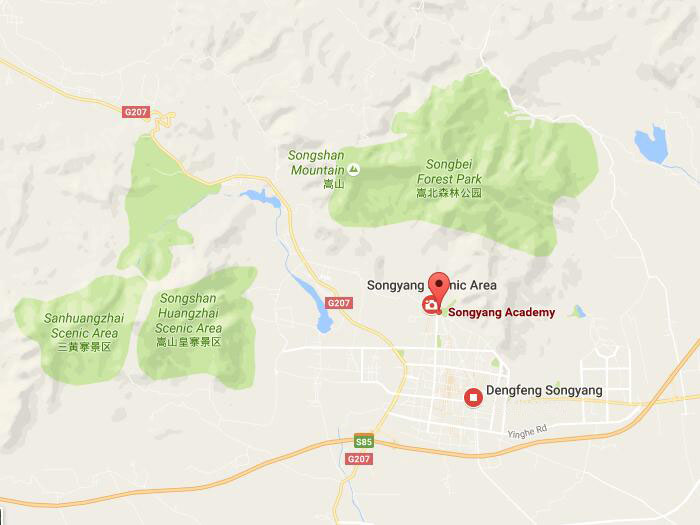
North of Dengfeng, Dengfeng 450000, Henan Province, China.
Top 4 ancient academies in China.
Songyang Academy was one of the oldest academies of higher learning in the Song Dynasty in China and the first of the four academies of the Northen Song Dynasty in China. The other three are Yingtian Academy in Henan Province, Yuelu Academy in Hunan Province and Bailudong Academy in Jiangxi Province. It is famous for its rationalistic Confucian philosophical school. It was originally built in the Northern Song Dynasty in 484 in North Wei Dynasty, for Buddhism activities. Then it was changed to be a Taoism site by Emperor Yang of Sui (569-618). Then it was renamed as Songyang Academy by Emperor Renzong of the Song Dynasty in 1035. Since then, it has been a place for historical eminent people to teach. Famous scholars in Song Dynasty, such as Cheng Hoa, Cheng Yi, Sima Guang, Fan Zhongyan and Zhu Xi, etc., once gave lectures here. There is a 4,500-year-old cypress, granted the title of Great General and Senior General by Emperor Wu of the Western Han Dynasty (206 BC-25 AD), seldom in the world.
The history of the Songyang Academy is a microcosm of China's religious and philosophical evolution, uniquely transitioning through the country's "Three Teachings."
Buddhist Origins (Northern Wei Dynasty, 484 AD): The site was originally established as the Songyang Temple (Songyang Si), a center for Buddhist activities during the Northern Wei Dynasty, a period when Buddhism flourished under imperial patronage.
Taoist Interlude (Sui Dynasty, 6th-7th Century): Reflecting the shifting religious currents of the court, Emperor Yang of the Sui Dynasty (569-618) repurposed the complex, converting it into a Taoist site known as the Songyang Abbey (Songyang Guan).
Confucian Apogee (Northern Song Dynasty, 1035 AD): The site reached its zenith in 1035 when Emperor Renzong of the Song Dynasty bestowed upon it the name "Songyang Academy" and designated it as an official center of higher learning. This marked a pivotal moment where Confucianism reasserted itself as the dominant state philosophy. The academy shed its earlier religious identities to become an exclusive bastion of Confucian scholarship, a role it maintained for centuries.
The Songyang Academy's unparalleled reputation was forged by the intellectual giants who taught and developed their philosophies within its halls. During the Northern Song Dynasty, it became the primary teaching ground for the brothers Cheng Hao and Cheng Yi, the founding masters of the Luo School of Confucianism. Their work laid the essential groundwork for what would become known as Neo-Confucianism—a philosophical system that reinvigorated classical Confucian thought with new metaphysical depth.
They were followed by a constellation of other luminaries. The great statesman and historian Sima Guang is said to have written parts of his monumental history, Zizhi Tongjian, here. The renowned poet and reformer Fan Zhongyan also lectured at the academy. Later, the synthesizing genius Zhu Xi, whose commentaries became the basis of the imperial civil service examinations for centuries, further developed and propagated the Cheng brothers' ideas. At its peak, the academy attracted hundreds of students who gathered to study the "Classics" and debate the principles of "Principle" (Li) and "Material Force" (Qi), forming one of the most important intellectual communities in Chinese history.
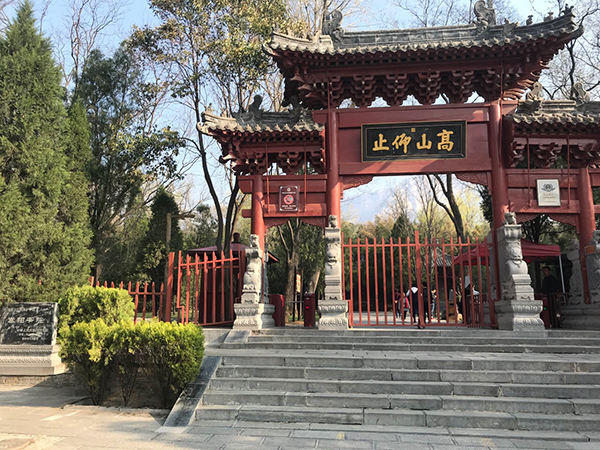
The academy complex is a superb example of traditional Chinese academic architecture, designed to foster contemplation and learning. The layout is symmetrical and orderly, reflecting the Confucian value of harmony. Visitors pass through a series of gates and courtyards, each leading to a hall with a specific function:
The overall ambiance is one of "simplicity and elegance" (pǔsù dànyǎ), as described in historical texts. The architecture, with its grey bricks, dark wood, and sweeping tiled roofs, blends humbly with the natural landscape of Mount Song, creating an environment perfectly suited to scholarly pursuit.
Beyond its man-made structures, the academy grounds are home to living monuments of even greater antiquity. The most famous are the "Great General Cypresses" (Dàjiāngjūn Bǎi). According to legend, when Emperor Wu of the Western Han Dynasty (206 BC-25 AD) visited, he was so impressed by the size and age of the cypresses that he enfeoffed them with noble titles: the largest as the "Great General" and two others as the "Second General" and "Third General."
Today, only two of these titans remain. The "Second General" is a colossal tree, its trunk split into multiple sections yet still thriving, a powerful symbol of resilience. Its estimated age of 4,500 years means it was already ancient when Confucius walked the earth. These trees are not merely scenic; they are sacred symbols of longevity and endurance, having silently witnessed the entire history of the academy, from its Buddhist founding to its zenith as a Confucian center.
【Chinese name】: 嵩阳书院 (Sōngyáng Shūyuàn)
【Recommended time to stay】: around 1 -2 hours
【How to get there】: you may take Bus Route No.2 or 6 and get off at the terminal, and you can not miss it. It takes about 10 minutes.
As Part of a Day Trip: The Songyang Academy is a key stop on the "Dengfeng Cultural Circuit." A highly efficient day trip can include the Shaolin Temple (morning), followed by the Songyang Academy (afternoon), and optionally the Astronomical Observatory to fully appreciate the region's status as the "Center of Heaven and Earth."
Practical Tips:
Combine with Shaolin: The academy is located very close to the Shaolin Temple. The contrast between the martial energy of Shaolin and the profound scholarly tranquility of Songyang makes for a perfectly balanced cultural experience.
Hire a Guide: To fully appreciate the philosophical and historical nuances of the academy, consider hiring a local guide at the entrance. Their stories will bring the stone tablets and silent halls to life.
Look for the Stone Tablets: The academy grounds contain numerous ancient stone steles (tablets) inscribed with calligraphy. Some record the academy's history, while others feature the writings of its famous scholars.
Wear Comfortable Shoes: The complex involves walking through a series of courtyards and gentle paths.
From $ 300

 English