Your China & Yunnan Travel Experts

 Ask a Question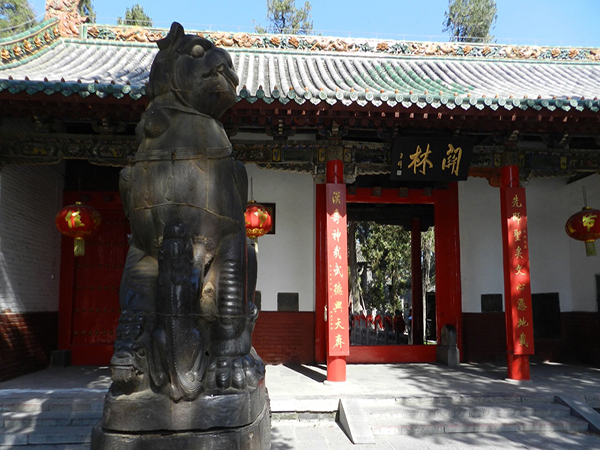
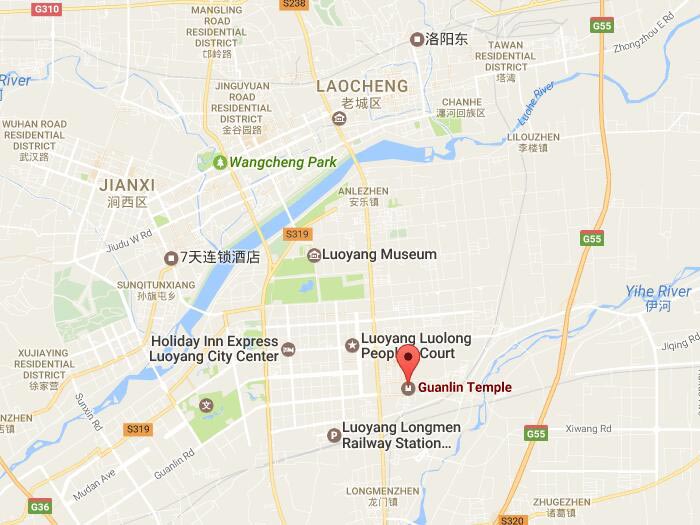
Guanlin Town, Luolong District, Luoyang, Henan Province, China
A famous historic site in Luoyang
Guanlin Temple is located in Guanlin County, 7 kilometers away the south of Luoyang City. As national AAAA-grade tourist spot, Guanlin Temple is a popular place as it’s one of the three great temples famous at home and abroad. This is situated in Luoyang. The temple got this name because the head of Guan Yu was buried here. Guan Yu is a hero in Chinese history and is the only person respected by Confucians, Buddhists and Taoists during the Three Kingdoms Period.
The Guanlin Temple that we can see today was built in Ming Dynasty. Then it went through expansion during the reign of Emperor Qianlong of Qing Dynasty. The existing buildings are mainly built in the Ming Dynasty and are well-preserved now. Guanlin Temple was built in accordance with the form of construction of palace, with rigorous & spectacular layout. The temple has the stage, followed by a door in the axis of the building, ceremonial gate, corridor, main hall, the Second Hall, Three Hall, stone arches, forest pavilion, General Guan’s Tomb.
There are more than 150 halls, over 70 ancient stone tablets, 4 stone archways, more than 110 big and small lions, and over 800 ancient cypress trees in the temple. The layout of the temple highly embodies the traditional style of Chinese architecture. It is designed and built symmetrically. The tow stone lions standing by the entrance to the building are from the Ming Dynasty and symbolize the power and mighty. The ancient cypress trees are one of the highlight of the temple. They are thick with leaves and luxuriant. After a rain, they turn bright green and, with smoke-like vapor, looking like a poem or a picture.
To fully appreciate Guanlin Temple, you need to know about General Guan Yu, an iconic 2nd and 3rd century AD, General of the Kingdom of Shu during the Three Kingdoms Period. His image is pervasive in China and you can see his long-bearded red-faced grimace in Chinese businesses around the world. Guanlin Temple is the site of his tomb since his death in 219 AD. He has been immortalized and worshipped for his strength and loyalty since ever. His story has been enjoyed by generations of readers of the famous 14th century Chinese classic, Romance of the Three Kingdoms. As one of the best known Chinese historical figures throughout East Asia, Guan's true life stories have largely given way to fictionalised historical novel Romance of the Three Kingdoms or passed down the generations, in which his deeds and moral qualities have been lionised. Guan is respected as an epitome of loyalty and righteousness.
One can take Public Bus 55, 58, 69, 15, 39, 71, 81 to get there directly.
The history of Guanlin Temple dates back to 220 AD. After the death of General Guan Yu, Cao Cao, the ruler of the Wei kingdom, buried Guan Yu's head with royal honors south of Luoyang and established a temple for worship. Through multiple expansions and renovations over the centuries, it gradually evolved into the complex we see today. A significant expansion occurred during the Wanli era of the Ming Dynasty, with further improvements made during the reigns of Emperors Kangxi and Qianlong of the Qing Dynasty. This solidified Guanlin's status as an important site for imperial ceremonies and public worship. As Guan Yu became the epitome of loyalty and righteousness, his spirit of "Loyalty, Righteousness, Benevolence, and Courage" was revered by successive generations. Guanlin Temple thus became a symbol of Guan Yu culture, the birthplace of the national-level intangible cultural heritage "Guan Yu Belief and Customs," and a site that carries the spiritual pursuit of the Chinese nation.
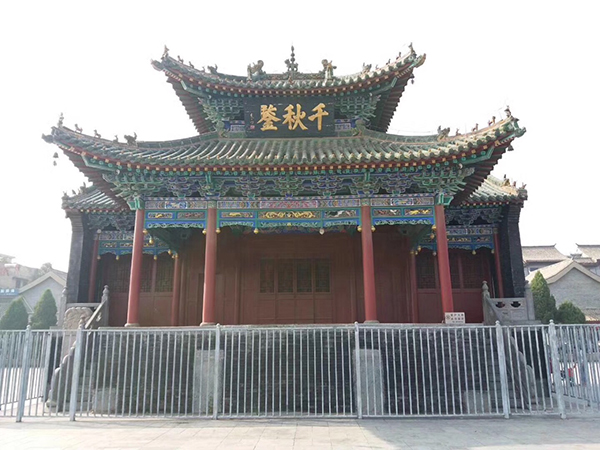
The Stage (Wu Lou): Also known as the Qianqiu Jian Lou, this is a rare architectural form in China. It features a combination of a front section with a hip-and-gable roof and a rear section with a flush gable roof, forming a multi-eaved pavilion. It is also the location of the Luoyang Ancient Art Museum.
Steles and Artifacts
The temple grounds preserve a large number of steles from the Ming and Qing dynasties, recording the posthumous titles bestowed upon Guan Yu by emperors and the details of sacrificial ceremonies. Among them, the stele inscribed with "The Forest of the Loyal and Righteous, Divine and Martial, Guardian and Benevolent, Brave and Majestic, Great Emperor and Saint Guan" is a national treasure. Furthermore, the Luoyang Ancient Art Museum, located within the complex, displays a superb collection of stone carvings and epitaphs from dynasties such as the Northern Wei, Tang, and Song, showcasing the achievements of ancient Chinese calligraphy and sculpture.
Guanlin Temple is built in the traditional palatial style along a central axis. Upon entering the main gate, visitors can walk along this axis to see the major structures in sequence.
Classic Route: Main Gate → Ceremonial Gate → Stone Lion Corridor → Bell & Drum Towers → Incense Burner → Worship Hall → Main Hall → Second Hall → Third Hall → Stone Archway → Guan Zhong (Tomb). This route covers the main highlights, allowing you to appreciate the essence of Guan Yu culture efficiently.
In-Depth Route: For visitors with a strong interest in Guan Yu culture, an extended route is recommended: Classic Route → Guanlin Old Street → Guanlin Folk Museum. This allows for a deeper understanding of the cultural significance and local traditions.
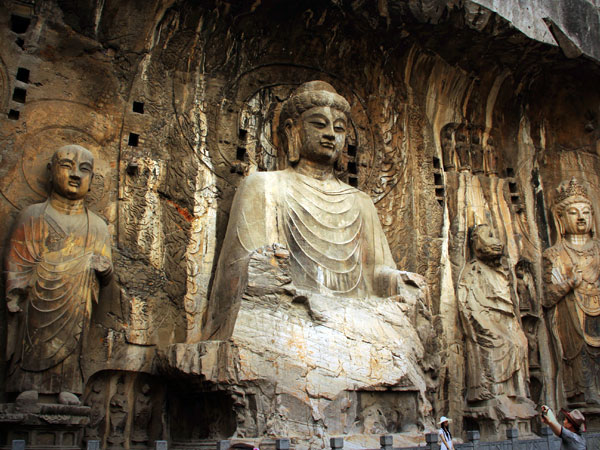
Annual Events: A large international worship ceremony is held here every September, attracting pilgrims from around the world. During the Chinese New Year, a grand temple fair takes place, often featuring vibrant folk performances, making it a particularly lively time to visit. Given its proximity to the Longmen Grottoes, most tourists visit both sites together.
Guided Tours: To better understand the history, consider renting an audio guide or hiring a human guide.
Notice: Please be aware that some sections of the temple may be temporarily closed or have adjusted routes due to maintenance; check the temple's notices upon arrival.
Opening Hours: Generally 8:30 am - 6:00 pm, with last entry at 5:30 pm. From October 15th (autumn/winter), hours adjust to 8:30 am - 5:30 pm, with last entry at 5:00 pm. On the 1st and 15th days of the lunar month, the temple opens earlier at 8:00 am.
Ticket Price: Adult tickets are approximately 40 CNY (for reference only, as prices are subject to change based on season and market conditions).
From $ 300

 English