Your China & Yunnan Travel Experts

 Ask a Question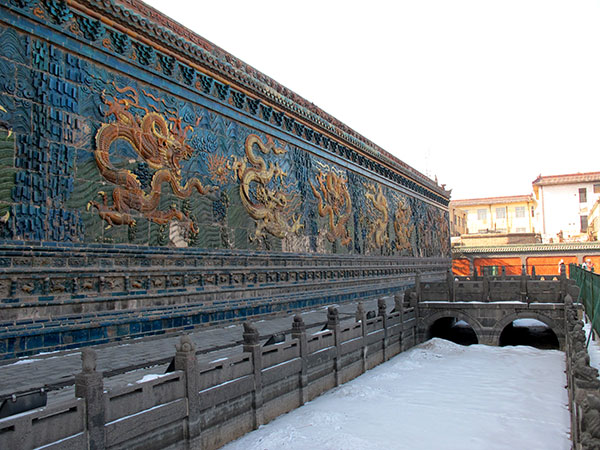
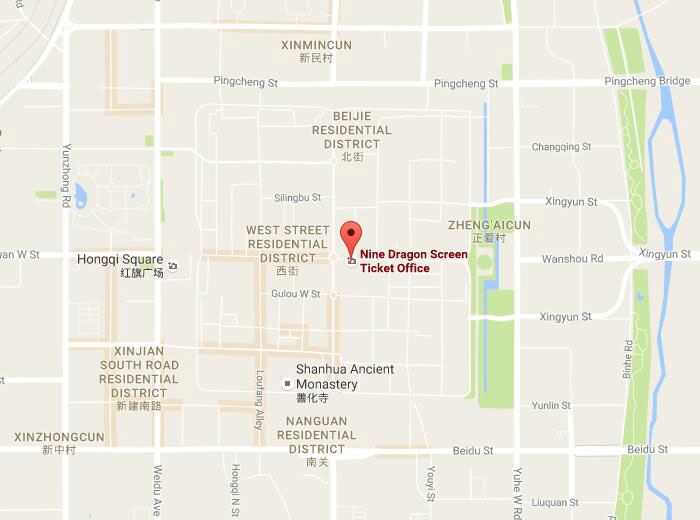
Heyang Street, Cheng District, Datong 037000, China
Ancient architecture.
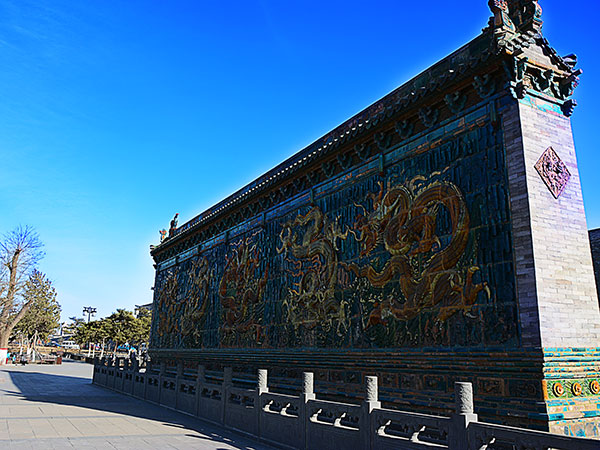
The wall's history is intimately tied to the Zhu family, the imperial house of the Ming Dynasty. It was commissioned not for the emperor himself, but for the palatial residence of Zhu Gui, the 13th son of the Hongwu Emperor, Zhu Yuanzhang. As the Prince of Dai (代王), Zhu Gui was granted a significant fiefdom in the strategically vital city of Datong. The construction of a Nine Dragon Screen for his palace was an extraordinary mark of imperial favor, a privilege that blurred the lines between royal and imperial prerogatives.
According to strict sumptuary laws of the time, the five-clawed dragon (long) was reserved exclusively for the Son of Heaven. Nobility and high-ranking officials were permitted to use dragons, but with a distinction: their dragons were to have only four claws. A careful look at the majestic creatures on the Datong wall confirms this regulation; each of the nine principal dragons possesses four claws, a subtle yet clear acknowledgment of the prince's lofty—but still subordinate—status within the imperial hierarchy. The screen thus functioned as a powerful piece of political communication, signaling the presence of a figure who was second only to the emperor in this region.
Grand Scale and Structure
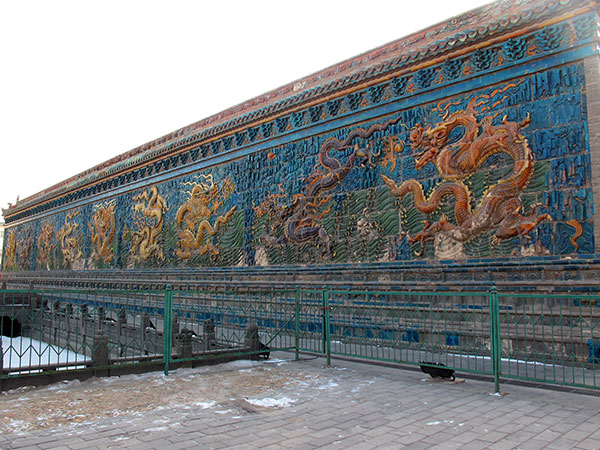
The sheer scale of the Datong Nine Dragon Screen is staggering. It stretches 45.5 meters (approximately 150 feet) in length, stands 8 meters (26 feet) high, and has a thickness of 2.02 meters, giving it a monumental and formidable presence. It was built as a zhaobi, or spirit screen, a fundamental element in traditional Chinese palatial architecture. Positioned directly inside the main gate, its primary function was to block direct sightlines and ward off evil spirits, which were believed to travel in straight lines. At the same time, it presented an immediate and awe-inspiring spectacle to visitors, establishing the power and prestige of the household before they even entered the main halls.
The Nine Dragons
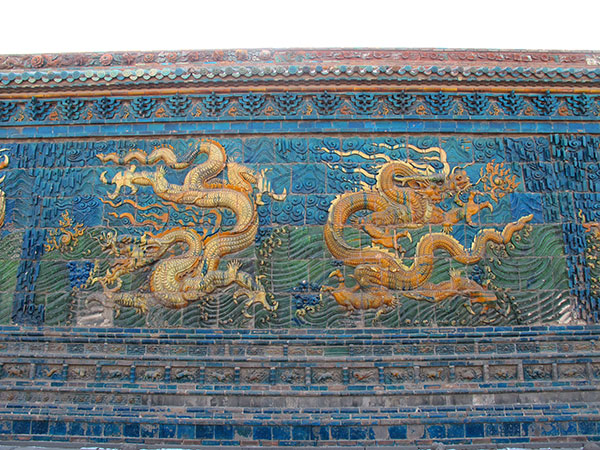
The wall's main spectacle is, of course, the nine dragons, crafted from brilliantly colored glazed tiles. In Chinese cosmology, the number nine is the ultimate yang number, associated with the emperor and heavenly perfection. The nine dragons are thus a complete representation of celestial authority and imperial power. Each dragon is a unique masterpiece of dynamic expression, twisting, turning, and soaring against a backdrop of swirling clouds, turbulent waves, and flaming pearls.
The central dragon is the focal point, a magnificent yellow dragon shown in a frontal pose, calmly but authoritatively clutching the Flaming Pearl of Wisdom and Enlightenment. Flanking it on either side are pairs of dragons engaged in a thrilling chase, their bodies forming powerful S-curves, their claws outstretched, and their faces animated with intense concentration. The composition is one of controlled chaos, a vibrant depiction of raw, elemental energy harnessed into a symmetrical and harmonious design.
Tapestry of Color and Detail
The wall is a marvel of medieval ceramic engineering. Its 426 specially fired glazed tiles come in five dominant colors: azure, yellow, green, purple, and black. These are arranged to create a coherent and symbolic narrative:
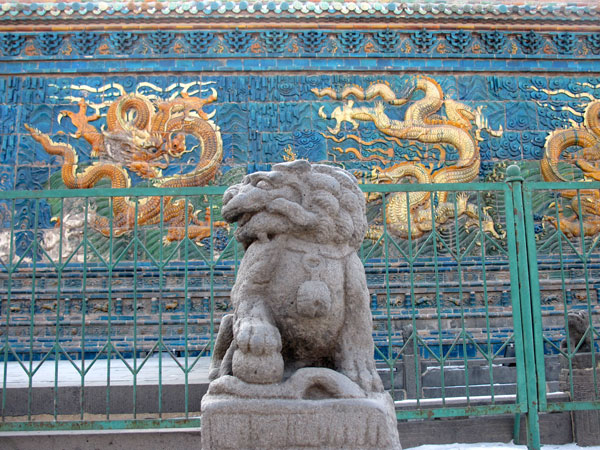
The artistry extends far beyond the nine main dragons. The bottom of the wall is carved with 41 intricate panels depicting two dragons playing with a pearl, a common motif symbolizing prosperity and the pursuit of wisdom. The waist of the wall is adorned with 75 relief sculptures made of colored glazed bricks, forming a charming frieze of animals including oxen, horses, sheep, dogs, deer, and rabbits. This terrestrial menagerie grounds the celestial spectacle, symbolizing a harmonious and prosperous realm under the dragon's benevolent watch.
The Flaming Pearl and Enduring Craftsmanship
The Flaming Pearl, pursued by all the dragons, is a recurring and potent symbol. It represents spiritual truth, wisdom, and the sacred essence of the universe. The dragons' pursuit of it signifies the eternal quest for knowledge and enlightenment. The entire wall, therefore, is not just a display of power but also a philosophical statement about the relentless pursuit of cosmic understanding.
Despite being over 600 years old, the wall's colors remain remarkably vivid, a testament to the unparalleled skill of Ming Dynasty artisans. The glazing process was incredibly complex, requiring multiple firings at precise temperatures to achieve the desired luminosity and durability. This technological and artistic mastery has allowed the screen to withstand centuries of harsh northern Chinese weather, remaining today in a state of exceptional preservation.
Best Time to Visit: To capture the wall at its most brilliant, visit on a sunny day when the glazed tiles gleam and reflect the sunlight, making the colors appear even more vibrant. The late morning or mid-afternoon sun illuminates the reliefs beautifully, creating depth and shadow that accentuate the dragons' dynamic forms. As with most attractions, visiting on a weekday will help you avoid the crowds of domestic tourists.
Practical Tips: The Nine Dragon Wall is often included in a combined ticket with other nearby historical sites in Datong, such as the Huayan Temple and Shanhua Temple. Inquire about this at the ticket booth to save money. The wall is a photographer's dream. A wide-angle lens is helpful to capture its full length. Pay attention to the details—close-up shots of the individual dragons, the animal friezes, and the cloud patterns are equally rewarding.
To fully appreciate the wall, read about the symbolism of the Chinese dragon and the significance of the number nine in imperial culture beforehand. This knowledge will transform your viewing from a simple sightseeing activity into a deep cultural experience.
From $ 531
From $ 644

 English