Your China & Yunnan Travel Experts

 Ask a Question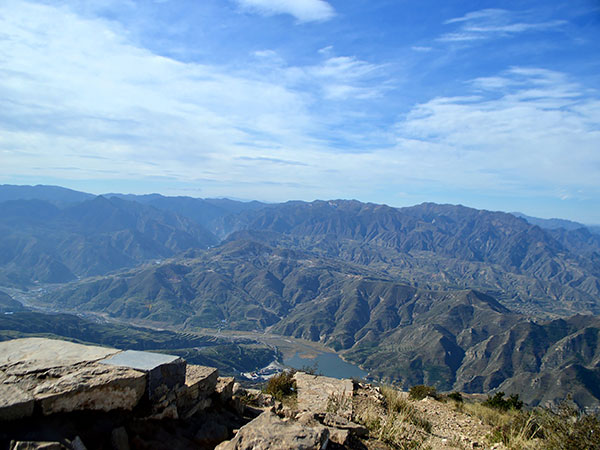
Daciyao Town, HUnyuan Prefecture, Datong, Shanxi Province.
Top 5 mountains in China.
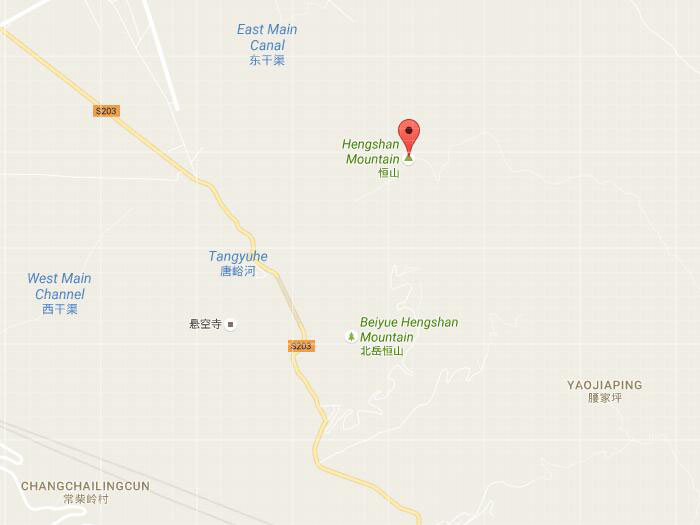
Mount Hengshan is sited in 10 kilometer south of Hunyuan County and 62 kilometers away from downtown Datong, Shanxi. It is one of “Five Sacred Mountains in China”, or “Wu Yue”. The other four mountains are Mount Tai in Shandong, Mount Huashan near Xian, Mount Hengshan in Hunan and Mount Songshan in Henan. Hengshan in Shanxi Province is sometimes known as the Northern Hengshan, and the one in Hunan Province as Southern Hengshan. Both mountains have the same pronunciation in Chinese, and the Southern Heng Shan is also one of the Five Sacred Mountains in China. There are all the geographic landmarks in China and known to the people not only in China, but also all over the world.
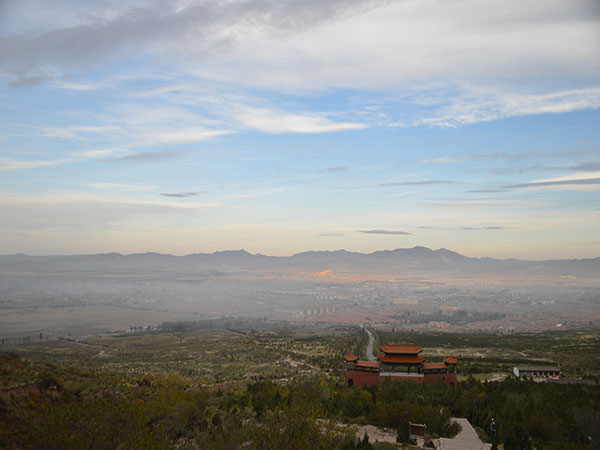
Like the other mountains in China with strong Taoist presence, Heng Shan has been considered a sacred mountain since the Zhou Dynasty. Mount Hengshan is a holy land for Quanzhen Taoist, for this is where Yin Zhiping made pills of immortality and cultivate vital energy. The main peak of Mount Hengshan is Tian Feng Ling Peak, which is 2016 meters above sea level. Its steep northern slope is covered with pine trees and located on its southern slope are temples and monasteries complex built by ancient kings and emperors to worship their ancestors. The main peak is a lovely hike of around three hours round trip from the parking lot (a few miles up the mountain from where you buy the ticket), with the summit covered in fragrant lilac blossoms in June, and temples set into the cliffs.
【Golden Dragon Gorge】
Golden Dragon Gorge is sited between Tian Feng Ling Peak and Chuiping Peak. From above, the gorge looks steep due to its depth and narrow base being only over 10 meters wide. The gorge acted as a natural defense barrier of strategic importance to military commanders ever since armies first set foot on Mt. Hengshan in ancient times. During the Northern Song Dynasty (960-1127), General Yang Ye and his sons managed to hold back invaders from the neighboring Liao Dynasty (916-1125) by using Golden Dragon Gorge as their ultimate line of defense.
【Hengshan Temples & Monasteries Complex】
Temples & Monasteries Complex is mainly located on its southern slope of Tian Feng Ling Peak in Mt. Hengshan area. The temples and monasteries were built by ancient kings and emperors to worship their ancestors. The most famous one is known as Beiyue Miao Temple (the Shrine of the Northern Peak). During the Han Dynasty, this temple was built on Hengshan's slopes, dedicated to the mountain god. While periodically destroyed and reconstructed, this temple has an uninterrupted history from Han times to the present day.
【Hengshan Pine】
Pine trees on Mt. Hengshan are another highlight to see. They look unique as those in Mt. Huangshan, odd shape and growing in cliffy rocks. You might be shocked by the tenacious vitality of the trees when you see them.
【Hanging Temple】
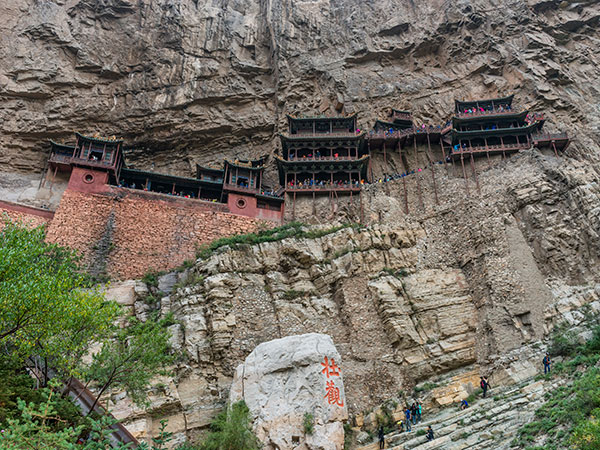
Hanging Temple was built in the late Northern Wei Dynasty, about 1400 years ago. It is the only existing unique three-in-one temple of Buddhism, Taoism and Confucianism. It got it name for it is built in a hanging cliff. It was Has selected as one of the world's top ten unstable buildings by The Times.
The best time to visit there is from April to October, when is from late spring and early Autumn in this area. Visiting to Mount Hengshan in Winter could be very cold. The peach blossom in spring on Tianfengling Peak are quite beautiful. If you want to see snow view, winter is a better choice, but whether you can see the snow or not depends on weather.
【Chinese name】: 恒山
【Recommended time to stay】: one day
【How to get there from Datong】: Usually, to reach Mount Hengshan, you need to arrive in Datong first by train or flight. Then transfer to Datong South Long-distance Bus Station to catch a coach to get to Mount Hengshan. It takes around 2 hours from the bus station to reach the foot of Hengshan Mountain.
A classic way to explore Mount Hengshan is to first visit the millennium-old Hanging Temple, perched precariously halfway up a cliff under Cuiping Peak, and then continue to Tianfengling Peak to admire the Taoist architectural complex. From there, hiking to the summit offers panoramic views.
The general visiting route goes as follows: Daziwan → Hufengkou → Sheshenya → Feishi Cave → Hengzong Hall → Tianfengling Summit. The round trip hike usually takes about 3–4 hours. Do note that the opening hours for the Tianfengling summit are not always fixed. Many times, visitors can only hike as far as Hengzong Hall, so it’s best to confirm with the scenic area in advance if you wish to reach the peak.
From the Tianfengling ticket office, a winding mountain road leads to Hengshan’s main parking lot (Tingzhiling). Looking east from the parking lot, you will notice bold Chinese characters carved into the cliffs of Daziwan, spelling “恒宗” (“Hengzong”). This cliff inscription is one of Mount Hengshan’s most famous stone carvings and is considered a landmark of the mountain.
If you are short on time, you can take a cable car from the parking lot up to the temple complex area, though hiking offers a more rewarding experience. Along the mountain trail, the first notable stop is Guolao Ridge, where there is a dramatic 90-degree turn known as Hufengkou (“Tiger Wind Pass”). Here, the strong mountain winds howl through the exposed Suspended Root Pine, whose roots are entirely above ground and seem to clutch the rocky cliff. The whistling wind and rustling trees together sound like a roaring tiger, which gives the pass its name. The cliffs east of Guolao Ridge are also an excellent spot for watching the sunset.
Continuing upward, visitors pass through a wooden archway inscribed with the words “Ren Tian Bei Zhu” (“The Northern Pillar of Heaven”), marking the entrance to the temple complex. Inside the square courtyard is Xuanjing Pavilion, home to the mysterious “Bitter and Sweet Wells.” The two adjacent wells are said to hold water with different tastes — the northern well sweet like nectar, and the southern one bitter — a curious phenomenon that has fascinated travelers for centuries. Other Taoist buildings here include the Horse God Temple, Baixu Temple, and Jieguan Pavilion, where visitors can burn incense and pray.
Climbing further leads to Feishi Cave, covered with stone inscriptions from poets and scholars of various dynasties, and finally to Hengzong Hall (Beiyue Temple), the main shrine of Mount Hengshan. Built on the cliffside, this large hall is dedicated to the God of the Northern Peak. Above the deity’s throne hangs an imperial plaque inscribed with the words “化垂悠久” (“Everlasting Transformation”), written by Emperor Kangxi.
One of the most striking features here is the 103 steep steps leading up to the hall, each inclined forward at 30–40 degrees, making the climb challenging and requiring both hands and feet. From the terrace in front of Hengzong Hall, visitors can enjoy sweeping views of the surrounding mountains and valleys.
West of Hengzong Hall is Huixian Cliff, home to Huixian Palace (Jixian Cave), famous for its cliff carvings such as “The Grand View of Heaven and Earth” and “Sheer Cliffs and Precipitous Walls.” Nearby are other attractions like Yuhuang Pavilion, Imperial Stele Pavilion, Qin-Qi Terrace, and Tongyuan Valley.
From Tongyuan Valley, the trail continues upward to the main summit of Tianfengling Peak. At 2016 meters above sea level, the summit rewards hikers with breathtaking views that embody the saying “Standing here, all other mountains look small.” After enjoying the scenery and taking photos, visitors can descend via Pure Yang Palace and Jiutian Palace, returning to the parking lot.
From $ 531
From $ 644

 English