Your China & Yunnan Travel Experts

 Ask a Question
Updated: 2026-01-30
September is the beginning of autumn in China, bringing a noticeable shift in temperatures and weather patterns across the country. The heat of summer begins to wane, making way for more comfortable and pleasant conditions. This month is often favored by travelers, as it offers stunning natural scenery, vibrant festivals, and an overall inviting atmosphere.
Across most parts of China, September brings milder temperatures, lower humidity, and more stable weather conditions. While the country is vast and climate varies by region, the overall travel experience is noticeably more comfortable than in July and August.
Best Time to Visit: Mid-September is particularly lovely, with clear skies and mild weather. Early September may still feel slightly summer-like in southern and eastern China, while late September brings more obvious autumn vibes, especially in the north and mountainous regions.
1. Northern China
Northern China includes major cities like Beijing, Tianjin, Harbin, Xi’an, and Qingdao. This region has a temperate continental climate, so September brings clear skies, cool temperatures, and almost no rain—perfect for exploring historical sites and outdoor attractions without the summer heat or winter cold.
2. Eastern and Central China
Eastern and Central China includes Shanghai, Nanjing, Wuhan, Hangzhou, Suzhou, and Huangshan. This region has a subtropical monsoon climate, so September brings relief from the summer heat and humidity, with mild temperatures and occasional gentle breezes.
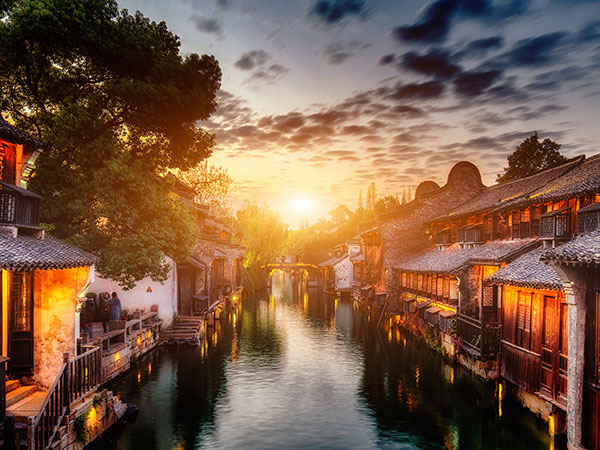
September is also a great time to visit water towns such as Wuzhen or Xitang, where cooler weather makes strolling along canals far more pleasant.
3. Southern China
Southern China includes Guangzhou, Shenzhen, Zhuhai, Hainan Island, and Guilin. This region has a tropical monsoon climate, so September is still warm, but not as hot and humid as summer. Occasional short showers add a refreshing break from the heat.
4. Western China
Western China includes Tibet, Xinjiang, Qinghai, and Gansu. This region has a continental and alpine climate, so September brings mild days, cool nights, and stunning autumn colors—some of the most beautiful in China. It’s also one of the only times of year when the weather is stable enough for travel (summer has rain, winter is freezing).
5. Southwest China
Southwest China includes Yunnan, Sichuan, and Chongqing. This region has a diverse climate—from subtropical in Chongqing to alpine in Sichuan’s mountains. September brings cooler temperatures and less rainfall, making it perfect for exploring ancient towns, hiking national parks, and experiencing ethnic minority culture.
| Region | Destination | Why Go in September | Weather (Avg) | Top Experiences | Tips | Recommendation Rating |
| Northwest | Kanas & Hemu (Xinjiang) | Peak early autumn colors; serene lakes, birch forests, and Tuvan culture | Day: 15–20°C (59–68°F) Night: 5–10°C (41–50°F) Dry & sunny |
Hike to Kanas Viewpoint at sunrise | (Border area—requires Military Permit, best arranged via licensed tour operator) | ★★★★★ |
| Stay in a wooden Hemu cabin | ||||||
| Southwest | Daocheng Yading (Sichuan) | “Last Shangri-La”—snow peaks, alpine meadows, fall hues begin | 8–18°C (46–64°F) Large day-night swing Rainy season ends |
Gentle trek to Milk Lake | (High altitude; limited English; remote transport) | ★★★★☆ |
|
Photograph Mt. Chenresig reflections Acclimatize slowly (3,700m+) |
||||||
| Southwest | Lijiang & Shangri-La (Yunnan) | Crisp air, blue skies, fewer crowds; Tibetan & Naxi cultures thrive | 15–22°C (59–72°F) Sunny days, cool nights |
Explore Lijiang Old Town at dawn | (Well-developed tourism; some English in hotels/guides) | ★★★★☆ |
|
Visit Songzanlin Monastery Walk in Pudacuo National Park |
||||||
| North China | Beijing | Perfect autumn weather; ideal for walking, history, and city life | 18–26°C (64–79°F) Low humidity, clear skies |
Bike through hutongs at sunrise | (International flights, English signage, easy metro) | ★★★★ |
| Hike Mutianyu Great Wall | ||||||
| Northwest | Gannan (Gansu) | Hidden Tibetan grasslands & monasteries without Tibet permit | 10–20°C (50–68°F) Windy but bright |
Explore Zhagana stone village | (Limited English; mobile signal spotty; best with driver/guide) | ★★★★ |
| Attend morning prayers at Labrang Monastery | ||||||
| South China | Guilin & Yangshuo (Guangxi) | Post-flood clarity on Li River; warm but not scorching | 25–32°C (77–90°F) Occasional showers |
Bamboo raft on Li River | (Tourist-friendly; English common in hostels/cafés) | ★★★★ |
| Bike through karst countryside | ||||||
| East China | Hangzhou & Wuzhen (Zhejiang) | West Lake at its most poetic; osmanthus flowers bloom late Sept | 22–28°C (72–82°F) Gentle breeze, low rain |
Boat ride on West Lake at sunset | (Easy high-speed rail access; digital payments work well) | ★★★★ |
| Tea tasting in Meijiawu Village | ||||||
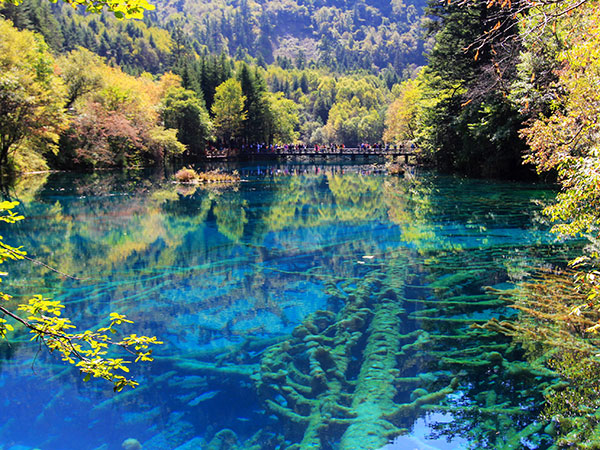
| Northeast | Arxan (Inner Mongolia) | China’s earliest autumn display—volcanic lakes + golden larch forests | 5–18°C (41–64°F) Cold mornings, mild afternoons |
Drive through Arxan National Forest Park | (Remote—fly to Ulanhot or Hailar, then drive; few English speakers) | ★★★★ |
| Soak in volcanic hot springs | ||||||
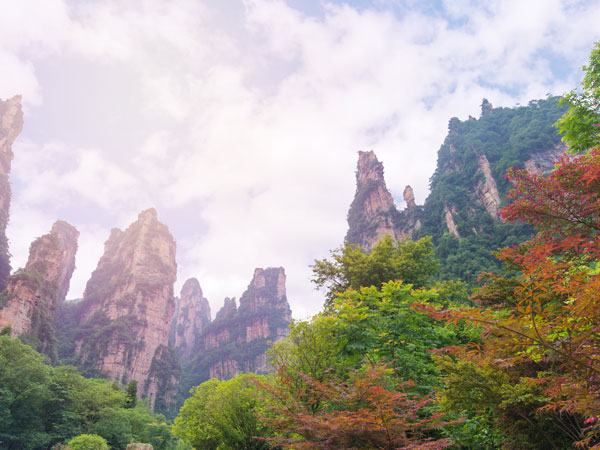
| Central China | Zhangjiajie (Hunan) | Mist-wrapped sandstone pillars; inspiration for Avatar | 18–25°C (64–77°F) Comfortable humidity |
Walk the glass bridge or skywalk | (Well-signed park; English audio guides available) | ★★★★ |
|
Ride Bailong Elevator up cliff face Hike Golden Whip Stream trail |
||||||
| Tibetan Plateau | Lhasa & Nyingchi (Tibet) | End of rainy season—crystal-clear views of Himalayas | 8–20°C (46–68°F) Intense sun, very dry |
Tour Potala Palace early morning | (Tibet Travel Permit required—must book through agency; no independent travel) | ★★★★☆ |
| Watch monk debates at Sera Monastery | ||||||

11 Days Beijing-Xi'an-Zhangjiajie-Shanghai Group Tour
Beijing, Xi'an, Zhangjiajie, Shanghai
Given China’s diverse regional climates, pack layered clothing (light tees, a thin sweater, and a light jacket/windbreaker) for day-night temperature shifts. Bring comfortable walking/hiking shoes, SPF 50+ sunscreen, a small foldable umbrella, a reusable water bottle, a universal plug adaptor, essential medications (prescription and over-the-counter), and a lightweight backpack for daily essentials. Avoid overpacking heavy coats (only needed for western mountainous areas) or impractical footwear like high heels.
There is one important thing to keep in mind: China’s Mid-Autumn Festival usually falls in September (exact dates vary each year). This can bring short domestic travel peaks, especially around popular destinations. If your trip coincides with the Mid-Autumn Festival holiday, book trains, flights, and hotels in advance, and consider starting sightseeing early in the morning to avoid crowds.
While many people in big cities (Beijing, Shanghai, Guangzhou) speak English, most locals in small towns and rural areas do not. Learn basic phrases like “hello” (nǐ hǎo), “thank you” (xiè xie), “how much is this?” (zhè duō shao qián), and “where is the bathroom?” (xǐshǒujiān zài nǎlǐ)—it will make your trip much easier and locals will appreciate your effort.
Download a translation app like Google Translate (make sure to download the Chinese language pack for offline use). This is a lifesaver for communicating with locals, reading menus, and understanding signs.
China has a rich culture and many traditions—be respectful when visiting temples (dress modestly, don’t take photos of monks without permission), try local food (even if it’s different from what you’re used to), and follow local customs.

 English