Your China & Yunnan Travel Experts

 Ask a Question
Address: Renmin Road, Jiangsu, China
What to buy: souvenirs such as silk products, writing brushes
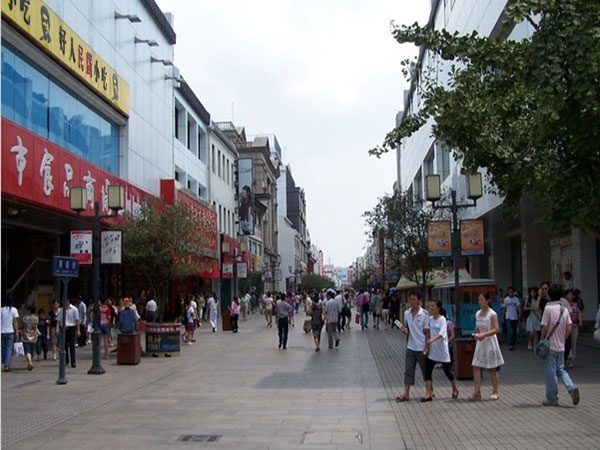
Guanqian Street lies in front of the Xuanmiao Taoist Temple, and so it was called Guanqian, which in Chinese literally means "in front of a temple". It is a historical street that is over 150 years old and is known far and wide because of the century-old traditional shops like Daoxaingcun Confectionery Shop, Qiantaixiang Silk Shop, Huangtianyuan Round Dumpling Shop, which were all established here. Gourmands should not miss the section that stretches from Bifengtang to Taijian Alley, where restaurants featuring authentic Suzhou cuisine are located.
Guanqian Street runs approximately 780 meters from Cufang Bridge on Lindun Road in the east to Chayuanchang on Renmin Road in the west. Located in the very heart of Suzhou’s old city, it serves as an important pedestrian corridor connecting the Pingjiang Road Historic Area with Suzhou Railway Station.
The street runs approximately 760 meters long and is divided into eastern, middle and western sections. The eastern part is filled with ancient buildings of historical significance. The temple is located in the middle section of the street, and in the western part are some stylish shops.
The street contains many features, including all kinds of century-old stores, like Huangtianyuan, Sanwanchang, Caizhizhai Daoxaingcun, Guangnanju, Yeshouhe, etc. which gain an international reputation. Tourists at home and broad are attracted by these century-old shops because there is variety of classic dishes in Southern China style available in those reputed shops. Some of the stores have a long history of more than 100 years, which offers deep impressions on tourists. A lot of the tourists visiting Guanqian Street just come to enjoy the delicious food. Precisely, the existences of those century-old shops that make the Guanqian Street not only become a class commercial street, but also reflect the culture and history of Suzhou.
Guixiangcun (桂香村)
Guixiangcun is best known for its signature Dafang Cake, whose traditional production technique has been listed as Suzhou Intangible Cultural Heritage. The cake lives up to its name—large and square—measuring about 7 cm long and 2 cm thick. Freshly baked, it is fragrant and jade-like in appearance, with fillings subtly visible from the side or center.
There are five classic sweet flavors: rose, mixed nuts, mint, sesame, and red bean paste, each with its own appealing color and aroma.
Caizhizhai (采芝斋)
Founded in 1870 during the Qing Dynasty, Caizhizhai originally sold only zongzi candy. Today, it offers more than 300 varieties of Suzhou-style sweets, pastries, roasted snacks, preserved fruits, and savory specialties, with over 1,000 different packages available—ideal for souvenirs.
Famous products include pine nut candy, zongzi candy, and shrimp roe dried fish, all well-known Suzhou specialties.
Lugaoxian (陆稿荐)
Entering Guanqian Street from Cufang Bridge, the most eye-catching storefront belongs to Lugaoxian, a celebrated Suzhou brand famous for its soy-braised meats. Its traditional upturned eaves and slightly faded gold-lettered sign reflect its long history.
Historically known for items such as five-spice braised pork and honey-glazed duck, Lugaoxian has adapted to modern tastes. Today, its best-selling products include braised duck, soy-braised pork, smoked fish, and braised beef, making it one of the most popular old brands in Suzhou.
Yeshouhe (叶受和)
Founded in 1886, Yeshouhe is a favorite among locals for its freshly baked pine nut and jujube paste sesame cakes. The filling is sweet but not cloying, with rich pine nut aroma and small pieces of lard that become translucent when warm, creating a uniquely rich texture.
Yuandachang (元大昌)
Yuandachang is a traditional Suzhou liquor brand. While it sells baijiu year-round, it becomes especially busy before the Winter Solstice, when locals line up—sometimes as early as 3 a.m.—to buy Dongniang Wine, a seasonal fermented rice wine.
During autumn and winter, the shop is filled with the gentle fragrance of osmanthus, making it a memorable sensory experience.
The name “Xuanmiao” comes from Laozi’s Dao De Jing, meaning “the gateway to all profound mysteries.” Beyond serving as a place for prayers and wishes, Xuanmiao Temple is also a highlight for architecture enthusiasts.
Its most remarkable structure is the Sanqing Hall, rebuilt in 1179 during the Southern Song Dynasty. It is the only surviving multi-eaved, nine-bay wooden Song-style structure south of the Yangtze River, and the largest remaining wooden hall from the Song dynasties. It is also the only existing wooden palace-style hall in Suzhou, making it a true architectural treasure.
Guwuxuan is a prestigious cultural brand in Suzhou. Its predecessor, Suzhou Calligraphy and Painting Society, was founded in 1979 and is often mentioned alongside Rongbaozhai (Beijing), Duoyunxuan (Shanghai), and Xiling Seal Society (Hangzhou) as one of China’s four major art bookstores. Guwuxuan Publishing House was officially established in 1989.
Recently reopened near its original site on Guanqian Street, the new Guwuxuan Bookstore features a striking façade designed like the pages of an open book, symbolizing “One Page of Gusu.” Visitors can read, drink tea, view exhibitions, or simply relax—making it a peaceful cultural stop amid the bustling street.
For an easy and enjoyable night stroll on Guanqian Street, start from Chayuanchang Station (Line 1). Upon exiting the metro, you will immediately feel the lively atmosphere. Begin by slowly walking into Xuanmiao Temple, where the illuminated eaves outline its ancient silhouette and wind chimes sway gently in the evening breeze. Then continue strolling along the street, browsing shops selling Suzhou silk, handicrafts, and traditional snacks—perfect for picking up souvenirs.
When your feet get tired, turn into one of the nearby alleys to enjoy local food. After dinner, settle into a street-side café, watch people pass by, and enjoy a quiet moment of Suzhou nightlife.
By Metro
From $ 197
From on request
From $ 490

 English