Your China & Yunnan Travel Experts

 Ask a Question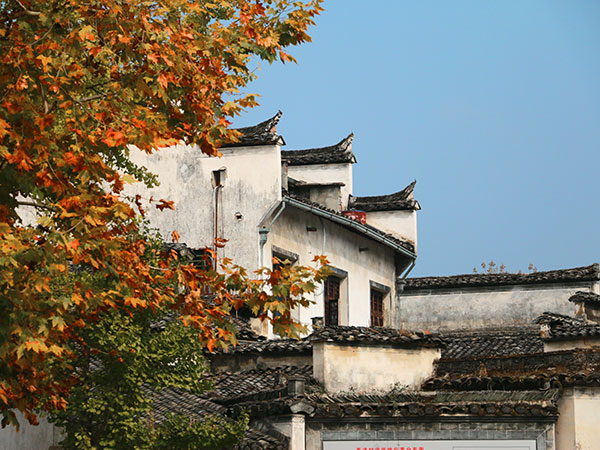
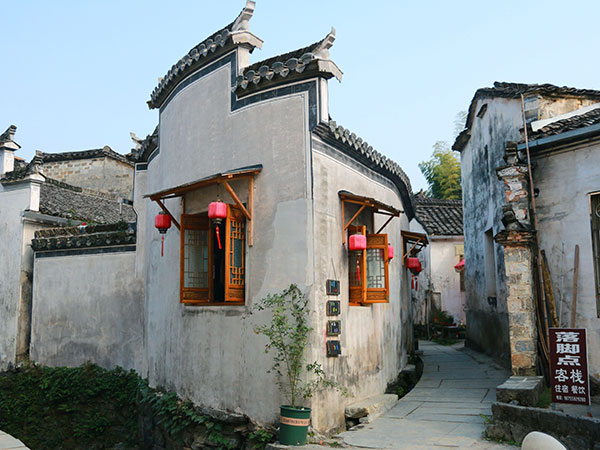
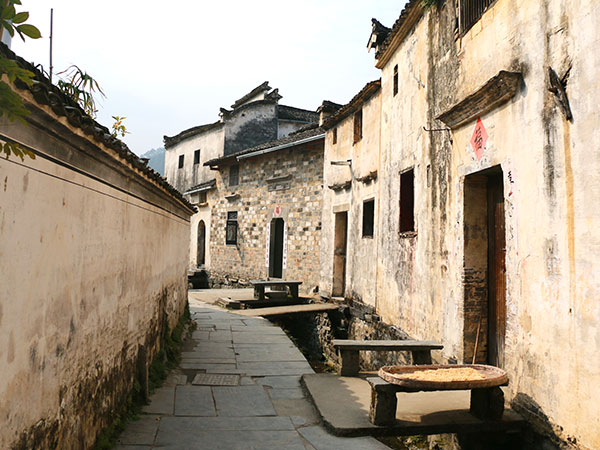
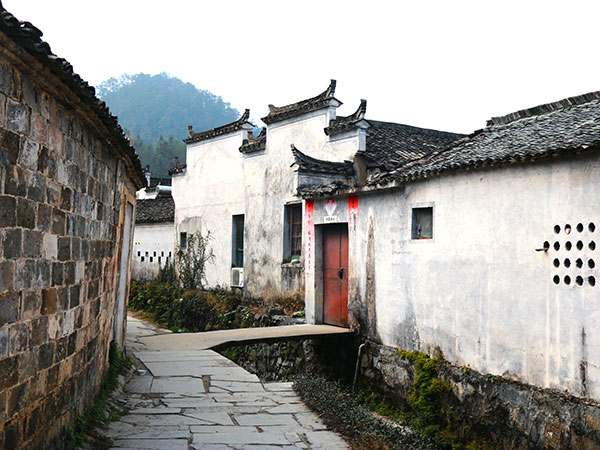
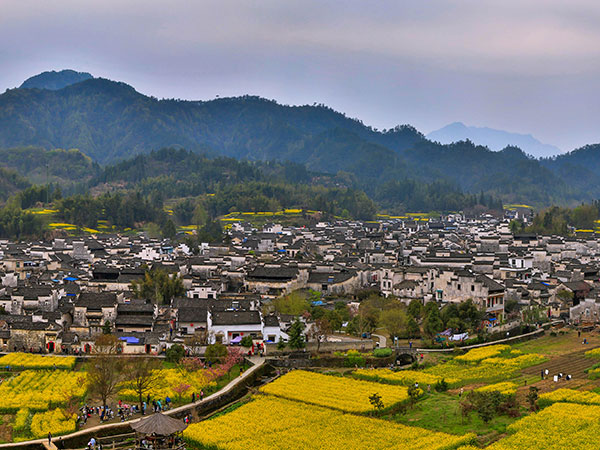
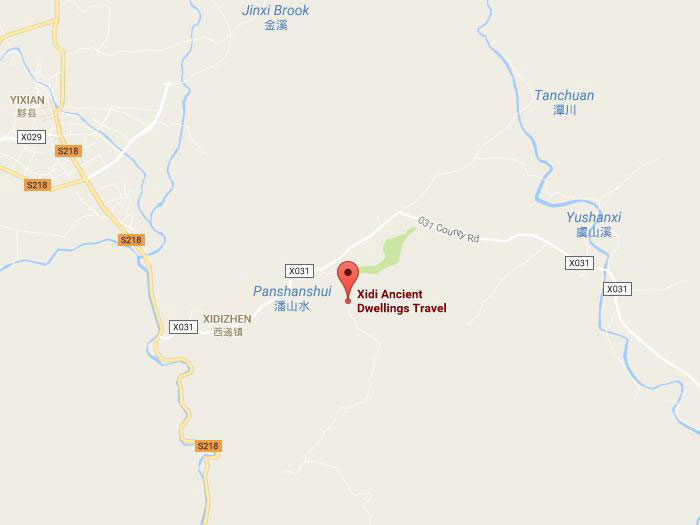
Xidi Village, Xidi Town, Qianxi Prefecture, Huangshan, Anhui Province.
World heritage site designated by UNESCO.
Xidi Village can be visited throughout the year, but the most pleasant seasons are spring (March–May) and autumn (September–November). In April, golden rapeseed flowers bloom around the village, creating a poetic landscape where the blossoms and Hui-style houses resemble a living ink painting. From September to October, the maple and ginkgo leaves tint the ancient alleys with warm hues, making the village even more tranquil. Early mornings before 7:30 a.m. often feature a light mist, while evenings offer dramatic sunset light over the tiled roofs. Winter snow gives the village a serene charm, though warm clothing is essential. Summer (June–August) tends to be hot and crowded, so it is advisable to avoid peak hours. For a quieter experience, weekdays or the off-season (late November to February) are the best times to explore Xidi in peace.
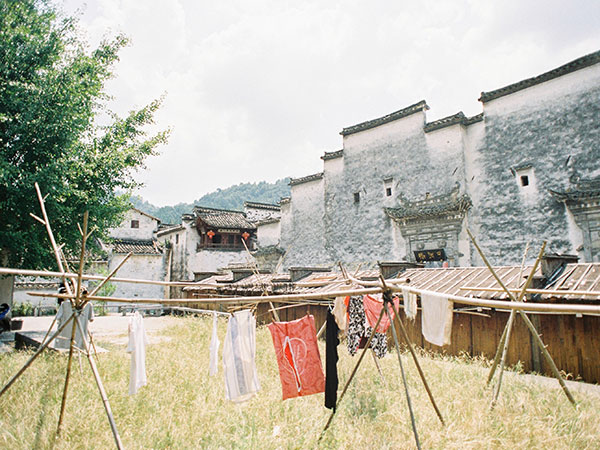
The layout of Xidi Village resembles a boat, built across three streams. The Qianbian and Houbianshi Streams converge at Huiyuan Bridge inside the village, forming the West Stream, which later joins Shewu Stream at the entrance. All streams flow from east to west, hence the name “Xidi,” meaning westward flow.
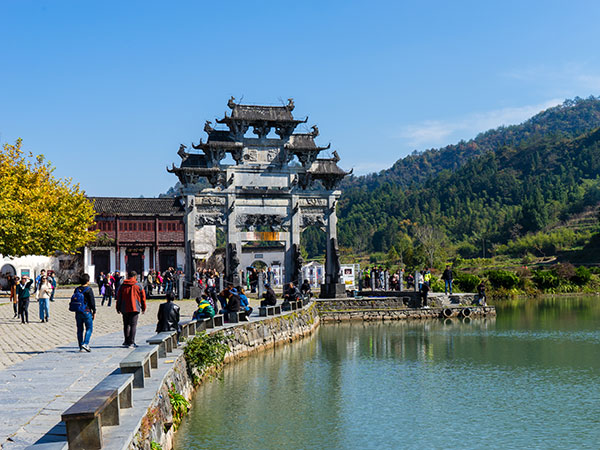
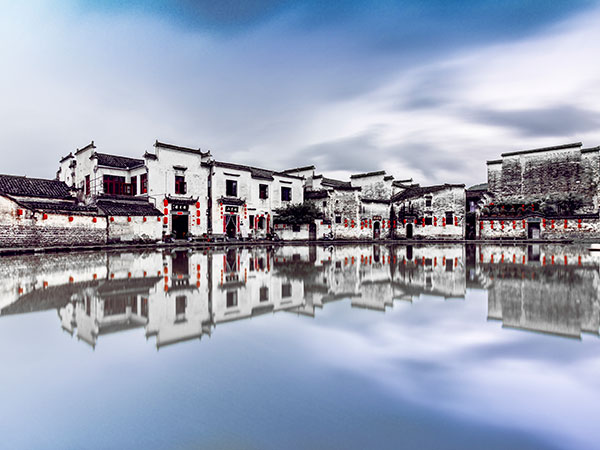
The main entrance is at the southwest corner, and most visitors explore the village from southwest to northeast. Upon arrival, the first landmark you will see is the Hu Wenguang Memorial Archway, built in 1578 during the Ming Dynasty. This towering stone arch, crafted from the local dark marble known as Yixian green, celebrates the glory of the Hu clan. Its five tiers are decorated with intricate carvings, making it an excellent photo spot. Beside the archway lies Mingjing Lake, where you can admire beautiful reflections of the Hui-style buildings.
Walking further, you will encounter Ruiyu Courtyard, a typical Huizhou merchant’s residence built during the Qing Dynasty. Crossing the stream to the east bank, you’ll reach Hall of Respect (Jing’ai Hall), originally constructed in the Ming Dynasty and later rebuilt in the Qing era. This grand ancestral hall once hosted clan meetings, weddings, and rituals of the Hu family. Inside hangs a giant character for filial piety (孝). The design is symbolic: the right part resembles a bowing man, while the left part resembles a monkey, implying that a person without filial piety is no better than a beast.
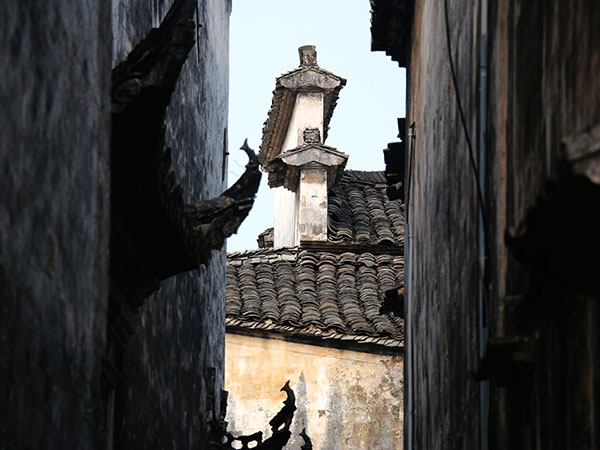
Continuing northeast along the stream, you’ll discover Shangde Hall, one of the oldest surviving Ming Dynasty houses, dating back more than 400 years. Other must-see sites include Taoli Garden, which combines residential quarters with a private school; Xiyuan and Dongyuan Courtyards, classic Hui-style gardens; Dunren Hall, once the residence of the richest man in Xidi during the late Qing Dynasty; and distinctive structures such as Zouma Lou (Horse-Watching Tower), Embroidered Building, and Zhuimu Hall, each with its own cultural significance and architectural beauty.
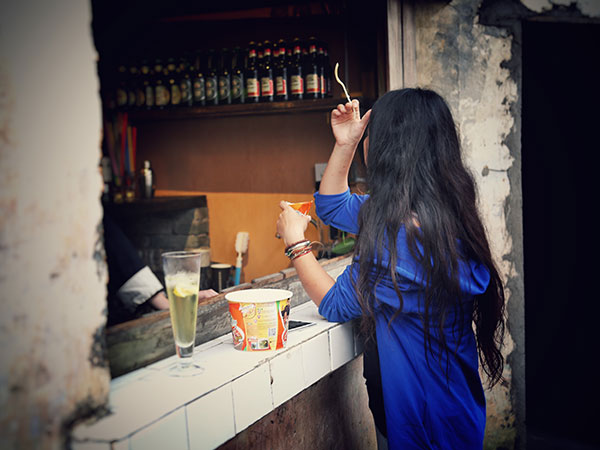
Xidi Village has a relatively high level of commercialization compared to other ancient villages. Many local households run homestays or small eateries, and vendors often sell snacks along the streets. Don’t miss sampling Huizhou specialties such as Laba tofu, crispy sesame cakes, bamboo shoots, fermented soybean snacks, stinky mandarin fish (Chou Guiyu), and hairy tofu (Mao Tofu).
For a more immersive experience, consider staying overnight in one of the family-run inns, many of which are converted Hui-style residences. Early mornings and late evenings are the best times to wander the alleys in peace, avoiding daytime crowds and enjoying the village’s quiet beauty.
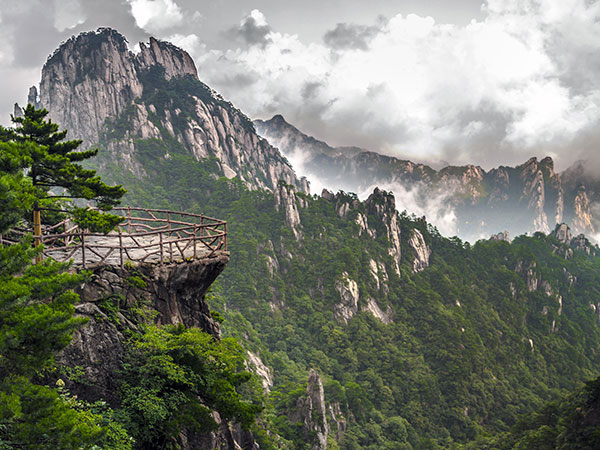
Xidi is located about 18 km from Hongcun Village and 43 km from Mount Huangshan, making it easy to combine the three into a single itinerary. Comfortable walking shoes are essential, as exploring the stone-paved alleys involves a fair amount of walking.
Before visiting, it is highly recommended to learn about Huizhou architecture and the history of Xidi Village. This will enrich your appreciation of the carved wooden doors, stone-paved courtyards, and ancestral halls. Hiring a knowledgeable local guide or joining a guided tour is also a great way to gain deeper insights into the symbolism, family traditions, and cultural heritage hidden in each corner of this UNESCO World Heritage site.

From $ 159
From $ 127
From $ 321

 English