Your China & Yunnan Travel Experts

 Ask a Question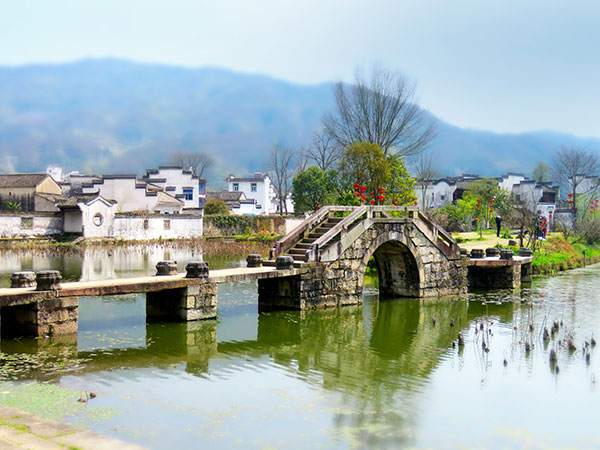
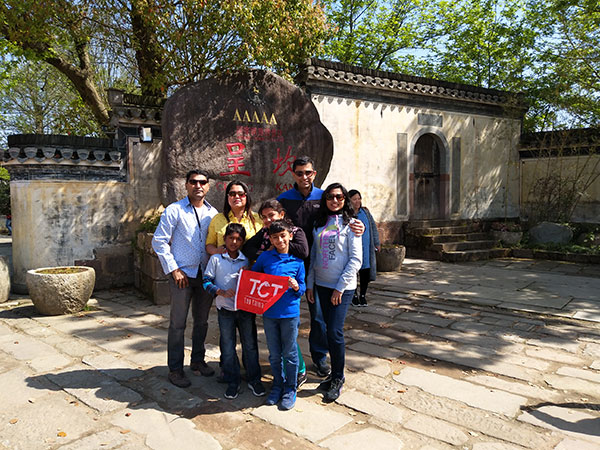
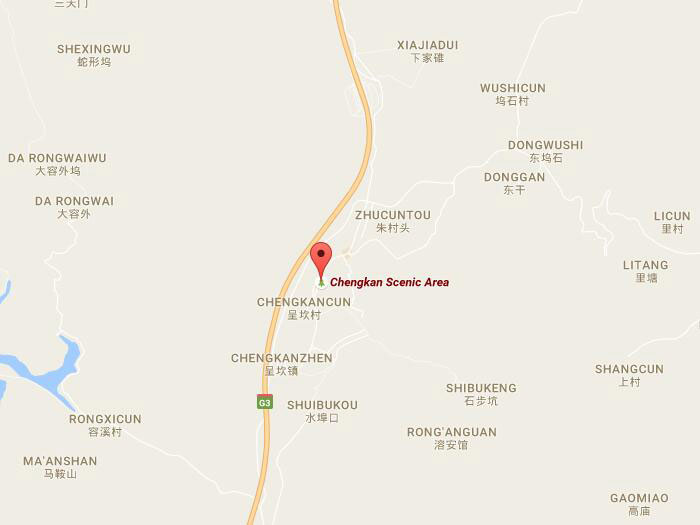
Chengkan Village, Huizhou District, Huangshan 245900, Anhui Province, China.
Nature view with ancient architecture.
Chengkan Village is located 31 kilometer away the north of Tunxi District (Huangshan downtown). Although it is less famous than Hongcun Village, the landscape is by no means inferior to Hongcun Village, and there is less tourists here. So if you want to visit a quieter village with less tourists, but still can admire countryside view and experience local Hui-style culture, it is recommended to visit Chengkan Village.
Chengkan Ancient Village is a perfect and typical combination of beautiful natural scenery and Huizhou-style culture art. It is famous for well-preserved ancient residential architecture of the Ming Dynasty (1368 A.D. - 1644 A.D.). The ancient architectures contain elegant pavilions, bridges, houses, ancestral temples, wells, etc. Moreover, there are exquisite stone carvings, wood carvings and brick carvings on each house. It is known as the museum of well-protected ancient buildings.
Chengkan Village, originally named Longxi, was first established during the Eastern Han and Three Kingdoms period (around 220–280 AD), giving it a history of more than 1,800 years. In the late Tang Dynasty, brothers Luo Tianzhen and Luo Tianzhi of the Luo clan migrated from Jiangxi Province and settled here. Following the principles of the I Ching (Book of Changes), particularly the philosophy of “the unity of yin and yang and the harmony between heaven and man,” they redesigned the village according to a Bagua (Eight Trigrams) layout and renamed it “Chengkan.” The word Cheng means “manifestation,” while Kan refers to obstacles, symbolizing the ups and downs of life.
The site selection was deeply rooted in Feng Shui wisdom. The eight surrounding mountain ranges correspond to the eight trigrams, while the winding S-shaped Longxi River represents the boundary between yin and yang. The resulting design created a labyrinthine structure of “three main streets and ninety-nine lanes,” making Chengkan the most well-preserved Ming Dynasty Bagua village in China today.
As the best-preserved Ming Dynasty Bagua village in China, Chengkan is remarkable for its unique Feng Shui-based layout. The design follows the I Ching principle of balancing yin and yang. Eight mountains encircle the village, aligning with the eight trigrams, while the S-shaped Longxi River serves as the dividing line between yin and yang. Within this natural setting, the village developed into a maze-like pattern of three main streets and ninety-nine winding alleys. The arrangement not only facilitated drainage and fire prevention but also created a sense of mystery and harmony.
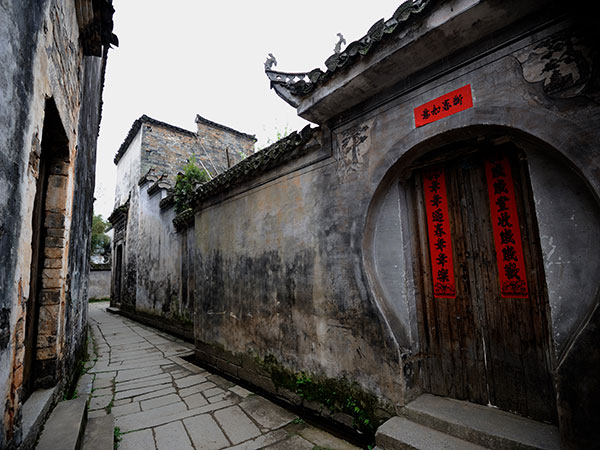
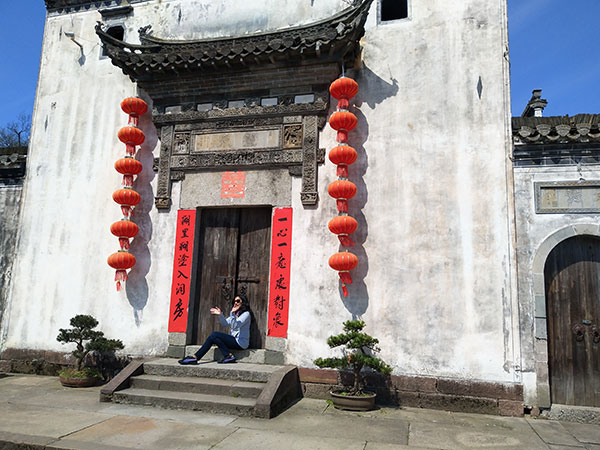
Architecturally, Chengkan is characterized by traditional whitewashed walls, dark-tiled roofs, and horse-head gables. Over 130 well-preserved Ming and Qing dynasty structures still stand, showcasing the village’s cultural richness. Among them, the Baolun Pavilion in the Luo Dongshu Ancestral Hall is especially remarkable, supported by golden Phoebe zhennan wood pillars valued at an astonishing 1.2 billion RMB, and built following the grand regulations of Beijing’s Hall of Supreme Harmony. Yanyi Hall is another highlight, ingeniously incorporating ancient systems of water purification, underfloor heating, air conditioning, and even automatic fire prevention.
Equally stunning are Chengkan’s artistic “three carvings” — brick, wood, and stone. Exquisite patterns of blessings, wealth, longevity, and happiness are carved on doors and windows, while decorative scenes of landscapes and figures on brick gates appear almost lifelike. The craftsmanship of the stone bases and pillars reflects the pinnacle of Huizhou artisanship, making Chengkan not only a living village but also a museum of traditional Chinese art and architecture.
General Scenic Spots and Photography
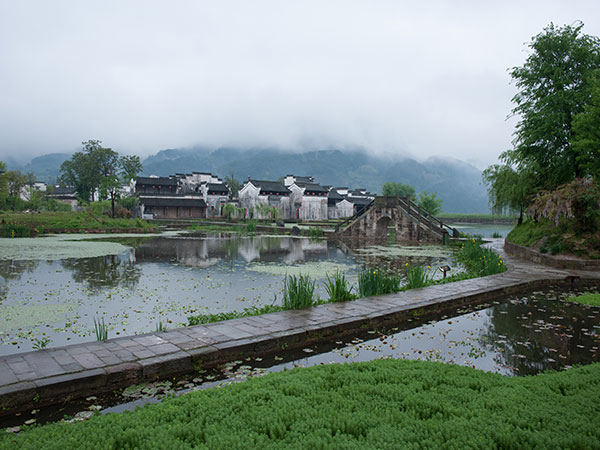
There are quite a few roads leading to the village, but the main entrance and ticket office is sited in the southwestern corner of the village, as well as Chengkan Bus Station. About 100 meters away from the ticket office, there is view platform where you can shoot the overall view of the village. There is a small hill in the right in front of the view platform. Yon can also take shoot the overall view of the village on the top of the hill. Every April, rape flowers bloom around the village, which make it more attractive. There is a small lake, where reflects ancient houses in white walls and grey roof. It is also a perfect shooting site, especially when the lotus flowers are blooming in summer.
Cultural Heritage and Must-see Sites
It is recommended to hire a tour guide at the entrance, so that you not miss the main sites and get explanation of the history of this village and Hui-style culture. Baolun Pavilion is a must see. It is located in the northeast of the village and built in Ming Dynasty. The Baolun Hall in ancestral temple is an outstanding example of the refined beauty of Chengkan's architecture. The coloured drawing on beam frame is rare folk painting treasures in the China.
It is also worth visiting the Bagua Gate, which stands right at the entrance of the village. This iconic eight-arch structure symbolizes the Eight Trigrams and is one of the most photogenic spots, especially when framed by the surrounding ancient houses. Not far away lies Yongxing Lake, a tranquil body of water reflecting the whitewashed walls and dark-tiled roofs of the village. Visitors can take a bamboo raft across the lake, and in summer the blooming lotus flowers make the scene even more enchanting. Among all the landmarks, the Luo Dongshu Ancestral Hall is the most prominent. Known as the “No. 1 Ancestral Hall in Jiangnan,” it was built by the Luo clan to honor their ancestor Luo Dongshu. With its massive scale, refined design, and the extremely rare 11-bay structure of the Sleeping Hall, it represents a true masterpiece of Ming Dynasty ancestral architecture.
Every autumn, Chengkan Village hosts the traditional “Shaiqiu” (Autumn Sun-Drying) Festival, which continues the thousand-year-old custom of “spring praying and autumn thanksgiving.” During this celebration, villagers gather at the Changchun Grand Temple to worship the Land God and the God of Grains, praying for favorable weather and a bountiful harvest. Throughout the village, golden rice, fiery red chilies, and other crops are displayed in front of houses and courtyards, turning the ancient settlement into a vivid palette of colors. This harvest scenery, combined with folk activities such as fish lantern performances, creates an immersive cultural atmosphere that attracts visitors to experience Huizhou traditions firsthand.
If weather conditions permit, you may also witness the intangible cultural heritage fish lantern show at Yongxing Lake after nightfall. The lanterns are crafted with bamboo frames and decorated with paper or cloth in the shape of carp, with an electronic light inside to make them glow. Their flexible movements mimic swimming fish. During the performance, teams of lantern bearers parade around the square and along the lake, accompanied by fireworks and acrobatics. Visitors can even join by carrying a fish lantern themselves, creating a festive and interactive experience.
【Chinese name】: 呈坎村
【Best time to visit】: April would be the best time to visit, when the rape flowers blooms. September and October are good time to see Autumn colors as well.
【How to get to Chengkan Village in Huangshan】: If you come from Huangshan downtown (Tunxi), you may take a bus at Tunxi Bus Station to reach Chengkan directly, and you may have to check the schedule upon your arrival in the station. If you miss the bus, you can take a taxi to get there. It is about 35 kilometers from Tunxi to Chengkan. If you come form Mt.Huangshan Scenic Area(Tangkou), you can take a bus which leaves for She County(歙县) or Huizhou District(徽州区), and get off at a fork road that leads to Chengkan. But it is still 5 kilometers away from the fork road to the village. You may take a local motorcycle or walk to get into the village. If you do not want to go by public transport, you can also rent a car through local agent to take you there.
【Join a tour guide group】: Without the tourist shops and overpriced restaurants, you can truly enjoy the atmosphere of the ancient Chinese village. But unlike Hongcun which has plenty of landmark signages (incl in English), Chengkan has virtually none. So you'd better travel with a guide.
From $ 159
From $ 127
From $ 321

 English