Your China & Yunnan Travel Experts

 Ask a Question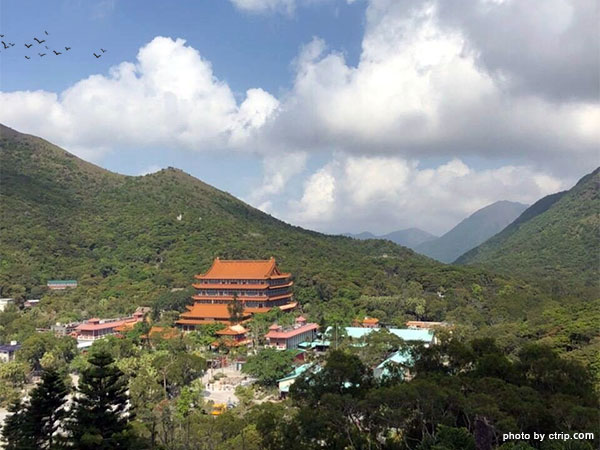
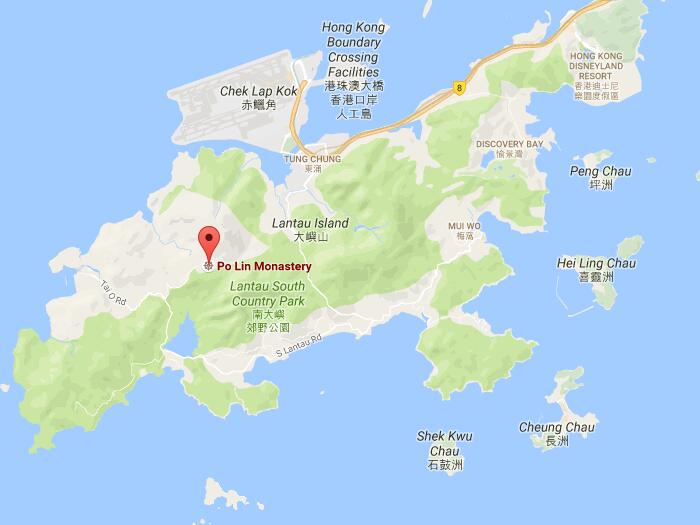
Lantau Island, Hong Kong, China
A very famous Buddhist monastery in Hong Kong
Po Lin Monastery stands as a testament to Hong Kong’s rich Buddhist heritage and architectural grandeur. What began over a century ago as a modest “Big Thatched Hut” has evolved into one of the world’s most revered Buddhist monasteries, drawing millions of pilgrims and tourists annually. Its crown jewel, the Tian Tan Buddha (Big Buddha), is a towering symbol of peace and enlightenment, while the monastery itself offers a tranquil escape from the bustling city below. This guide delves into the monastery’s fascinating history, must-visit attractions, practical travel tips, and how to make the most of your journey to this spiritual sanctuary.
The story of Po Lin Monastery dates back to 1924, when Venerable Ji Xiu—an eminent monk from Jiangtian Monastery in Jinshan—chanced upon Lantau Island during his Buddhist study travels. Struck by the area’s serene beauty and spiritual aura, he renamed the existing “Big Thatched Hut” (a simple hermitage for monks) to “Po Lin Monastery,” meaning “Precious Lotus Monastery,” and assumed the role of its first abbot. This marked the beginning of the monastery’s transformation from a humble retreat to a major religious institution.
In 1925, just one year after its founding, Po Lin held its first Autumn Ordination Ceremony, attended by dozens of lay followers—a significant milestone that solidified its place in Hong Kong’s Buddhist community. Three years later, in 1928, the Hall of Great Perfection was constructed, flanked by the Vajra Cave (for meditation) on the left and the Guest Hall and Treasury on the right, expanding the monastery’s infrastructure to accommodate growing numbers of visitors and practitioners.
The mid-20th century brought periods of transition and growth. In 1952, Abbot Fat Ho stepped down from his role to focus on religious retreat, and Venerable Tsang Sau was appointed the third abbot. However, in 1960, Abbot Fat Ho resumed leadership and introduced a pivotal change: replacing the traditional abbot-led management with a board of administrators, becoming the first Board Leader. This restructuring ensured the monastery’s long-term stability and efficient operation.
Tragedy struck in 1972 with the passing of Abbot Fat Ho, but the monastery continued to thrive under Venerable Wai Ming, who was named the fourth abbot. During his tenure, he built a pensionable shelter for former abbots, honoring their contributions to Po Lin’s legacy. The most transformative chapter began in 1981, when construction of the Tian Tan Buddha—an ambitious project over a decade in the making—kicked off. In 1992, a delegation led by Venerable Chu Hui traveled to Sri Lanka to acquire two sacred Buddha relics, adding profound spiritual significance to the upcoming statue. Finally, in December 1993, the Big Buddha was completed, and its grand opening ceremony catapulted Po Lin Monastery to international fame, cementing its status as a global Buddhist landmark.
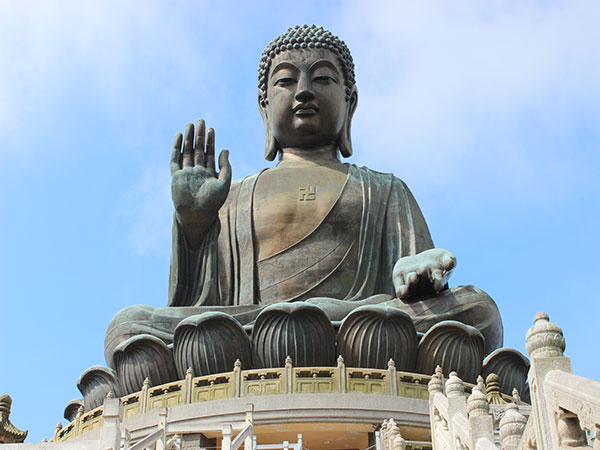
Undoubtedly the star attraction, the Tian Tan Buddha is the world’s tallest outdoor bronze seated Buddha, standing at an impressive 34 meters (112 feet) tall, including its pedestal. Perched atop Muyu Mountain (Wooden Fish Mountain), the statue depicts Sakyamuni Buddha in a meditative pose, with hands resting gently on his lap—symbolizing peace and enlightenment. To reach its base, visitors must climb 268 stone steps, a journey that not only tests physical endurance but also serves as a metaphor for the spiritual path of self-cultivation.
The pedestal beneath the Buddha houses three exhibition halls: the Gongde Hall, Fajie Hall, and Sakyamuni Memorial Hall. Inside, you’ll find a wooden book adorned with bodhisattva images, a 200-kilogram bronze statue of Ti-tsang Bodhisattva, and the sacred Buddha relics acquired from Sri Lanka. A large bell in the hall rings every seven minutes, totaling 108 times a day—each chime believed to dispel one of the 108 human vexations in Buddhist teachings. The view from the top of the steps is equally breathtaking, with panoramic vistas of Lantau Island’s lush greenery and the South China Sea on clear days.
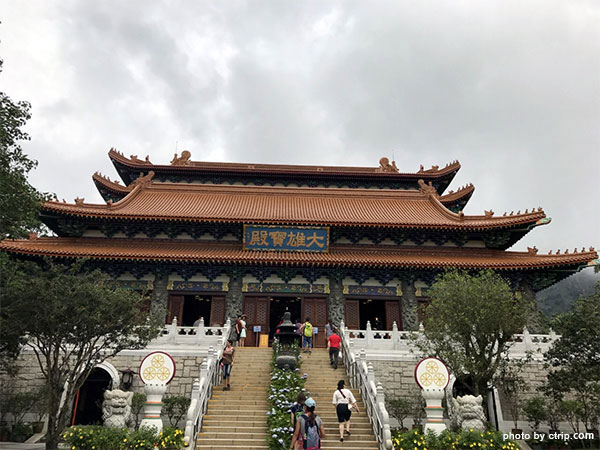
The monastery’s main complex is a masterpiece of traditional Chinese Buddhist architecture, with intricate carvings, vibrant red pillars, and golden-tiled roofs. The heart of the complex is the Da Xiong Bao Dian (Great Hall of Treasure), where three giant Buddha statues are enshrined: Sakyamuni (the historical Buddha), Dipamkarara (the Buddha of the past), and Maitreya (the Buddha of the future). Incense wafts through the air as worshippers offer prayers, creating a deeply spiritual atmosphere.
Adjacent to the Great Hall is the Hall of Ti-tsang Bodhisattva, home to a 200-kilogram bronze statue of Ti-tsang (the Bodhisattva of Hell Rescue) and a 1,000-kilogram bronze bell. The bell is rung during important ceremonies, its deep resonance echoing through the monastery grounds. Other notable halls include the Hall of Great Perfection (built in 1928) and the Abbot’s Quarters, each reflecting the monastery’s rich cultural and religious heritage.
A hidden gem nestled on a hillside near the monastery, the Wisdom Path is a serene outdoor installation that combines art, philosophy, and nature. It features 38 wooden columns, each 8–10 meters tall, inscribed with the Heart Sutra—one of the most important texts in Mahayana Buddhism—calligraphed by the renowned Chinese scholar Professor Jao Tsung-i. The columns are arranged in the shape of an infinity symbol (figure 8), representing the endless nature of Buddhist wisdom and the cycle of rebirth.
Unlike the bustling main monastery, the Wisdom Path offers a quiet space for reflection and contemplation. As you walk along the winding path between the columns, the rhythmic flow of the sutra’s verses and the rustle of leaves create a meditative ambiance. The path culminates in a small pavilion, where you can sit and soak in the panoramic views of Lantau Peak and the surrounding valleys. It’s particularly stunning during sunrise or sunset, when the golden light bathes the wooden columns and the landscape below.
Po Lin Monastery regularly hosts temporary exhibitions showcasing precious Buddhist artifacts, including ancient sutras, thangka paintings, and statues. The Longcang Sutra— a rare handwritten Buddhist text—and the painting Monk Huayan Preaching Buddhist Sutras are among the highlights of these exhibitions. For Buddhist disciples and culture enthusiasts, these displays offer a unique opportunity to deepen their understanding of Buddhist history and art.
From on request
From on request
From on request

 English