Your China & Yunnan Travel Experts

 Ask a Question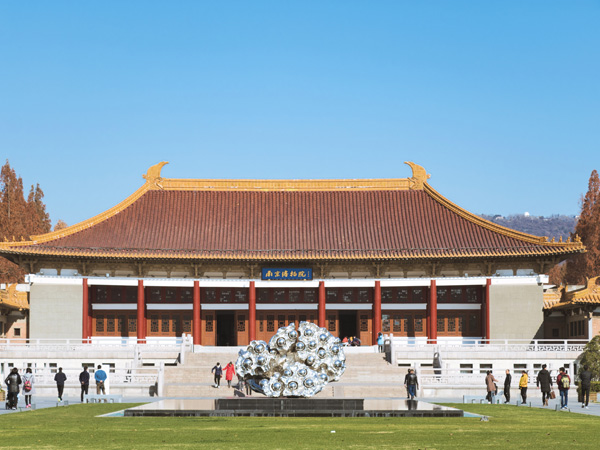
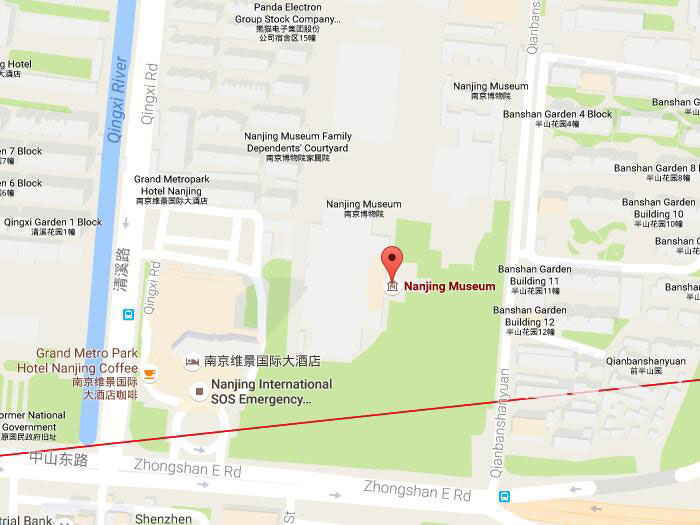
No.4 Jianye Road, Qinhuai District, Nanjing, Jiangsu Province.
The largest-scale and best-preserved museum in regions south of the Yangtze River.
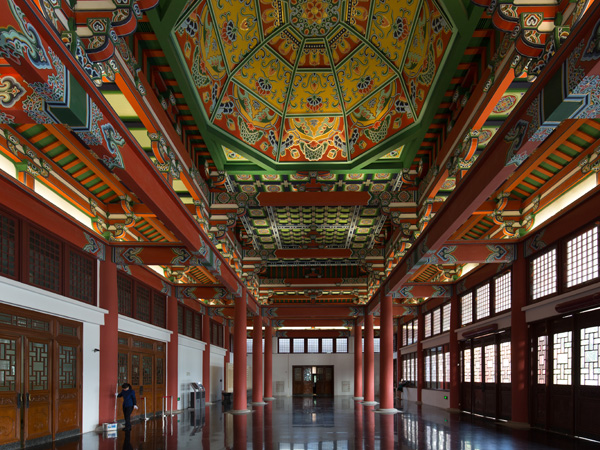
Nanjing Museum is located inside the Zhongshan Gate, in the south of Purple Mountain, Nanjing City. The Museum is a complex of buildings that is modeled after Liao Dynasty palace. Taking an area of 70,000 square meters, with two exhibition halls (history exhibition hall and art exhibition hall) taking 35,000 square meters construction area, both of them being splendid palatial architecture stimulating the architectures in Liao Dynasty, trees and grasses full of the museum decorated by various stone inscription relics, with cultural landscape and natural landscape formed It is one of the first large national comprehensive museum in China, and also the second largest museum in China.
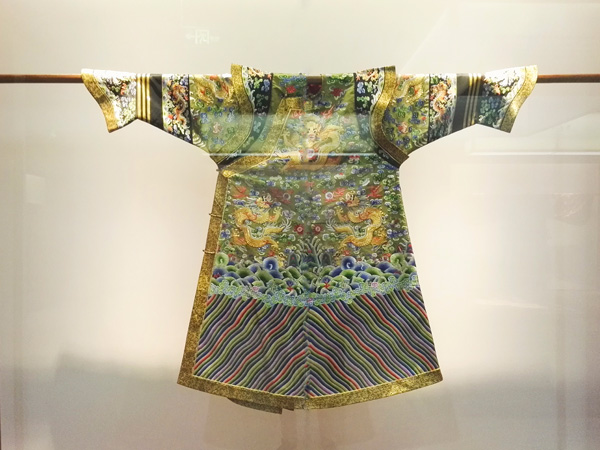
There are about 400,000 artifacts collections in the museum in various types from Paleolithic period to the contemporary era, including stoneware, earthenware, bronze ware, jadeware, chinaware, embroidery, bamboo carving, painting and calligraphy, contemporary and folklore art, and 1,062 cultural relics higher than first national grade. Some of them are very precious to China’s history, such as the full-size suit of armor sewed with silver thread (A highlight of the collections). Some of the amazing artifacts come from the excavation of Chu State tomb from the Warring States period of Chinese history.
One of the highlights of the museum would be the calligraphy and painting collections. Out of about 100,000 pieces of work in these collections, most are from the Jiangsu area during the Ming and Qing dynasties such as 'Wu Men painting school', 'Yangzhou painting school', and 'Jinling painting school'. Most of the works of the modem Chinese painter Fu Baoshi (1904-1965, painter, art historian) and Chen Zhifo (1896-1962, modern arts educator) are displayed here.
The Nanjing Museum also holds the objects excavated during the early part of the twentieth century. These include excavations in Heilongjiang, Xinjiang, Yunnan, Sichuan, Gansu and other places. Collections also include artifacts from the southwest parts of China of the Naxi tribe, the Yi tribe, the Miao tribe, and other Chinese minorities.
The Museum applies modern scientific methods of conservation, and is active in displaying its holdings, having mounted some 236 exhibitions. There are 12 permanent exhibition halls at the museum, including Qin Garden, Treasure Hall, Ming and Qing Porcelain Hall, Bronze Ware Hall, Ancient Paintings Hall, Folk Art Hall, Jade Hall, Jiangnan Silk Product Hall, Lacquer Hall, Wu Weishan Sculpture Hall, Earthen Ware Hall, Modern Art Hall.
Gold Beast: The Power to Rule and Safeguard the Country
The Gold Beast was discovered in 1980s in Xuyi, Jiangsu Province. The gold content of the Gold Beast is 99%. It weighs 9900 grams, which is the heaviest ancient gold in China.
Brick Painting of Seven Sages of the Bamboo Forest and Ron Qiqi
Seven Sages of the Bamboo Forest are the seven famous literary men in the Wei and Jin period. And Ron Qiqi is a famous celebrity in the Spring and Autumn Period. The brick painting is consisted of about 300 bricks. There are 2 series of the brick painting. One is 78 centimeters high and 242.5 centimeters wide. Another is 78 centimeters high and 241.5 centimeters wide. The brick painting was excavated a tomb of Nanjing, which is from Southern Dynasties.
Ox-shaped Bronze Lamp Inlaid with Silver
The Ox-shaped Bronze Lamp Inlaid with Silver is from Han Dynasty, which is useful and beautiful in the appearance. At the bronze lamp, you can see the patterns of animals like dragon, phoenix, tiger and deer. And you can also see the patterns of clouds, triangle and spiral.
At the History Gallery of Nanjing Museum, you can know about the history of Jiangsu from Old Stone Age to Tang, Song, Yuan, Ming and Qing dynasties. You can know about the history, development of the typical water town of China as well as the diversity, richness and uniqueness of the culture of Jiangsu. Jiangsu is located in the downstream of the Yangtze River with picturesque mountains and rivers and abundant natural resources.
At the Arts Gallery, you can see the temporary exhibitions and permanent exhibitions. You can visit the Su Tianci Oil Painting Exhibition and Wu Weishan Sculpture Exhibition. At the Su Tianci Oil Painting Exhibition, you can know about the art of Chinese oil painting.
The Digital Gallery has physical exhibition halls and virtual exhibition hall. The virtual exhibition hall restores the space and content of the physical exhibition hall through network and image recognition technology, which is an extension of the physical exhibition hall.
At the Intangible Gallery, you can see the intangible cultural heritage of Jiangsu Province, including folk literature, traditional music, traditional dances, traditional operas, folk art, traditional art, traditional skills, traditional medicine, traditional sports, entertainment and acrobatics, folk customs, etc. You can see the performances of the Intangible Cultural Heritage of arts and handicrafts at the Intangible Gallery. At the Master Works, you can see the inheritors of the intangible cultural heritage and get close to the intangible cultural heritage of Jiangsu.
At the Republic of China Gallery, you can know about the history and development of the architectures of Nanjing Museum. You can know about the architecture and stories of the Nanjing Museum. At the Former Capital Exhibition Hall, you can see the restoration of the buildings like post office, train station, bookstore and barber shop of the Republic of China. You will feel like that you get back to the time of the Republic of China. And there are many old things at the Republic of China Gallery like cars, furniture and foods of the old Nanjing.
Special Exhibitions Gallery include Furnishing of the Qing Court Exhibition Hall, Accuracy and Splendor Exhibition Hall and the Golden Age of Extravagance Exhibition Hall.
At the Furnishing of the Qing Court, you can know about the court life in the Qing Dynasty from the aspects of etiquette, belief, life, entertainment and furnishings, which not only shows the preference and aesthetic orientation of the emperors in the Qing Dynasty, but also shows Chinese's intelligence and creativity. At the Accuracy and Splendor Exhibition Hall, you can see the various kinds of exquisite clocks of China and European countries, which were made from 18th century to 20th century. At the Golden Age of Extravagance Exhibition Hall, you can see the porcelains during Kangxi, Yongzheng and Qianlong Reigns of Qing Dynasty. You can admire the characteristics of the porcelains of different periods.
Taking Bus Routes 5, 9, 29, 34, 36, 51, 55, 59, 201, 202, Y1, Y2 or Y5 to Zhongshanmen Station; Or take the Subway Line 2 to the Minggugong Station(明故宫站), a number of export to East 300 meters and you will get there.
From on request
From on request

 English