Your China & Yunnan Travel Experts

 Ask a Question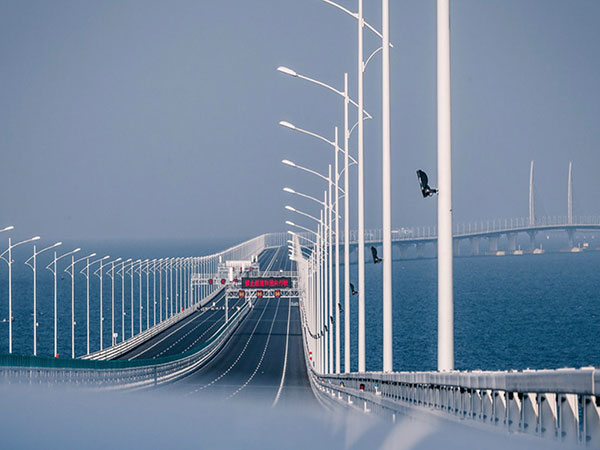
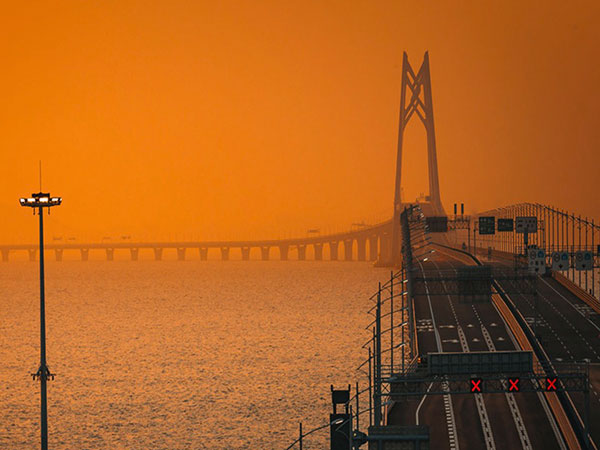
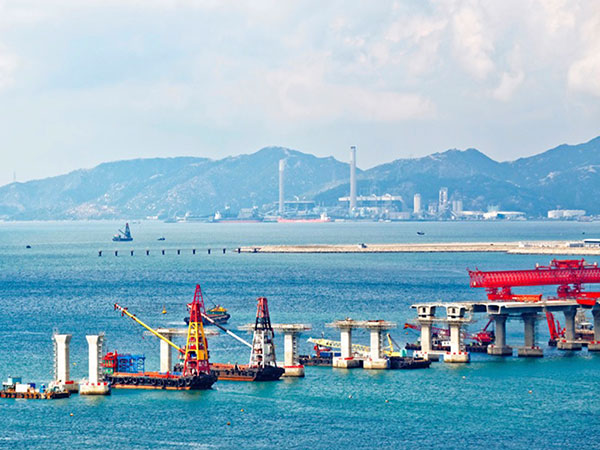
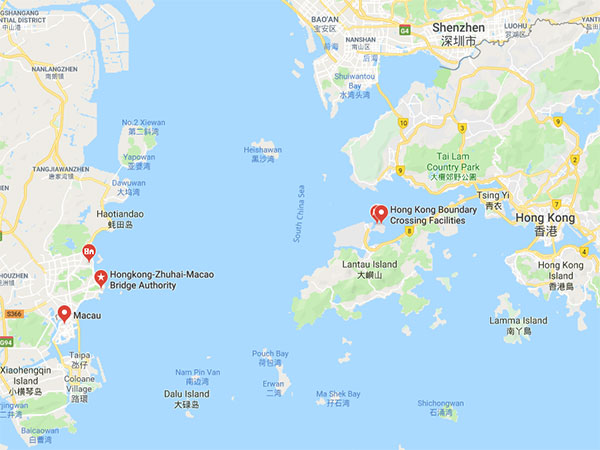
Hong Kong port, Zhuhai port, Macao Port
Longest Sea-crossing Bridge in China, Recommended ways from Hong Kong to Macau and to Zhuhai
The Hong Kong-Zhuhai-Macau Bridge (HZMB) is a remarkable engineering feat, standing as the longest sea-crossing bridge in the world. Stretching an impressive 55 kilometers, this massive infrastructure project links Hong Kong, Zhuhai, and Macau, significantly reducing travel time between these regions. Originally, the drive from Hong Kong to Zhuhai and Macau could take up to three hours, but with the HZMB in operation, this time has been slashed to just 45 minutes. Beyond its status as an engineering marvel, the bridge holds immense economic significance, serving as a vital link for trade and tourism in the region.
► Who is the designer of HZMB?
The design and execution of the HZMB was led by Meng Fanchao, the chief engineer behind the project. His visionary approach to bridge construction helped bring to life one of the most ambitious and complex engineering projects in recent history.
►How long is HZMB?
The bridge spans a total length of 55 kilometers, including a main bridge that stretches 29.6 kilometers. The bridge incorporates multiple engineering elements such as tunnels, artificial islands, and high-speed roadways, making it an unprecedented achievement in both scale and technology.
►What is the cost of HZMB?
The total cost of constructing the HZMB was approximately 120 billion RMB, a hefty investment that has already started yielding returns in terms of enhanced economic integration and regional development. This significant financial outlay underscores the importance of the bridge not just as an engineering marvel but as a critical infrastructural asset for the region.
►When does it open?
After nearly a decade of construction, the HZMB was officially opened on October 24, 2018. The opening marked a new chapter in connectivity for the Greater Bay Area of Guangdong, Hong Kong, and Macau, allowing for seamless transportation between the three regions.
The Hong Kong-Zhuhai-Macau Bridge is more than just a sea-crossing bridge; it represents China's growing technological prowess and its ability to execute large-scale infrastructure projects. The bridge’s unique features include a 6.7-kilometer undersea tunnel and two offshore artificial islands, marking several milestones in engineering that had never been attempted before.
The most innovative component of the HZMB is the undersea tunnel, which is the longest immersed tunnel for road traffic in the world. The creation of this tunnel posed a huge challenge due to the complex underwater geography and the need to maintain traffic flow while avoiding disruption to maritime activities. The tunnel, along with the two artificial islands built to facilitate the transition between bridge and tunnel, is a testament to China's advanced engineering and construction capabilities.
The HZMB also plays a vital role in regional integration, cutting down travel time between the cities of Hong Kong, Zhuhai, and Macau, which has substantial benefits for both local residents and businesses. The bridge has improved accessibility, fostered greater tourism, and enhanced trade links, contributing to the growth of the Greater Bay Area—a major economic hub in China.
The planning and construction of the Hong Kong-Zhuhai-Macau Bridge began on December 15, 2009. The project was an extraordinary feat, requiring the collaboration of engineers, architects, and construction teams from across China and beyond. With a total investment of 126.9 billion RMB, the bridge’s construction consisted of three major parts
Bridge and Tunnel Construction
The most technically challenging part of the HZMB project was the undersea tunnel. From the Tonggu course to the Lingdingxi course, the tunnel was constructed using the immersed tube method, a complex technique that involved floating large sections of tunnel into place and then sinking them to the seabed. The undersea tunnel stretches 6.7 kilometers, making it the longest immersed tunnel for road traffic in the world.
Ports Construction in Hong Kong, Macau, and Zhuhai
The construction of the bridge also involved building massive artificial islands to serve as the landing points for the tunnel. These artificial islands are strategically located at the transition points between the tunnel and the bridge, helping to connect the different parts of the bridge system. The Hong Kong port, for example, was built on an artificial island close to Hong Kong International Airport, covering an area of 1.3 million square meters.
Connection Between Hong Kong, Zhuhai, and Macau
Once the main bridge, tunnel, and ports were built, engineers worked on connecting them through efficient transportation networks. The bridge now accommodates six lanes of traffic in both directions, with a design speed of 100 km/h.
Hong Kong-Zhuhai-Macau Bridge has three ports, in Hongkong, Zhuhai and Macao. It is a six lane two way highway, with a design speed of 100 km per hour. Special license is needed for cars running on this bridge.
► What are the time slots for traffic permits on HZMB?
HZMB is available in 24/7 for car drivers. In nights, there are bright lights, and drivers won’t have any problems while driving in dark nights.
►What cars can use HZMB?
Eligible cars with official permits: cross-boundary buses, shuttle buses, across-boundary taxis , freight vehicles, and across-boundary private cars under quotas.
Tourists could take shuttle bus, cross-boundary bus or cross-boundary taxi, travelling between Zhuhai/ Macao and Hong Kong.
►What is the toll charge?
Hong Kong-Zhuhai-Macau Bridge only has 1 toll plaza with 20 toll gates, which is set up in the bridge management area of Zhuhai-Macao ports artificial island. The toll charge is listed as this: 150 yuan for private car and taxi, 200 yuan for cross-boundary bus, 300 yuan for shuttle bus, and 60 for goods vehicle, and 115 for container truck. The Bridge toll could be paid through cash, bank cards and e-payment like WeChat Pay and Alipay.
►Hong Kong-Zhuhai-Macau Bridge Shuttle Bus
Shuttle bus is running between Zhuhai port/ Macao port and Hong Kong port. Steps for taking shuttle bus: Passengers pass though a port, buy ticket and take shuttle bus, and pass through another port. Although tourists take shuttle bus travelling in this three cities, necessary papers are needed according to law, which is the same like travelling through other ports. Every seat is equipped with USB interface for passengers.
Bus charge and timetable
Shuttle bus for Hong Kong-Zhuhai line, and Hong Kong-Macao line takes 58 yuan per ticket in day time, and 63 yuan per ticket in night time. Shuttle bus is available at 24/7, with a terminal of 5-10 or 10-15 minutes at different time periods.
From on request
From on request
From on request

 English
