Your China & Yunnan Travel Experts

 Ask a Question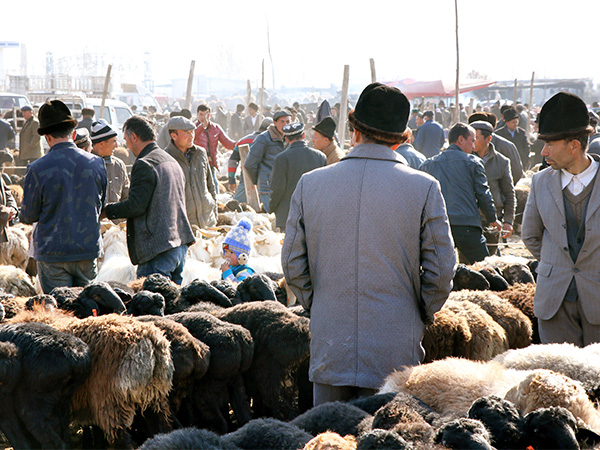
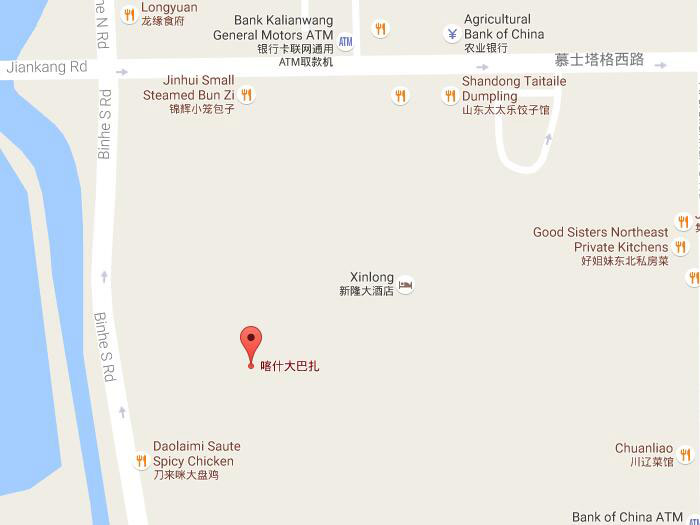
No.218 Aizi Rete Road, Kashgar, Xinjiang Uygur Autonomous Region.
The largest international trade market in northwest China.
Kashgar has been a gateway on the ancient Silk Road since ancient times with superior geographical position. And it has also become an important trading node of the ancient Silk Road. With the advancement of modern civilization, there is still such a grand bazaar, which has retained its former excitement and prosperity.
The full name of Kashgar Grand Bazaar is the international trade market of central and western Asia in Kashgar. Locals call it Dongmen(East Gate) Grand Bazaar, which is located at the east gate of Kashgar, and its specific address is near No.218, Aizirete Road of Kashgar. It is the largest international trade market in northwest China. Bazaar is a Uyghur language, which means market. Bazaar in Kashgar has a history of more than 2,000 years, and it was called the largest market in Asia in ancient times.
Kashgar is a famous historical and cultural city on the ancient Silk Road, and it is also a commodity distribution center. From the 2nd century BC to the 15th century A.D., in the long history of 1700 years, Kashgar has always maintained a top position in commercial trade. In those years, business travelers from Xi 'an, whether passing Tianshan South Road or Tianshan North Road, all met here. The prosperity of commercial trade made Kashgar the earliest international trade market in western China, which is now Kashgar Grand Bazaar.
There are 21 markets in the Kashgar Grand Bazaar, with more than 4,000 fixed sales stalls and a food street. There are more than 100,000 people visiting here every day. Kashgar Grand Bazaar has a wide range of goods, with more than 9,000 kinds. Here you can see all kinds of local products, handicrafts, daily necessities, fruits and vegetables, means of production and large and small livestock, etc. It is a place where local folk customs are concentrated.
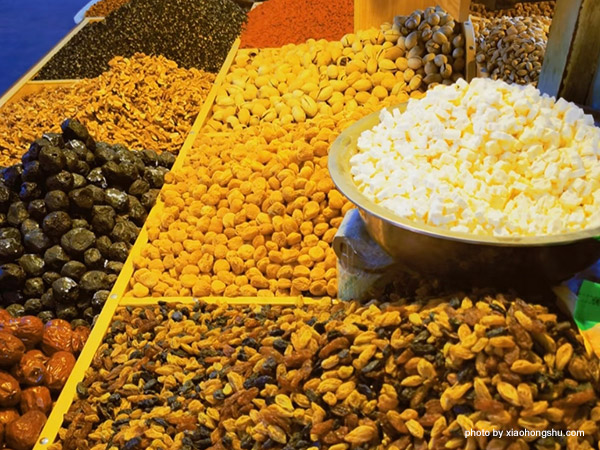
Kashgar Grand Bazaar is a unique business place in Xinjiang, where a variety of special foods are gathered. The dried fruit here is delicious and sweet, with refreshing taste, and there are many flavors and varieties such as goji berry, angelica, walnut, sunflower seed, peanut and almond. Because of the long sunshine time and large temperature difference between day and night in Xinjiang, dried fruit is a very popular specialty with high sugar content and excellent quality. The are also delicious beef and mutton, baked buns, yogurt and barbecue at the Kashgar Grand Bazaar.
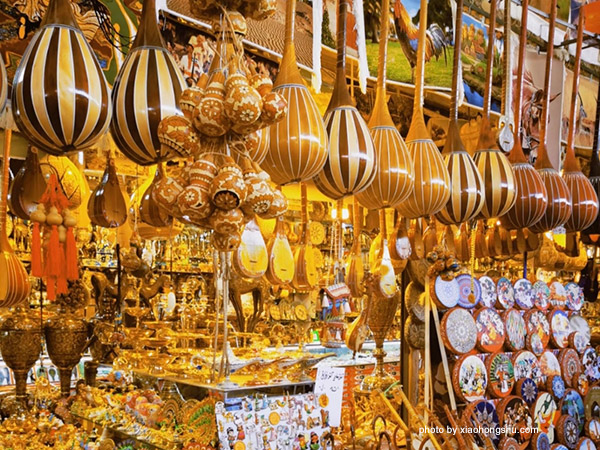
Kashgar Grand Bazaar has a dazzling array of handicrafts with strong national characteristics and regional customs.
Uyghur characteristic embroidery: With rich and colorful patterns, embroidery often embroidered with flowers, geometric figures and other elements, which can be used for clothing, tapestries and other decorations.
Carpet: The carpets at Kashgar Grand Bazaar are handwoven by traditional craft. With excellent texture and exquisite pattern, these carpets are useful and artist, and it is one of the popular commodities in Kashgar Grand Bazaar.
Gold and silver jewelry: The gold and silver ornaments at Kashgar Grand Bazaae are unique in shape and exquisite in craftsmanship, it combines the cultural characteristics of Uygur people, such as inlaid gems and carved patterns, showing unique charm.
Gourd handicrafts: In the form of painting, carving or soldering iron, the gourd handicrafts show the lively Bazaar in southern Xinjiang, the happy life of local farmers and the life of people of all ethnic groups. And they are usually used to make bedroom decorations and other daily necessities.
Kashgar earthenware: Known as the mud art, the history of Kashgar earthenware can be traced back to the Neolithic Age, especially the antique earthenware, which are useful and beautiful. Its main varieties include bowls, plates, pots, cans, etc.
National musical instruments: The instruments at Kashgar Grand Bazaar are exquisite with beautiful and high-quality sound, and you can also see the process of making musical instruments at the scene.
These handicrafts are not only commodities, but also carriers of culture. They reflect the wisdom and creativity of local people and are an important part of Xinjiang's multiculturalism. Every handicraft contains the historical memory and cultural heritage of Uygur and other nationalities, and reflects the philosophy of life and aesthetic concept of local people.

 English