Your China & Yunnan Travel Experts


 Ask a Question
|
Month
Item
|
Jan
|
Feb
|
Mar
|
Apr
|
May
|
Jun
|
Jul
|
Aug
|
Sep
|
Oct
|
Nov
|
Dec
|
|
average temperature
(℃) |
5.2
|
6.9
|
11.1
|
17.5
|
22.3
|
25.7
|
29.0
|
28.6
|
24.0
|
28.6
|
23.0
|
7.8
|
|
Rainfall (mm)
|
60.1
|
67.1
|
114.6.
|
119.6
|
162.8
|
208.9
|
152.4
|
129.9
|
73.1
|
81.4
|
64.7
|
38.9
|
|
Days of rainfall
|
11.8
|
11.6
|
16.1
|
16.6
|
14.9
|
14.5
|
11.4
|
10.1
|
95
|
12.0
|
9.8
|
8.4
|
January is one of the coldest months in Zhangjiajie, with average temperatures ranging from 0–5°C (32–41°F). In the mountains, especially at higher elevations, temperatures can drop to around –8°C (18°F). The temperature difference between day and night is significant. Light rain, sleet, or freezing rain may occur, and icy conditions are common in high-altitude areas. Humidity remains high throughout the month, and thick fog or low cloud cover can reduce visibility at times.
What to Expect: In January, you can enjoy snow and rime frost at Wulingyuan and Tianmen Mountain, where the white-covered peaks look especially beautiful. Huanglong Cave is a good indoor choice with a steady temperature year-round. You can also take an easy walk along Golden Whip Stream for some quiet winter forest views—just be careful of slippery paths.
Tips: Wear warm layers, gloves, and anti-slip shoes. Cable cars may temporarily close due to weather—check operational status in advance.
February in Zhangjiajie is still cold, with average temperatures around 2–10°C (36–50°F). It gets even lower in the mountains, and early mornings and evenings feel especially chilly. Snow, rain, and rime frost are still possible, and mountain weather can change quickly with fog or low temperatures, so it’s best to keep an eye on the latest forecast.
What to Expect: You can continue to enjoy winter views at places like Yuanjiajie, Tianzi Mountain, and Huangshizhai, where snowy peaks and rime frost often appear. Indoor spots such as Huanglong Cave and Jiutian Cave stay comfortably warm at around 16–20°C, making them great choices on colder days. Since February often overlaps with Chinese New Year, you can also experience local Tujia traditions at places like Tujia Folk Customs Park or 72 Qilou, where activities such as dragon dances, hand-waving rituals, and local food-making take place. Just note that crowds and prices rise sharply during the holiday period (the 2026 Spring Festival is Feb 15–23), so it’s best to avoid these dates if possible.
March brings a noticeable warm-up in Zhangjiajie. Daytime temperatures usually sit around 10–15°C (50–59°F), and on sunny days it can briefly climb to 18–24°C (64–75°F). Nights are still chilly, sometimes dropping below 5°C (41°F), and it’s even colder in the mountains. Rainfall is relatively light but the weather can shift quickly—short showers, drizzle, or the occasional spring thunderstorm may appear when cold air moves in. Humidity is high, so morning fog is common after rain. Places like Tianmen Mountain and Golden Whip Stream often get wrapped in beautiful mist, giving the landscape that classic “fairy-tale” look.
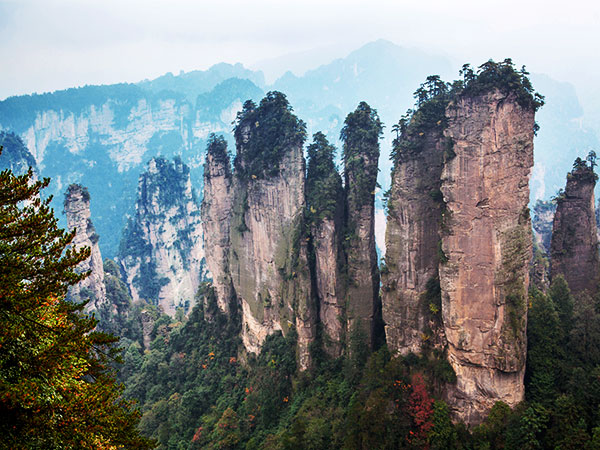
April is one of the most beautiful months, offering 12–20°C (54–68°F) temperatures and lush greenery. Rainfall increases, but the mist often enhances the otherworldly atmosphere of the stone pillars.
What to Expect: Forest hikes, panoramic views, and spring photography.
Tips: Sudden showers are common—carry waterproof bags and wear quick-dry clothing.
May is pleasantly warm, with temperatures between 16–25°C (61–77°F). Vegetation is at its most vibrant, and clear days offer long viewing distances. This is one of the best months to explore the national park.
What to Expect: Full scenic routes, long hikes, glass bridge visits.
Tips: Labor Day holiday (early May) brings crowds—avoid May 1–5 or visit early in the morning.
June becomes hot and humid, with temperatures climbing to 20–28°C (68–82°F). Afternoon showers and thunderstorms are frequent but typically short-lived. Forests are lush and waterfalls are at their strongest.
What to Expect: Cool forest walks, shaded valley routes (e.g., Golden Whip Stream).
Tips: Pack insect repellent and waterproof gear; avoid ridges during thunderstorms.
July is the hottest month with temperatures around 22–30°C (72–86°F). Although warm, Zhangjiajie’s altitude keeps it cooler than major cities. Frequent rain creates dramatic seas of clouds.
What to Expect: Escaping city heat, summer photography, lush forest experiences.
Tips: Stay hydrated, wear breathable clothes, and check weather before ascending higher mountains.
August remains hot and humid, similar to July. Expect temperatures of 22–30°C (72–86°F) and occasional heavy rain. Forest vitality peaks, creating intense green landscapes.
What to Expect: Shaded valley trails and family travel.
Tips: Avoid midday heat; morning and late afternoon provide better temperatures and visibility.
Temperatures cool down to 18–26°C (64–79°F), humidity decreases, and rainfall lessens significantly. Clear skies make it a superb month for enjoying panoramic mountain views.
What to Expect: Long-distance photography, glass bridge walks, full-day itineraries.
Tips: Weather becomes more stable, but carry a light jacket for higher elevations.
October is one of the most popular months, with temperatures around 15–22°C (59–72°F). Autumn colors begin to appear, especially late in the month. Skies are clear, making views incredibly sharp.
What to Expect: Autumn foliage, mountain viewpoints, classic scenic spots.
Tips: National Day Golden Week (Oct 1–7) is extremely crowded—avoid if possible.
November brings cooler temperatures (8–16°C / 46–61°F) and beautiful late-autumn colors. Visibility remains good, and the mountains turn gold and red.
What to Expect: Photography, tranquil hikes, and cooler outdoor activities.
Tips: Evenings are cold; bring warm layers. Rainfall begins to decrease significantly.
December is the start of winter with temperatures around 2–8°C (36–46°F). Snow may appear on higher peaks, though not frequently. The park becomes peaceful with very few tourists.
What to Expect: Serenity, winter landscapes, and off-season travel.
Tips: Weather can be windy at high viewpoints—dress warmly. Some facilities may operate on shorter schedules.

 English