Your China & Yunnan Travel Experts


 Ask a Question
Famous Landmarks in Zhangjiajie are considered the Name Card of Zhangjiajie, like Zhangjiajie National Forest Park, Dragon King Cave, Tianmen Mountain National Forest Park, etc. ancient and new. They are somehow, represent a certain character or role Zhangjiajie played to the world. Come with Top China Travel, to witness and appreciate those famous Zhangjiajie Landmarks.
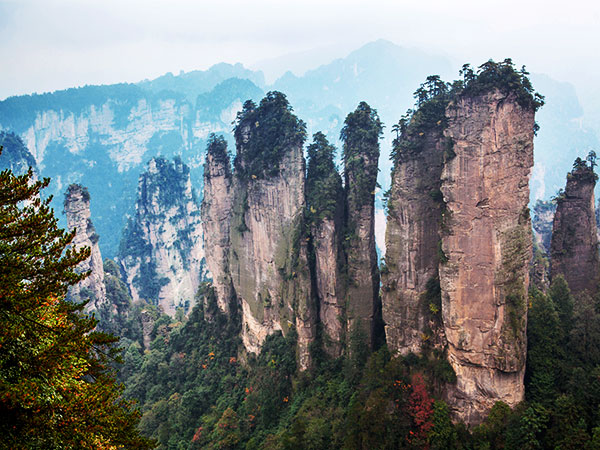
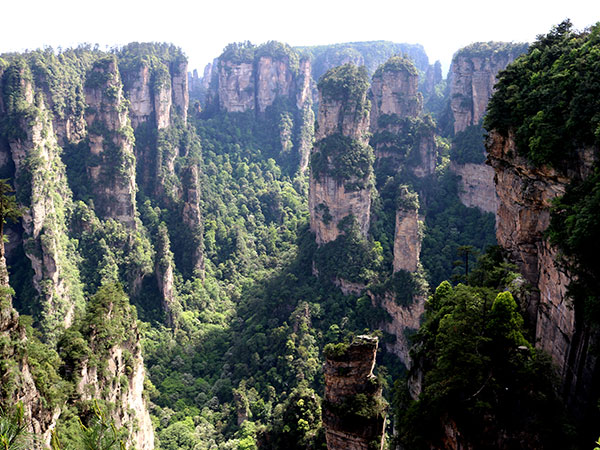
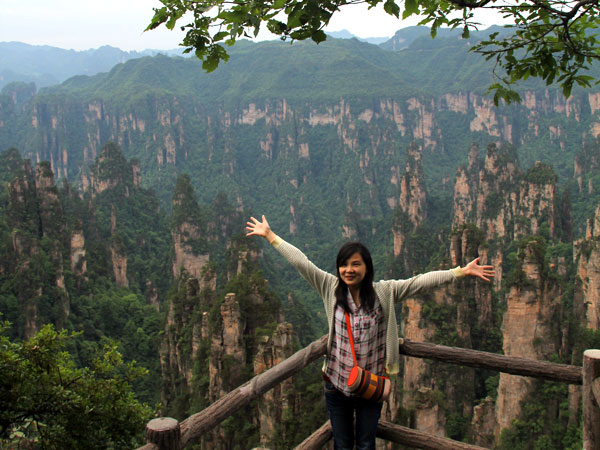
Zhangjiajie National Forest Park: The three-character name can be interpreted as follows: Zhang is a common surname in China; jia can be translated as family; and jie can be translated as homeland, giving the completed translation of Zhang family homeland. In 1982 it was recognized as China's first national forest park (4,810 hectares). In Zhangjiajie National Forest Park, the several thousand mountain peaks of quartz stand rise abruptly from the ground. Streams flow through the Jinbian (Gold Whip) Stream Grand Canyon which is flanked by sheer cliffs. The Sightseeing Platform at Huangshi Village is shrouded in mist. Wild animals play freely in the primeval forests. The scenic zone is like a fairy land with the beaury of wild nature.
Landmark Attractions in Zhangjiajie National Forest Park
Tianmen Mountain is the highest mountain in Zhangjiajie. The world marvelous scene called Tianmen Cave, means a door to the heaven in Chinese, makes this mountain famous. The comparative plat mountain top, the well-preserved original forest, the rare plants and species, the natural bonsai in everywhere form into a splendid picture. People entitle this mountain as the most beautiful flower garden in the sky and the fairy land in the boundary of heaven. For a long time, Mount Tianmen not only attracted attention because of its miraculous and unique geographic landform and unparalleled natural landscape, but it also became well-known for its profound cultural connotations and famous colorful humanistic site.
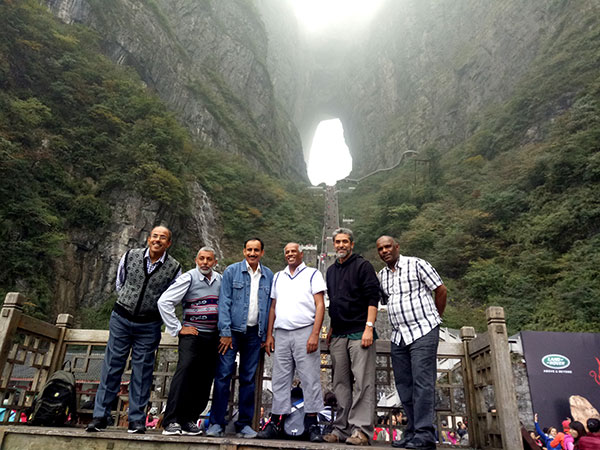
Landmark Attractions in Tianmen Mountain
With its unique scenes, Dragon King Cave is reputed as "the most featuring karst cave in the world". Ranking as the oldest and largest karst cave, it is a potential tourism spot for people to exploring. The totally length of this cave is about 30km. With an average height of 50 meter and width of 80 meters, there are 58 halls, 28 stone corridors, 15 pearl waterfalls, 3 underground rivers, 2 lakes and 45 pools.
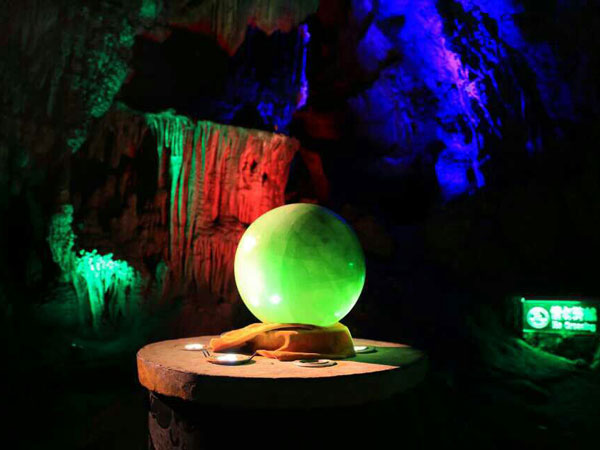
Tourists who are walking around these fantastic sites will feel the magic power of the nature. With the rapid development till now, Dragon King Cave has turned into a modern attraction integrating working, shopping, dining and entertaining together.
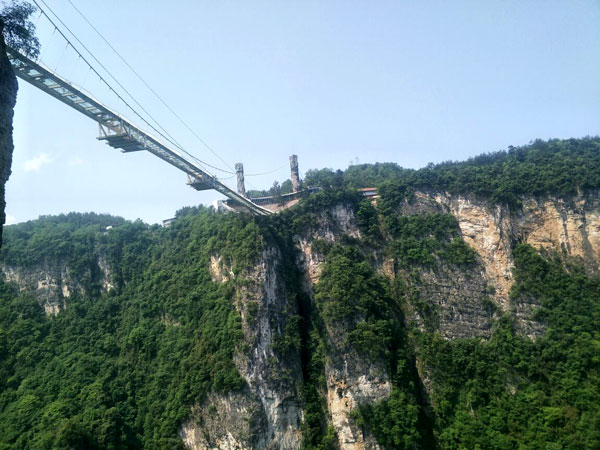
As an iconic landmark of Zhangjiajie's "adventure tourism", it is officially known as "Yunti Glass Bridge", which means "the bridge connecting the sky and clouds, carrying all people across the canyon" . Spanning the two mountains of Zhangjiajie Grand Canyon, it is a combination of sightseeing, adventure, and transportation. With a total length of 430 meters, a width of 6 meters, and a height of 300 meters above the canyon bottom, it was once the world's longest and highest fully transparent glass bridge when it was completed . The bridge deck is made of transparent glass with strong load-bearing capacity, allowing visitors to overlook the deep canyon, gurgling streams, and lush forests under their feet, experiencing the thrill of "walking in the air". In addition to the glass bridge, the surrounding Grand Canyon Scenic Area also has beautiful landscapes such as waterfalls, karst caves, and plank roads, forming a complementary natural and man-made landscape. It is also listed as one of the world's 11 most spectacular bridges by CNN .
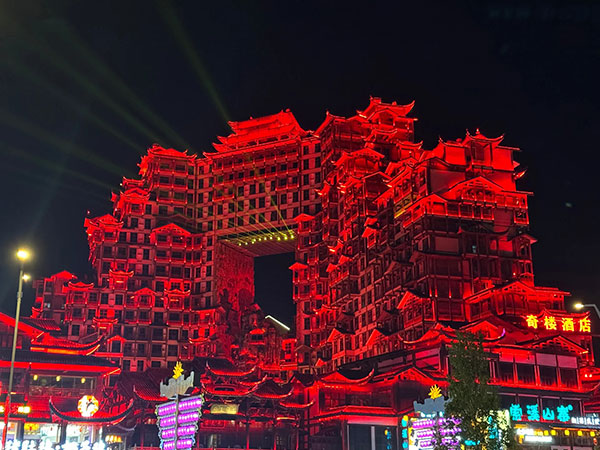
Located at No. 1 Wuling Mountain Avenue, Yongding District, Zhangjiajie City, it is the world's tallest building in the style of stilted buildings, certified by the Guinness World Records in 2021. Its main building is 109.9 meters high, with a hollow central archway 38 meters high, 28 meters wide, and 21 meters deep, forming a "mutual viewing between two caves" with Tianmen Cave thousands of meters away. As a new cultural industry landmark in Zhangjiajie, it integrates various tourism and leisure formats such as catering, accommodation, shopping, and cultural performances. At night, the building is brightly lit, showing a charming style different from the daytime, and is known as "Zhangjiajie's Cultural Landmark" and "a new engine of night economy".
Located on the southwest side of Dayongqiao Park, its main building is designed based on the "layered peaks" of Zhangjiajie's quartz sandstone peak forest landform, with a total construction area of 15,395 square meters, making it an important cultural landmark building in Zhangjiajie City. The museum's exhibition halls are composed of the Geology Hall, History and Culture Hall, and Urban Construction Planning Hall. The Geology Hall showcases the formation process of Zhangjiajie's unique peak forest landform; the History and Culture Hall displays the historical evolution and ethnic customs of Zhangjiajie; and the Urban Construction Planning Hall presents the past, present, and future of Zhangjiajie's urban construction. It is an important window for understanding Zhangjiajie's geology, history, and culture.
As one of the largest Tusi cities in southwest China, it is known as the "Forbidden City in the South". The Jiuchongtian Hereditary Hall in the garden is hailed as the "No.1 Building Under Heaven"—a 9-story, 12-floor stilted building with a height of 48 meters. With strong Tujia ethnic characteristics, the building adopts traditional Tujia construction techniques without a single nail, showcasing the wisdom of the Tujia people. The garden integrates Tujia ethnic customs, architectural art, and cultural performances. Visitors can watch Tujia folk dances, experience Tujia customs such as "sangzhi marriage", and taste Tujia specialty foods, making it an important window for displaying Tujia folk culture.
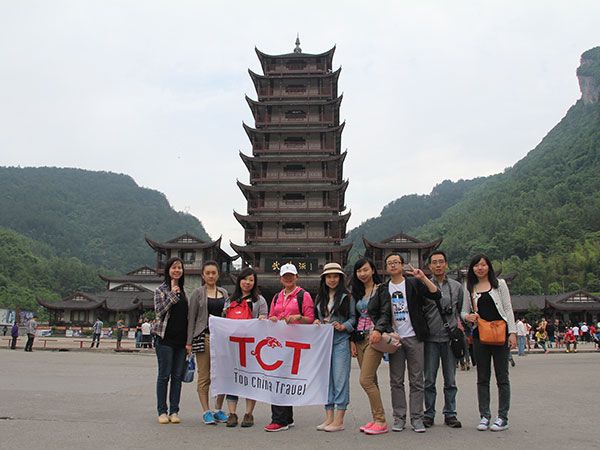
Located at the East Gate of Wulingyuan Scenic Area, it is a landmark building designed based on the Tujia Tusi Fort "Jiuchongtian". As an important sign for tourists to enter Wulingyuan Scenic Area, its architectural style fully embodies the traditional cultural characteristics of the Tujia people—with exquisite carvings on the outer wall, patterns related to Tujia's production and life, and ethnic beliefs. The tower not only has a decorative function but also serves as a viewing platform; climbing to the top, you can overlook the entrance scenery of Wulingyuan Scenic Area and feel the integration of Tujia culture and natural landscape.
More famous attractions in Zhangjiajie please click Zhangjiajie Attractions
Highly recommended Zhangjiajie Tours at Zhangjiajie Tours

 English