Your China & Yunnan Travel Experts


 Ask a Question
Xinjiang, a vast and diverse region in the far west of China, is an incredibly fascinating destination for travelers seeking a mix of natural beauty, rich cultural heritage, and unique ethnic diversity. Covering over 1.6 million square kilometers, Xinjiang is China's largest province, and it is home to a wide variety of landscapes, from towering mountain ranges and vast deserts to ancient cities and picturesque oases. This region is a melting pot of cultures, with various ethnic groups, including Uighurs, Kazakhs, Tajiks, and Hui, contributing to a vibrant cultural tapestry. Here’s a comprehensive introduction to the many facets of Xinjiang as a travel destination.
Xinjiang tourism resources are rich and colorful; and its natural landscape is strange, its climate is ecological and divers. The famous natural sceneries in Xinjiang include the, Bosten Lake, Karakul Lake, Bayibuluke Grasslands, Flaming Mountains, etc...Xinjiang's historical heritage is also numerous, such as the Jiaohe Ancient City, Gaochang Ancient City, Loulan Ruins, Kizil Thousand Buddha Caves, Emin Minaret; all of them are well known at home and abroad. In addition, Xinjiang has a famous reputation of singing and dancing township with its unique ethnic customs.
Xinjiang’s geographical diversity is one of its most remarkable features. The province is bordered by Kazakhstan, Kyrgyzstan, Tajikistan, Afghanistan, Pakistan, and India, making it a crossroads of cultures and civilizations. The landscapes are equally diverse, offering a wide range of outdoor activities for nature lovers and adventure seekers.
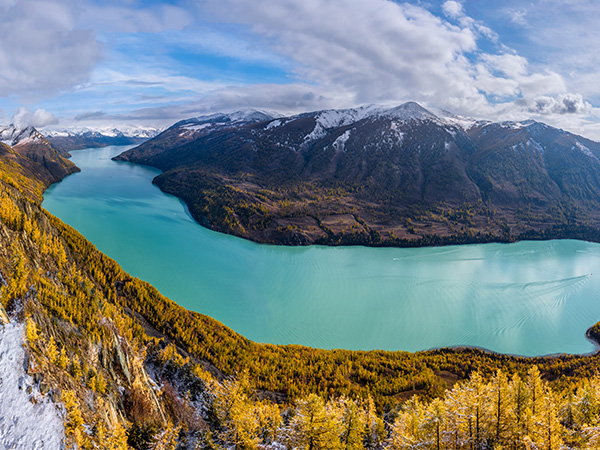
The Tian Shan, or “Heavenly Mountains,” stretch across the northern part of Xinjiang, offering dramatic alpine scenery. The mountains are home to lush valleys, crystal-clear lakes, and snow-capped peaks. Kanas Lake, located in the northern part of the province, is often considered one of the most beautiful lakes in China. Surrounded by forests and mountains, its blue waters are a perfect place for photography and hiking.
In stark contrast to the lush mountains, the Taklamakan Desert is one of the largest sandy deserts in the world. It is often called the "Sea of Death" because of its harsh, arid environment. Despite its challenges, the desert is a unique travel destination, offering camel rides and opportunities to explore ancient caravanserais along the ancient Silk Road, such as Mohenjo-daro and Subashi Ruins. Visitors can experience the serene beauty of shifting sand dunes and the extreme silence of the desert.
One of the most spectacular drives in the world is the Karakoram Highway, which stretches from Kashgar in Xinjiang to Pakistan. The route winds through the Karakoram Range, featuring some of the world’s highest mountain peaks, including K2. Travelers can enjoy panoramic views of rugged peaks, glaciers, and remote valleys.
The Turpan Depression is another fascinating natural wonder. It is one of the lowest places in the world, reaching 154 meters below sea level. The area is known for its unique geological features, including ancient lava formations and the Flaming Mountains, which appear to glow in the sunlight. It’s also famous for the Jiaohe Ruins, a former Silk Road city, and the Karez irrigation system, a testament to ancient ingenuity in water management.
Xinjiang has been an important part of world history, particularly as a central region on the Silk Road, the ancient trade route that connected China to Central Asia, the Middle East, and Europe. The influence of different cultures, religions, and empires over millennia has made Xinjiang a treasure trove of historical sites.
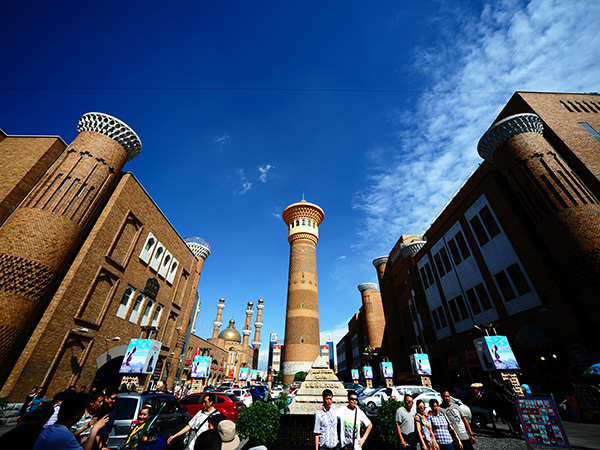
Kashgar, one of the most famous cities in Xinjiang, is a must-visit destination for those interested in history and culture. As a major trading hub on the ancient Silk Road, Kashgar has a rich blend of Islamic, Persian, and Central Asian architectural styles. The Id Kah Mosque in Kashgar is one of the largest mosques in China, and the Kashgar Old Town is a labyrinth of narrow alleys, traditional bazaars, and ancient homes made of mud bricks.
The city’s Sunday Bazaar is a must-see for any traveler. It is a bustling market where locals gather to sell everything from spices and textiles to livestock and traditional crafts. It’s a perfect place to experience the vibrant and lively culture of Xinjiang.
Another important historical city is Hotan, which has been a key point on the Silk Road for centuries. Famous for its production of jade and silk, Hotan is home to numerous ancient ruins, including the Ancient Hotan Ruins and Niya Ruins, which date back over 2,000 years. Visitors can explore the area’s ancient tombs, Buddhist caves, and historical sites that reveal the region’s rich cultural past.
While the Mogao Caves are more famous in Dunhuang, Xinjiang also boasts a series of Buddhist caves with stunning murals and statues. The Kizil Caves near Kucha are particularly noteworthy. These caves date back to the 3rd century and contain an impressive collection of Buddhist art, reflecting the cultural exchange that took place along the ancient Silk Road.
Xinjiang is a melting pot of diverse ethnic groups, with the largest group being the Uighurs, a Turkic-speaking Muslim minority. Other ethnic groups, such as Kazakhs, Tajiks, and Hui Muslims, also call Xinjiang home, contributing to a rich and varied cultural heritage.
Uighur culture is a blend of Turkic, Central Asian, and Islamic influences, and it is most evident in the music, food, and architecture of the region. Traditional Uighur music, such as the use of the dombra (a two-stringed instrument), and dance, especially the famous Dolan Dance, are an essential part of Xinjiang’s cultural life. Travelers can attend live performances or visit local cafes to experience Uighur music firsthand.
Xinjiang cuisine is another highlight of the region. It’s heavily influenced by Central Asian flavors, with dishes often featuring lamb, beef, and mutton, as well as a variety of breads and rice dishes. Lagman, a hand-pulled noodle dish, and kebabs (often cooked with cumin and chili) are local favorites. Don’t forget to try pilaf (fried rice with vegetables and meat) and Xianglao (spicy chicken). Xinjiang’s fruit, particularly its melons, grapes, and pomegranates, are also famous for their sweetness and are a refreshing treat in the hot summers.
The best time to visit Xinjiang is during the spring (April to June) and autumn (September to November) months when the weather is most comfortable, with mild temperatures and clear skies. Summer (July to August) can be hot, especially in desert areas, but it’s also a great time to visit the mountains and cooler regions. Winter (December to February) can be very cold, especially in the northern areas, but it offers a chance to experience the region’s winter beauty and serenity.
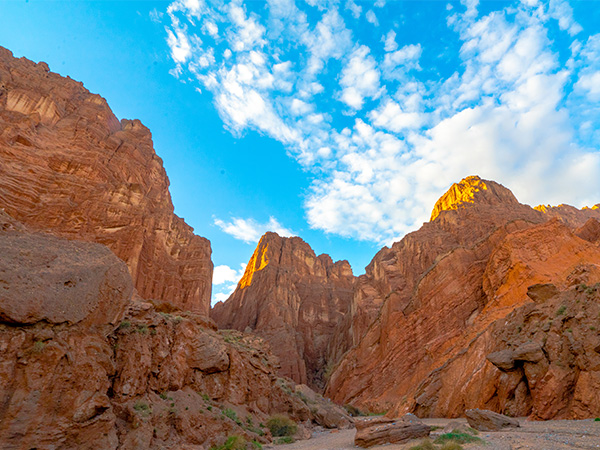
Tianshan Kuqu Valley
Xinjiang Tourism Administration
|
District Tourism Bureau
|
Address
|
Telephone
|
|
Xinjiang Tourism Bureau
|
No.36, Jinyin Avenue, Urumqi City
830001
|
0991-8831902 8830507
|
|
Hami Tourism Bureau
|
No.2, Tianshan West Road, Hami City
839000
|
0902-6986650
|
|
Hetian Tourism Bureau
|
No.3, Tanai North Road, Hetian City
848000
|
0930-8833817
|
|
Kashgar Tourism Bureau
|
No.46, Jiefang North Road, Kashgar City
844000
|
0998-2831600 2822173
|
|
Turpan Tourism Bureau
|
No.41, Qingnian Road, Turpan City
838000
|
0995-8523653
|
|
Urumqi Tourism Bureau
|
No.52, Xihong East Road, Urumqi City
830063
|
0991-4623900
|
|
Yili Tourism Bureau
|
No.14, Ahemaitijiang Street, Yining City
835000
|
0999-8098155
|
More Xinjiang Tourism Information:
Top Xinjiang Tourists Cities
Top Xinjiang Attraction
Recommended Xinjiang Tours

 English