Your China & Yunnan Travel Experts


 Ask a Question
Xinjiang, located in the far northwest of China, is a region of dramatic landscapes, vast deserts, towering mountain ranges, and diverse ethnic cultures. Because of its enormous size — covering over one-sixth of China’s total land area — Xinjiang’s climate varies significantly from north to south and from basin to mountain. Understanding Xinjiang’s climate and weather patterns is essential for planning a comfortable and rewarding trip.
This guide will help travelers understand seasonal differences, regional variations, temperature extremes, rainfall patterns, and the best times to visit different parts of Xinjiang.
Xinjiang is far away from the ocean with the mountains all around that forms the temperate continental climate.
Generally speaking, the south is warmer than the north in winter and hotter than the north in summer. Most of the areas feature a big temperature difference of days and nights in spring and summer and the alternation of fall and winter. In the coldest month January, the average temperature in the Dzungarian Basin is 20ºC below freezing point.
The Fuyun County on the northern edge of the Basin made a national record and had the lowest temperature once amounted to 50.15ºC below freezing point, claimed one of the coldest areas in the nation. The hottest month July, Turpan known as "the Fire Continent", the average temperature is above 33 ºC. The highest temperature once reached to 49.6ºC that comes first of the nation.
Xinjiang has a typical continental arid and semi-arid climate, characterized by:
Large temperature differences between day and night
Extremely dry air in desert areas
Hot summers and very cold winters
Low annual rainfall in basins
Heavy snowfall in mountainous regions
Due to the presence of major geographical features such as the Tian Shan Mountains, the Taklamakan Desert, and the Altai Mountains, the climate differs sharply across the region.
Xinjiang is generally divided into:
Northern Xinjiang (North of the Tian Shan Mountains)
Southern Xinjiang (South of the Tian Shan Mountains)
Eastern Xinjiang (Turpan–Hami Basin area)
Each area has distinct climate characteristics that travelers should understand before visiting.
Northern Xinjiang has a relatively milder and wetter climate compared to the south. Influenced by westerly air currents and mountain systems, it receives more rainfall and supports grasslands, forests, and alpine lakes.
Temperature: 10°C to 25°C
Snow begins melting in mountain regions
Grasslands turn green
Occasional strong winds
Spring is ideal for visiting the Ili grasslands and alpine lakes. However, temperature differences between day and night can exceed 15°C, so layered clothing is essential.
Temperature: 20°C to 35°C (cooler in mountains)
Pleasant and relatively humid compared to desert areas
Peak tourism season
Summer is the best time to visit scenic alpine areas such as Kanas Lake and the Ili River Valley. Wildflowers bloom, and the weather is comfortable for hiking and photography.
Temperature: 5°C to 20°C
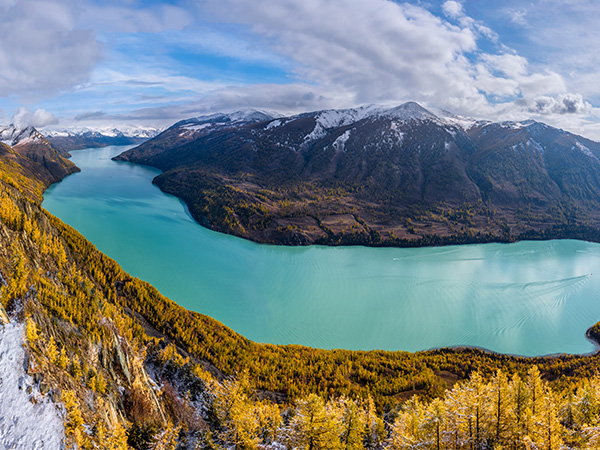
Spectacular golden forests
Crisp air and clear skies
Autumn is one of the most photogenic seasons in northern Xinjiang, especially in forested areas.
Temperature: -15°C to -30°C in some areas
Heavy snowfall in mountainous regions
Long and cold
Winter tourism is popular for snow landscapes and skiing in the Altai region, but temperatures can be extreme.
Southern Xinjiang is dominated by the Tarim Basin and the vast Taklamakan Desert. It has a classic desert climate with extremely low rainfall and intense summer heat.
Temperature: 15°C to 30°C
Frequent sandstorms
Dry air
Spring can be windy, especially around desert areas. Travelers should bring scarves or masks to protect against dust.
Temperature: 30°C to 45°C
Extremely dry
Strong UV radiation
Cities like Kashgar and Hotan experience intense summer heat. Outdoor sightseeing is best done early in the morning or late in the evening.
Despite the heat, summer is vibrant with fruit harvests — melons, grapes, and pomegranates are at their sweetest.
Temperature: 15°C to 28°C
Comfortable and stable weather
Harvest season
Autumn is the best time to visit southern Xinjiang. The weather is pleasant, skies are clear, and bazaars are lively.
Temperature: -5°C to 10°C
Dry and sunny
Minimal snowfall
Winters are cold but not as harsh as in northern Xinjiang. Tourist crowds are minimal.
Eastern Xinjiang is home to one of the hottest places in China — the Turpan Basin.
The Turpan Depression lies below sea level and experiences extremely high summer temperatures.
Summer highs often exceed 40°C
Surface temperatures may reach 70°C
Very low rainfall (less than 20 mm annually)
Nearby, the Flaming Mountains appear to glow red under intense sunlight, especially in July and August.
Best visiting seasons:
April–May
September–October
Avoid midday sightseeing in summer due to extreme heat.
One of Xinjiang’s most notable climate features is the large diurnal temperature variation.
In desert areas:
Daytime: 30°C
Nighttime: 10°C or lower
In mountain areas:
Sunny and warm during the day
Near freezing at night
Travelers should always:
Pack layers
Bring a light down jacket even in summer
Carry sun protection (hat, sunglasses, sunscreen)
Xinjiang is one of the driest regions in China.
Annual precipitation in desert basins: 10–50 mm
Mountain regions: up to 600 mm
Humidity is generally very low
Because of dry air:
Skin becomes dehydrated quickly
Lips may crack
Travelers should drink more water
Rain is rare in southern Xinjiang but more common in northern mountain regions during summer.
Spring is sandstorm season, especially in southern Xinjiang and desert areas.
Sandstorms can:
Reduce visibility
Disrupt transportation
Cause flight delays
If traveling in March or April:
Check weather forecasts
Bring protective eyewear
Wear breathable but covering clothing
The best travel seasons for most regions are:
Green grasslands in the north
Moderate temperatures
Fewer tourists than peak summer
Comfortable temperatures
Golden autumn scenery
Stable weather
Harvest season
July and August are good for mountain and grassland exploration but can be extremely hot in desert regions.
Winter is suitable for snow photography and winter sports in northern Xinjiang but requires preparation for sub-zero temperatures.
Here is a practical packing checklist:
Layered clothing
Windbreaker jacket
Light down coat (even in summer for mountains)
Sunscreen (SPF 50+)
Sunglasses
Wide-brim hat
Lip balm and moisturizer
Reusable water bottle
Comfortable hiking shoes
If visiting high-altitude areas near the Pamirs or Altai Mountains, prepare for thinner air and colder temperatures.
Xinjiang’s climate is dramatic, diverse, and sometimes extreme. However, it is precisely this diversity that creates its stunning landscapes — snow-covered peaks, golden deserts, emerald lakes, and vast grasslands.
Understanding regional weather patterns will help you:
Choose the right season
Dress appropriately
Avoid extreme heat or cold
Plan outdoor activities safely
For most travelers, late spring and autumn offer the best balance of scenery and comfort.
With proper preparation, Xinjiang’s climate will not be a challenge — it will be part of the adventure.

 English