Your China & Yunnan Travel Experts


 Ask a Question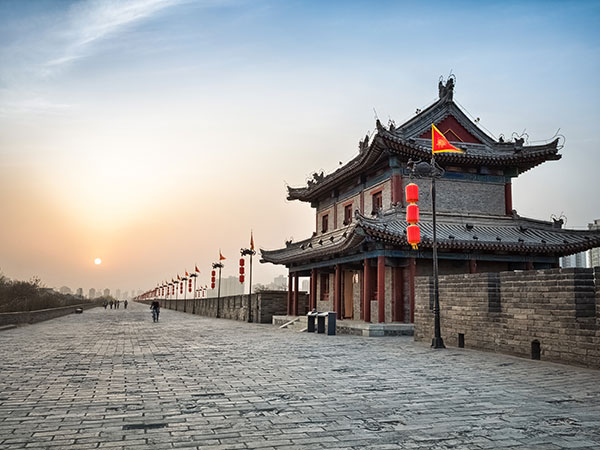
The story of human habitation in the Xi'an region reaches into deep prehistory. As early as 1.1 million years ago, the area was home to Homo erectus lantianensis ("Lantian Man"). By the Neolithic period, around 6,000 years ago, the sophisticated Banpo Village was established by the "Banpo ancestors," a matriarchal clan community whose well-preserved archaeological site reveals advanced pottery, tools, and early social structures.
In the 11th century BC, the Zhou Dynasty laid the foundational stones of Xi'an's destiny as an imperial capital. King Wen of Zhou established the sacred city of Feng on the west bank of the Feng River. His son, King Wu, later founded Hao on the opposite bank after defeating the Shang Dynasty. Together, forming Fenghao, this dual capital complex inaugurated Xi'an's glorious and millennia-long history as a center of power.
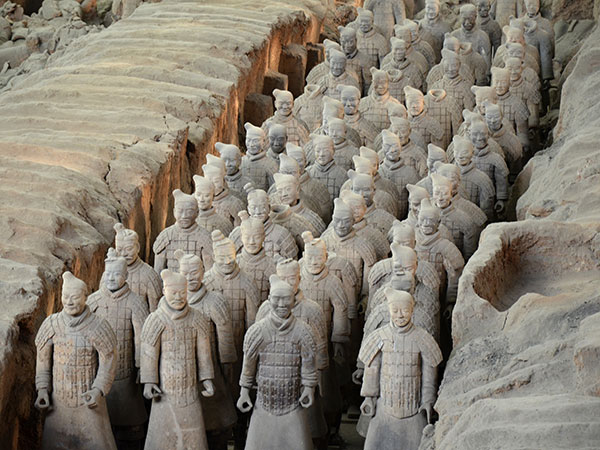
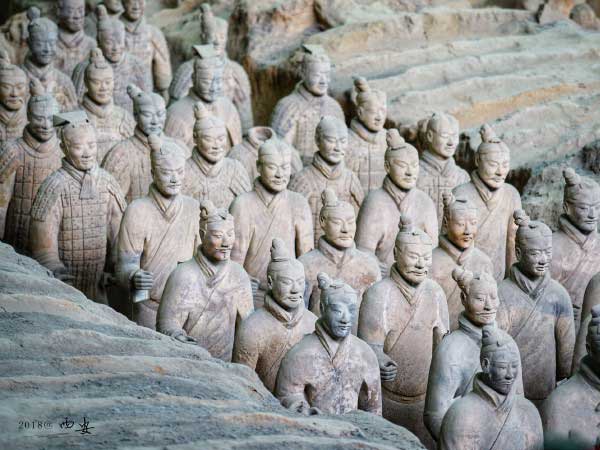
Though the short-lived but monumental Qin Dynasty (221-206 BC) had its capital in nearby Xianyang, its legacy is inextricably linked to modern Xi'an. The First Emperor, Qin Shi Huang, unified China and embarked on projects of staggering scale. His Epang Palace, largely within today's Xi'an, was a symbol of supreme power. His quest for immortality culminated in the Mausoleum of the First Qin Emperor, located in Xi'an's Lintong District. The subterranean Terracotta Army, discovered in 1974 and guarding his tomb, remains one of the most spectacular archaeological finds in history, vividly showcasing the military might and artistic prowess of the era.
The Western Han Dynasty (206 BC – 9 AD) solidified Chang'an's status as a world-class metropolis. The Han capital, built upon the ruins of Qin Xianyang, became a cosmopolitan hub. It was from here in 138 BC that Emperor Wu dispatched the envoy Zhang Qian westward, an event that formally opened the Silk Road. This network of trade routes connected Chang'an to Central Asia, Persia, and the Roman Empire, facilitating an unprecedented exchange of goods (silk, spices, glass), technologies, and ideas (Buddhism entered China via this route). Even during the Eastern Han and subsequent periods of warlord rule, figures like Dong Zhuo continued to recognize Chang'an's strategic and symbolic importance as a capital.
Xi'an reached its zenith during the Sui and Tang dynasties (581-907 AD). The Sui rebuilt the city as Daxing, a meticulously planned metropolis. The Tang, inheriting and expanding it, renamed it Chang'an. It became the largest and most splendid city in the world during the 7th to 9th centuries, with a population exceeding one million. Its grid-pattern layout, with the majestic Imperial City at its north center (occupying the area of today's Xi'an city center), influenced urban planning across East Asia. Chang'an was a truly global city, teeming with foreign merchants, diplomats, and scholars from across the Silk Road. This era produced unparalleled cultural achievements in poetry, painting, and Buddhism, with landmarks like the Big Wild Goose Pagoda built to house sutras brought from India. The lavish Tang imperial tombs, such as the Qianling Mausoleum, dot the surrounding landscape.
After the Tang's decline, Xi'an's national capital status ended, but its regional importance persisted. In 1369, early in the Ming Dynasty, the city was renamed Xi'an ("Western Peace") and was fortified with the impressive city walls that still stand today—the most complete in China. During the Republic of China era, Xi'an remained a key city. The Xi'an Incident of December 12, 1936, where Generalissimo Chiang Kai-shek was detained to force a united front against Japanese invasion, became a pivotal moment in modern Chinese history. After the founding of the People's Republic of China, Xi'an was confirmed as the capital of Shaanxi Province and emerged as a major center for education, industry, and national defense research.
|
Dynasty
|
Name of the Capital
|
Period as the Capital
|
|
Western Zhou Dynasty
|
Gaojing
|
1046BC – 771BC
|
|
Qin
|
Xianyang
|
350BC – 206BC
|
|
Western Han
|
Changan
|
200BC -9AC
|
|
Xin
|
Chanan
|
9 AC - 2 AC
|
|
Eastern Han
|
Changan
|
190 AC - 195 AC
|
|
Western Jin
|
Changan
|
313 AC - 316 AC
|
|
Early Zhao
|
Changan
|
319 AC - 328 AC
|
|
Early Qin
|
Changan
|
352 AC - 385 AC
|
|
Later Qin
|
Changan
|
386 AC - 417 AC
|
|
Western Wei
|
Changan
|
534 AC - 557 AC
|
|
Northern Zhou
|
Changan
|
557 AC - 581 AC
|
|
Sui
|
Daxing
|
581 AC - 618 AC
|
|
Tang
|
Changan
|
618 AC - 904 AC
|

 English