Your China & Yunnan Travel Experts


 Ask a Question
The world-know Silk Road across the Eurasian Continent is a friendship bridge linking the Europe and Asian people. The Silk Road starts from Xian, and Dunhuang is also a city right on the road. The two cities are also hot destinations for tourist from both domestic and abroad. Here, you will find some information about Train from Xian to Dunhuang including Xian to Dunhuang Train Schedule & Fares. And also you can find tips for booking train tickets and tips for traveling to the two cities.
|
Train Code
|
Departure Time
|
Arrival Time
|
Duration
|
|
D2737
|
10:21
|
21:24
|
11h3m
|
G: High-Speed Train (the fastest train in China, maximum speed up to 350 km/h, only stops at major cities)
C: Intercity EMU Train (for short-distance travel between nearby cities, such as Xi’an to Xianyang)
D: Electric Multiple Units (EMU) Train (slightly slower than G-series trains, maximum speed around 250 km/h, with more stops; the D2737 belongs to this type)
Z: Direct Express Train (conventional speed train, non-stop between key cities, with fewer stops)
T: Express Train (conventional speed train, stops at more cities than Z-series trains)
K: Fast Train (conventional speed train, the most common non-high-speed option, stops at many cities and counties)
Four-digit Number Train: Regular Speed Train (the slowest train type, stops at almost all stations along the route)
L: Temporary Train (only operates during peak travel seasons such as Spring Festival and National Day to meet the increased travel demand)
► Best Time to Visit Xian
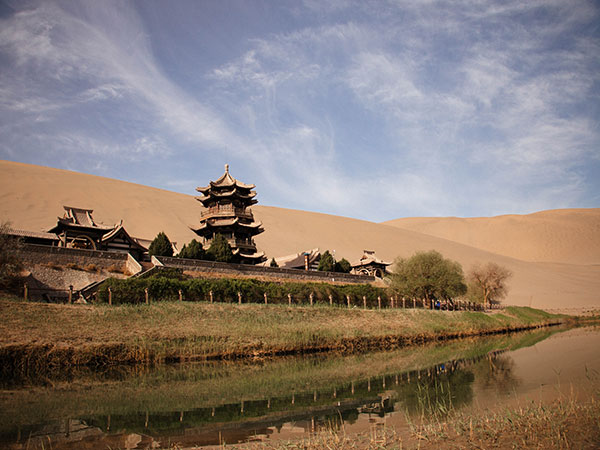
Clothing Preparation: For Xi’an, bring light and breathable clothes in summer, and warm clothes in winter. For Dunhuang, due to the large temperature difference between day and night, even in summer, you should bring a thin coat or jacket for the night. In addition, Dunhuang has strong sunlight, so it is necessary to bring sunscreen, sunglasses, a hat, and a scarf (to protect against sand and sun).
Dietary Tips: Xi’an’s food is mainly pasta and spicy food, such as roujiamo, cold noodles, and lamb paomo. Dunhuang’s food is influenced by Islamic culture, with more lamb and beef dishes, such as hand-grabbed lamb and lamb soup. If you are not used to spicy food or lamb, you can ask the restaurant to make it less spicy or choose other dishes. It is also recommended to drink plenty of water, especially in Dunhuang, due to the dry weather.
Currency and Payment: In China, cash (Renminbi, RMB) is accepted, but mobile payment (WeChat Pay and Alipay) is more convenient. Most restaurants, shops, and scenic spots accept mobile payment. Foreign travelers can bind their passports to WeChat Pay or Alipay to use mobile payment, or exchange RMB at banks or airports in advance.
Language Help: Most people in Xi’an and Dunhuang speak Mandarin Chinese. Staff at major scenic spots, hotels, and restaurants can speak basic English, but communication may still be difficult in some small shops or rural areas. It is recommended to download a translation app (such as Google Translate) on your mobile phone, or write down key words in Chinese (such as the name of the scenic spot or hotel) to facilitate communication.

 English