Your China & Yunnan Travel Experts


 Ask a Question
Suzhou, as a world-famous tourism city, is equipped with a convenient and multi-modal transportation infrastructure. To reach and move around this city, you can use High-speed trains, highways, waterways, and the urban metro system — giving travelers flexibility, efficiency and comfort. Below is a detailed, updated guide to getting to and navigating Suzhou.
1. By High-Speed Rail (The Top Recommended Option)
Suzhou is a cornerstone of China's most advanced high-speed rail network, sitting directly on the vital Beijing-Shanghai High-Speed Railway and Shanghai-Nanjing Intercity Railway. This makes it incredibly accessible from major cities.
Main Railway Stations:
Suzhou Railway Station (苏州站): The city's historic and busiest main station, located in the Gusu District. It has undergone significant renovation and now seamlessly handles both high-speed (G/D-series) and conventional (K/T-series) trains. Its design harmoniously blends modern facilities with traditional Suzhou architectural elements. It is directly connected to Metro Lines 2 and 4.
Suzhou North Railway Station (苏州北站): Located in Xiangcheng District, this is a dedicated high-speed rail station primarily serving the Beijing-Shanghai HSR line. It is the preferred stop for the fastest G-trains. The station is connected to the city via Metro Line 2.
Suzhou New District Railway Station (苏州新区站) & Suzhou Industrial Park Railway Station (苏州园区站): Two smaller stations on the Shanghai-Nanjing line, offering great convenience for travelers staying in those respective districts.
Key HSR Routes & Travel Times:
Fares: A second-class seat from Shanghai Hongqiao to Suzhou costs ¥34-40; from Nanjing South, it's about ¥85-100.
2. By Air
Suzhou currently does not have its own commercial airport. This is largely due to geographical constraints: its airspace is surrounded by seven nearby airports, including Shanghai Hongqiao, Shanghai Pudong, and Wuxi Shuofang, leading to limited available airspace resources. In practice, however, this presents no inconvenience for travelers. Suzhou is exceptionally well-connected via China's high-speed rail network. The bullet trains can whisk passengers from Suzhou Station directly to Shanghai Hongqiao Railway Station—which is integrated with Shanghai Hongqiao International Airport—in as little as 32 minutes. This seamless and efficient high-speed rail link already fulfills the vast majority of air travel needs for the region, making a dedicated local airport less necessary from a transport functionality standpoint.
Primary Air Gateways:
3. By Long-Distance Bus & Expressway
Suzhou is well connected by a network of expressways and national highways. For example, the Jiangsu–Shanghai Expressway links Suzhou directly with Shanghai, making road travel between the two cities fast and straightforward. Additionally, expressways such as the Suzhou–Jiaxing–Hangzhou Expressway and the Yangtze River (Changjiang) Expressway (as well as other regional highways) provide road connectivity to other parts of Jiangsu and neighboring provinces.
The Suzhou Outer Ring Road — completed some years ago — links peripheral county-level cities or districts such as Taicang, Kunshan, and Changshu with the Suzhou urban area. This ring road eases traffic, especially for travelers and commuters coming from suburbs or nearby smaller cities.
For travellers who prefer road trips, or need to reach towns and rural areas not served by rail, these expressways and highways, combined with local roads, offer a flexible alternative. Long-distance buses frequently use these highways to reach Suzhou or pass through it, making bus travel a viable option for many.
4. By Water (Historical & Scenic)
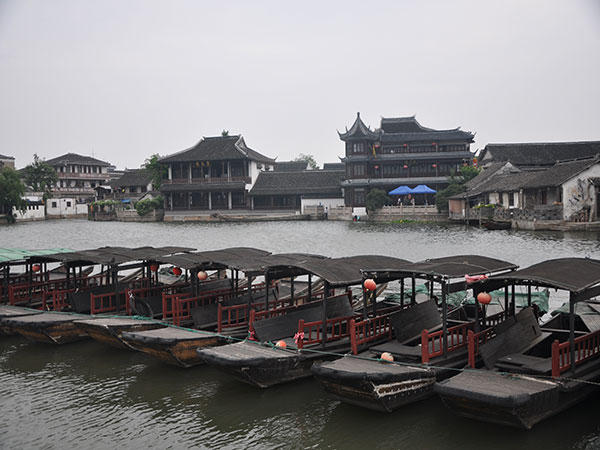
Suzhou's ancient canal network, while no longer a primary transport mode, offers unique tourist experiences.
Grand Canal: The historic Beijing-Hangzhou Grand Canal still sees some barge traffic. Tourist boats operate scenic cruises on the city's canals and to nearby water towns like Tongli.
Ferries: There are no regular long-distance passenger ferry services for transport purposes.
1. Metro (The Most Efficient Urban Transport)
Suzhou's modern metro system is the backbone of city travel, clean, efficient, and covering most key areas. As of 2024, 8 lines are now operational (Lines 1, 2, 3, 4, 5, 11, and the S1 line to Kunshan), with more under construction. The network connects all major railway stations, the industrial park, the ancient city, and tourist sites.
Key Tourist Lines:
Fare & Operation: Fares range from ¥2-8. Trains generally operate from 6:00 to 23:00+. Use single-journey tickets, a "Suzhou Tong" card, or scan QR codes via the "Su e xing" app or Alipay/WeChat.
2. Public Buses
The bus network is comprehensive, filling in gaps not covered by the metro, especially within the protected ancient city where metro lines are limited.
Coverage: Reaches every corner of the city, including gardens and smaller attractions.
Fare: Most routes cost ¥2 (¥1 for buses without A/C). Payment is via cash (exact change), Suzhou Tong card, or mobile QR codes.
3. Taxis & Ride-Hailing
4. Tourist-Specific Transport
Best Way to Arrive: Without question, take the high-speed train from Shanghai Hongqiao (25 mins). For air travelers, fly into Shanghai Hongqiao (SHA) for the easiest transfer.
For City Exploration: Purchase a 72-hour Suzhou Tong Tourist Card for unlimited metro and bus rides. Use the metro for long distances (e.g., to Jinji Lake or Tongli) and taxis/walking for the ancient city core.
Navigating the Ancient City: The historic core has traffic restrictions. The best ways to explore are on foot, by bicycle, or by taxi. Buses are also a good option here.
Day Trip to Water Towns: For Tongli, take Metro Line 4 to its terminus, then transfer to a short bus/taxi. For Zhouzhuang, take a direct tourist bus from the Suzhou Passenger Transport Center.

 English