Your China & Yunnan Travel Experts


 Ask a Question
Shangri-la, a name that resonates with the promise of a hidden earthly paradise, holds a history as profound and majestic as the Himalayan landscapes it encompasses. Originally known as Zhongdian County, the region was poetically described in Tibetan lore as the "appanage of the Tibetan King's three sons," a land bestowed upon royalty. Its name, Shangri-La (香格里拉), finds its roots in the local Diqing Tibetan language, where "Shangri" signifies the heart or essence, and "La" denotes a sacred mountain pass; together, they poetically translate to "the sun and moon in one's heart." This mystical designation was immortalized in global consciousness by James Hilton's 1933 novel Lost Horizon, which described a secluded, harmonious utopia. Yet, long before this literary fame, the plateau of Diqing was a crucible of ancient civilizations, a contested frontier between empires, and the spiritual sanctuary of Tibetan Buddhism.
Diqing's human narrative begins in deep prehistory. Archaeological evidence from sites such as the Gordon Neolithic site in Weixi Lisu Autonomous County proves that as early as six or seven thousand years ago, human communities were thriving and cultivating this high-altitude terrain. These early inhabitants laid the foundational stones of a distinctive indigenous culture adapted to the rugged environment.
From around 2000 to 3000 years ago, the ancestors of the modern Tibetan people, believed to be part of the ancient Qiang tribes, began migrating and settling across the plateau. They brought with them a pastoral lifestyle and unique spiritual beliefs that evolved into the early cultural fabric of the region. By the time of the Qin Dynasty, the influence and ruling power of emerging Tibetan polities had already extended their reach into the Diqing area.
During the Han Dynasty, the region was known as part of the domain of the Yak Qiang, a subgroup of the greater Qiang peoples. With the explosive expansion of the Tibetan Empire (Tubo), particularly under King Songtsen Gampo in the 7th century, Diqing was formally incorporated into this powerful realm. It was administered as part of Shenzhou, a strategic military and administrative district. This period embedded the foundational elements of Tibetan language, culture, and the early Bon religion deep into the local identity.
Following the collapse of the Tibetan Empire, the region came under the sway of the Nanzhao and later the Dali Kingdoms during the Song Dynasty. Despite this political overlay, the Tibetan cultural and social structures remained deeply entrenched. In the 13th century, the Mongol Yuan Dynasty incorporated the region, administratively naming it "Dagdan" or "Da Dan Dang." In 1293, it was placed under the Lijiang Route Pacification Commissioner's Office, marking the beginning of a prolonged era where it oscillated between Tibetan cultural influence and direct administrative control from the east.
The Ming Dynasty saw a complex power-sharing arrangement. While the Ming court established the Lijiang Military and Civilian Government, granting significant authority to the Naxi Mu chieftains over the region, local Tibetan chieftains and monasteries retained substantial autonomy. This created a unique hybrid zone of Naxi administrative influence over a predominantly Tibetan cultural landscape.
The Qing Dynasty further complicated this tapestry. In the mid-17th century, the Ming defector Wu Sangui, seeking Tibetan alliance, reportedly gifted parts of Zhongdian to the Fifth Dalai Lama. However, in 1726, following the Qing's consolidation of power in Yunnan after the Dzungar-Qing Wars, the region was formally placed under the Lijiang Prefecture through the policy of "Gaitu Guiliu" (replacing native chieftains with appointed officials). This brought it under more direct imperial administration, though local Tibetan tusi (chieftains) and powerful monasteries like Songzanlin continued to wield immense social and economic power.
This administrative status was solidified in the modern era. In April 1913, with the establishment of the Republic of China, Zhongdian Ting was reorganized as Zhongdian County.
The contemporary chapter began on May 10, 1950, when Zhongdian was peacefully liberated. Recognizing the region's distinct ethnic character, the People's Republic of China established the Diqing Tibetan Autonomous Prefecture on September 13, 1957, with Zhongdian as its capital. This granted the area legal autonomy to preserve and develop its Tibetan language, culture, and religious traditions.
The most transformative moment in its modern identity came at the turn of the millennium. As James Hilton's "Shangri-La" captured the world's imagination, the picturesque and spiritually resonant Zhongdian became a leading contender for the fictional paradise's real-world location. After extensive scholarly review and official approval, the State Council of China ratified the name change. On December 17, 2001, Zhongdian County was officially renamed Shangri-La County (later upgraded to Shangri-La City in 2014).
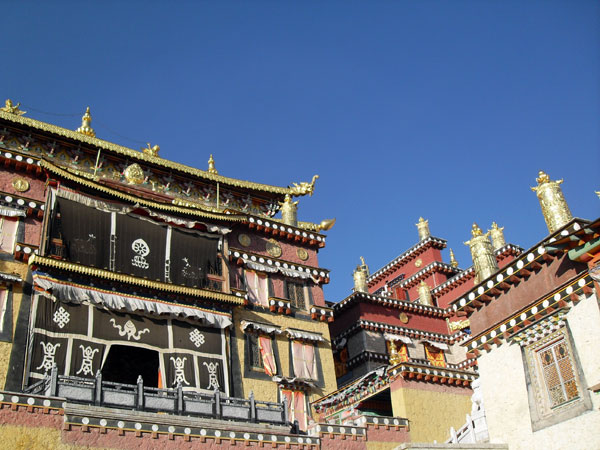
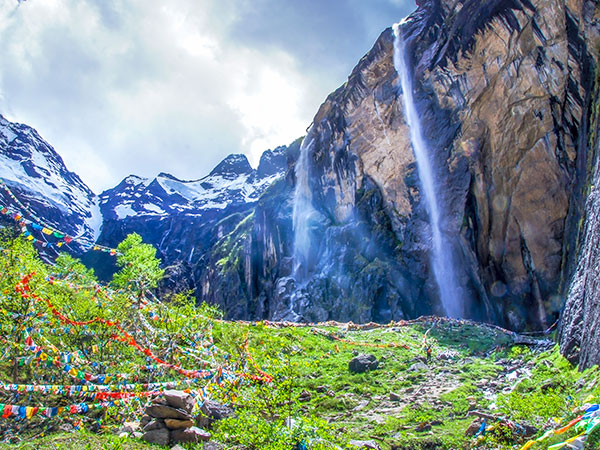
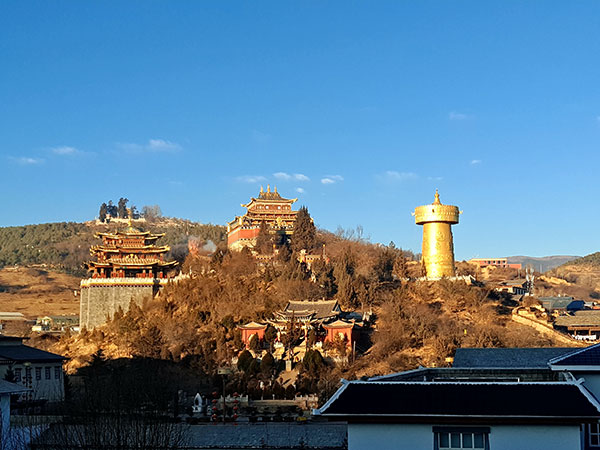
This renaming was not merely a marketing strategy but a recognition of the area's unique confluence of stunning natural beauty—with Meili Snow Mountain, Potatso National Park, and the Napa Grassland—and its preserved, vibrant Tibetan Buddhist culture centered around the Ganden Sumtseling Monastery (Songzanlin), a replica of the Potala Palace. Today, Shangri-La stands as a bridge between its profound, centuries-old history as a Tibetan frontier land and its modern identity as a globally recognized symbol of harmony and natural splendor. It is a place where ancient pilgrimage routes converge with modern tourism, and where the timeless chants from its monasteries carry the enduring spirit of a land that truly holds "the sun and moon in its heart."

 English