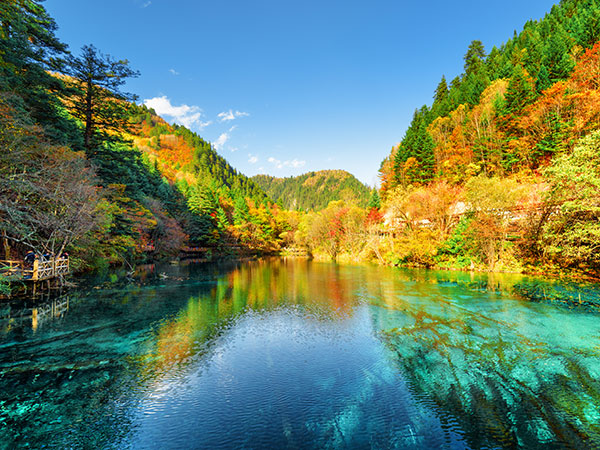
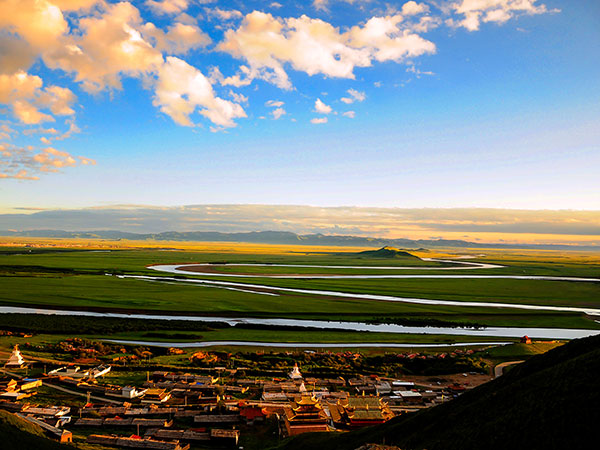
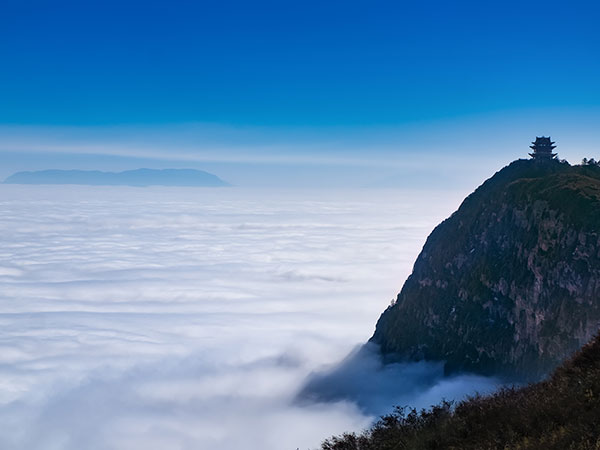
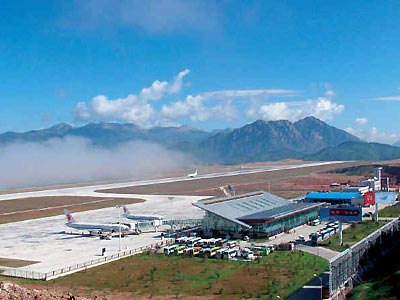
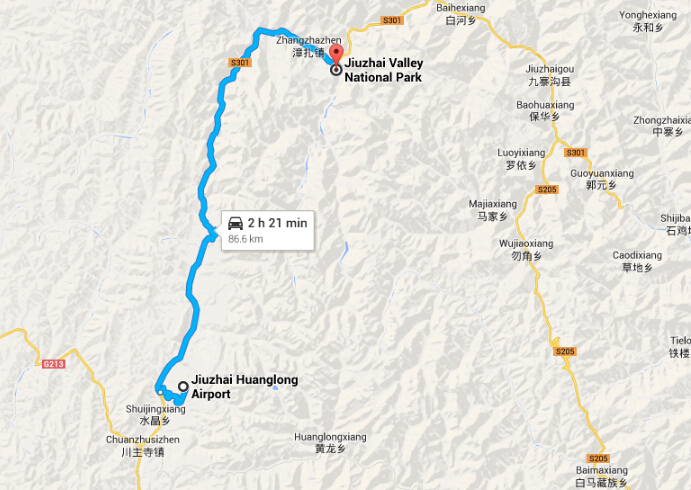
Jiuzhaigou Huanglong Airport, also as known as Jiuhuang Airport and Jiuzhaigou Aiport, is located in Songpan County, Sichuan Province, China. It is 12 km from Chuangzhou Temple, 88 km from Jiuzhaigou Valley and 53 km from Huanglong National Park.
Jiuzhaigou Huanglong Airport was opened to navigation on Sept. 28, 2003. The runway is 3200m long and 60 m wide, which is suitable for Boeing 757, Boeing 737-700, A319 and other large and medium-sized aircraft taking off and landing. The air distance between Chengdu and Jiuhuang Airport is 240 km. The opening of the airport shortened the 10 hrs driving journey to just 40 min. It is the second largest airport in Sichuan. Jiuzhaigou Huanglong Airport is the first airport in Aba Tibetan and Qiang Autonomous Prefecture.
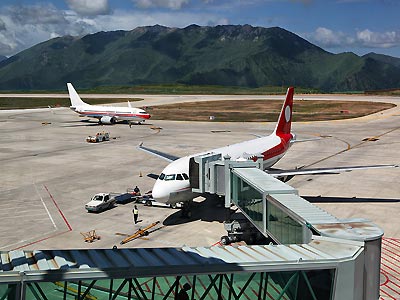
The natural terrain of the airport is high in north and low in south. Along the runway, there are high mountains. It is one of the most difficult airport to fly in China.
Because the airport is located on a high plateau, passengers are often rewarded with spectacular aerial views during takeoff and landing. On clear days, visitors can enjoy panoramic views of snow-capped mountains, deep valleys, alpine forests, and Tibetan villages scattered across the landscape. For many travelers, the flight itself becomes an unforgettable part of the Jiuzhaigou travel experience.
Airport Information
Name: Jiuzhaigou Huanglong Airport
Code: IATA-JZH, ICAO-ZUJZ
Type: Public
Altitude: 3447.65 m
Operator: Sichuan Jiuzhaihuanglong Airport Co. Ltd.
Location Songpan, Sichuan
Coordinates: 32°51′15″N, 103°41′07″E
The airport terminal is designed to accommodate the growing number of tourists visiting Jiuzhaigou and Huanglong. Inside the terminal, passengers can find check-in counters, baggage claim facilities, waiting areas, restaurants, convenience stores, and tourist information services. Although not as large as major international airports, the terminal provides the essential facilities needed for a comfortable travel experience.
Airlines and Destinations
|
Airlines
|
Destinations
|
|
Air China
|
Beijing-Capital, Chengdu, Chongqing, Guangzhou, Shanghai-Pudong
|
|
China Eastern Airlines
|
Chengdu, Shanghai-Pudong, Xi'an
|
|
China Southern Airlines
|
Chengdu, Chongqing, Guangzhou, Zhangjiajie
|
|
Sichuan Airlines
|
Chengdu, Chongqing, Xian
|
Flight schedules vary depending on the season. During peak tourism months, particularly from April to November, airlines may increase the number of flights to meet rising demand. Additional seasonal routes may also be introduced during national holidays and summer vacations. Travelers are advised to check flight availability in advance, especially during the colorful autumn season when Jiuzhaigou attracts large numbers of visitors from across China and around the world.
Characteristics
High Altitude
The altitude of the airport is 3447.65m.
The high altitude creates unique conditions for both aircraft and passengers. Air density is lower at this elevation, which affects aircraft performance during takeoff and landing. For visitors arriving from low-altitude regions, mild symptoms of altitude sickness such as dizziness, headaches, or shortness of breath may occur. Most travelers adapt quickly, but it is recommended to avoid strenuous activities immediately after arrival and to drink plenty of water.
Complex Terrain
The airport is surrounded by mountains all above 4000 to 5000m in altitude. Xubao Summit is 5600m in altitude which is just 10 nautical mile from the airport. The safety height is 6200 m, which is just above the mountains.
The mountainous environment also creates unique wind patterns and air currents. Pilots must carefully monitor weather conditions and follow precise flight paths when approaching the airport. Modern navigation equipment and air traffic control systems help ensure safe operations despite the demanding geographic conditions.
Another notable feature of Jiuzhaigou Huanglong Airport is its ecological setting. The airport is surrounded by pristine alpine ecosystems, forests, grasslands, and mountain scenery. Environmental protection measures have been implemented to minimize the impact of airport operations on the surrounding natural environment, which is one of the most valuable ecological regions in western China.
Best Time to Use Jiuzhaigou Huanglong Airport
The airport operates year-round, but the best travel seasons are spring, summer, and autumn. From April to June, visitors can enjoy fresh mountain scenery and blooming wildflowers. Summer offers pleasant temperatures and lush green landscapes, making it ideal for sightseeing. The most popular season is autumn, especially from late September to early November, when Jiuzhaigou Valley is transformed by brilliant shades of red, yellow, and orange foliage.
Winter travel is also possible and offers a completely different experience. Snow-covered mountains, frozen waterfalls, and fewer tourists create a peaceful atmosphere. However, travelers should prepare for cold temperatures and possible weather-related flight disruptions during this season.
Airport Transportation
There are shuttle bus between Huanglong airport and Huanglong National Park, and the airport and Jiuzhaigou Valley. The brand of the buses are mainly Kassbohrer, Volvo, Xiamen Golden Dragon. Each bus has GPS satellite positioning systems and intelligent dispatching system, and also tour guide service.
Airport to Jiuzhaigou:
Diving time: 1.5 -2 hrs Single-trip: 45 CNY Round-trip:80 CNY
Airport to Huanglong National Park
Diving time: 1 hr Single-trip: 22 CNY Round-trip:40 CNY
In addition to shuttle buses, visitors can also choose taxis, private transfers, or tour package transportation services. Many hotels in Jiuzhaigou and nearby tourist areas offer airport pickup services, which can be arranged in advance. Private transfers are particularly convenient for families, small groups, or travelers carrying large amounts of luggage.
For independent travelers, renting a vehicle with a local driver is another popular option. This allows greater flexibility when visiting both Jiuzhaigou Valley and Huanglong National Park, as well as nearby Tibetan villages and scenic viewpoints. Travel times may vary depending on road conditions and weather, especially during winter months.


 Ask a Question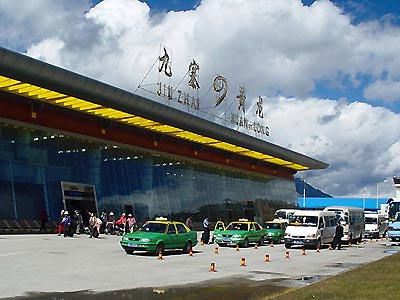

 English