Your China & Yunnan Travel Experts


 Ask a Question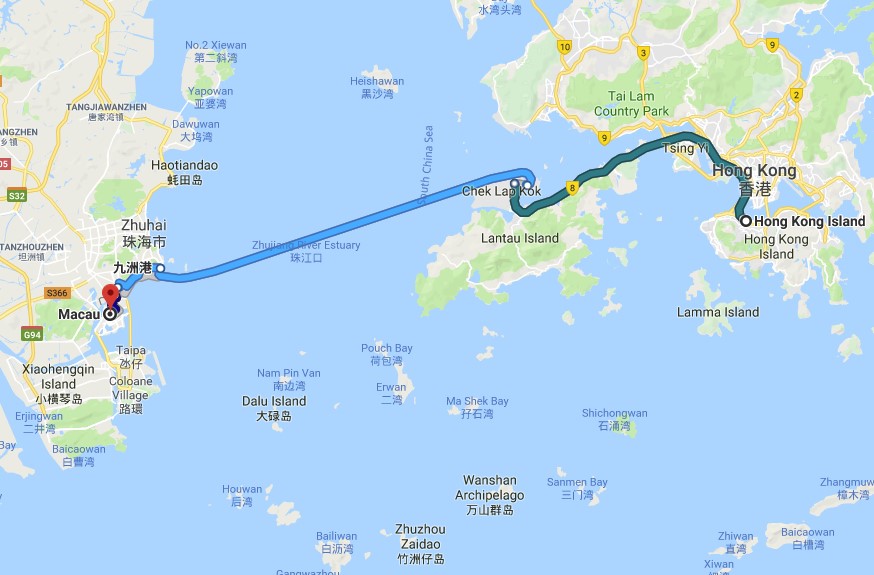
The Macao Special Administrative Region is located on the southeast coast of mainland China and lies in the west bank of the Pearl River Delta. Macau is situated 60 kilometres southwest of Hong Kong and 145 kilometres from Guangzhou of Mainland China.
From Hong Kong to Macau, there are three methods of transportation: by sea, by air and by land. This passage will introduce the three ways for you. TCT suggest that you travel to Macau by boat, which is the most convenient and economical way.
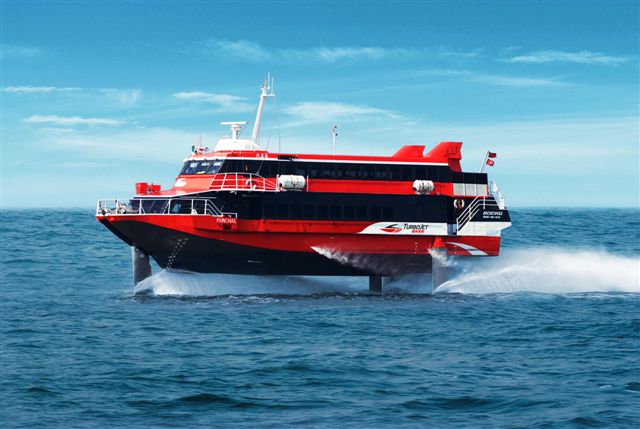
Taking a speedboat to Macao is highly recommended, as it is also the most popular choice for most travelers. Turbo Jet (speedboat) is a major mode of transport from Hong Kong to Macao. There are three docks that offer direct service from Hong Kong to Macao, namely:
Among these terminals, more passengers prefer the Hong Kong-Macau Ferry Terminal in Shun Tak Centre, Sheung Wan. The reason is that Shun Tak Centre is directly above Sheung Wan MTR Station and serves as a terminus for many public buses and minibuses, making transportation extremely convenient. There are also public buses from here to Hong Kong International Airport. Turbo Jets depart from Hong Kong every 15 minutes, with frequencies increased to every 5 minutes during peak hours (e.g., weekends or public holidays) to accommodate more passengers. The entire journey takes approximately 55 minutes.
According to the latest policy for mainland Chinese residents (2024), a valid Macao endorsement (either Individual Travel Endorsement "G" or Group Travel Endorsement "L", with no need for a tour group for "L" endorsements) is mandatory to enter Macao. The former claim that "you can enter Macao by filling out a form on the boat without a Macao endorsement" is outdated and invalid—without a valid Macao endorsement, you will be denied entry.When returning to Hong Kong from Macao: If you used a Hong Kong endorsement to enter Hong Kong earlier, you can return as long as you are within the 7-day stay period of that Hong Kong endorsement. If your Hong Kong endorsement has expired or been used up, you will need a new unused Hong Kong endorsement to re-enter Hong Kong; otherwise, you can only exit to Zhuhai.
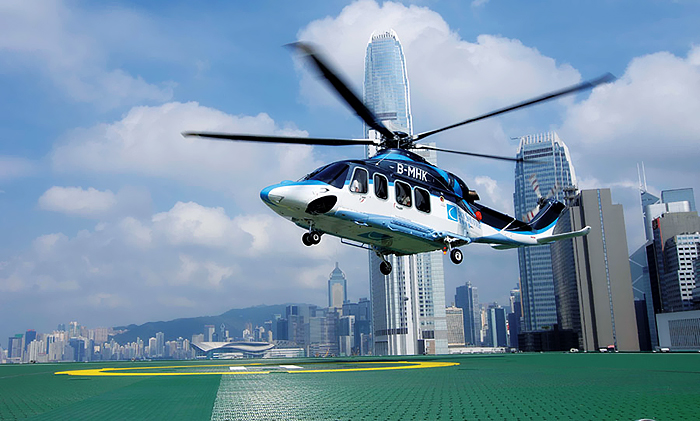
Traveling to Macao by helicopter is an option, though relatively expensive. Regular helicopter services operate daily between the helipad at Shun Tak Centre (Hong Kong Island) and the helipad at Macao Outer Harbour Ferry Terminal. These services are primarily operated by Sky Shuttle (the mainstream provider), and bookings are required 1-2 days in advance (via the official website or authorized travel platforms). Helicopters depart every 30 minutes, with a one-way fare of approximately HK$5,000-6,000 (updated 2024) and a flight time of only 15 minutes. This option is ideal for travelers seeking maximum efficiency, as it avoids long queues at ferry terminals.
The former land route (returning to Shenzhen from Hong Kong, then bypassing Humen, Nansha, Zhongshan, Zhuhai to enter Macao via Gongbei) is no longer the mainstream choice. Currently, the most convenient land option is via the Hong Kong-Zhuhai-Macao Bridge (HZMB).
The optimal time to visit Macao is October to December (autumn). This period features mostly sunny weather with no rain or typhoons. Additionally, March to April (spring) is also a good choice, with mild temperatures and low precipitation. Avoid July to September, as this is the typhoon season.
Ruins of St. Paul's
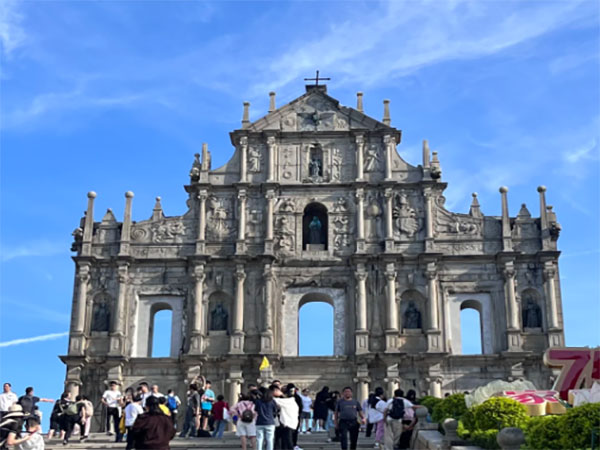
As Macao’s most iconic landmark and a UNESCO World Heritage Site, it is the remaining granite facade of St. Paul’s Church, built by Jesuits in 1602-1637 and destroyed by fire in 1835. Blending Italian Baroque architecture with Eastern elements like Chinese stone lions and Japanese chrysanthemum carvings, its five-tiered carvings of religious figures and biblical scenes earn it the title "3D Bible" . It draws over 35 million annual visitors, symbolizing Macao’s East-West cultural fusion.
Monte Forte (Fortaleza do Monte)
A pivotal 17th-century fortress near the Ruins of St. Paul's, this well-preserved military structure safeguards nearly 100 ancient artillery batteries. Built to defend Macao, its strategic hilltop location offers sweeping panoramic views of the city. Constructed with thick granite walls, it reflects colonial military architecture and now stands as a key relic of Macao’s defensive history, complementing the nearby historical urban area.
Hong Kong Dollars (HKD) and Macao Patacas (MOP) are widely accepted in Macao (no service fee for using HKD). Most shopping malls and restaurants also support WeChat Pay and Alipay (remember to switch the payment currency to MOP). It is recommended to carry a small amount of cash, as some local small shops may not accept electronic payments.
Related Readings:
How to Get to Hong Kong Convention and Exhibition Centre from Hong Kong Airport
How to Get to Guangzhou from Hong Kong

 English