Situated in the heart of Northeast China, Harbin is a key economic and cultural hub, with its diverse and well-developed transportation network playing a central role in its regional importance. The city acts as a crucial gateway, connecting Heilongjiang Province and the broader Northeast to the rest of China and beyond. Its transportation system seamlessly integrates air, rail, road, and water links, along with efficient local transit, all of which drive the city's growth and support its thriving tourism industry.
External Traffic
► Aviation: Soaring International Connectivity
Harbin Taiping International Airport solidifies the city's status as an aerial hub. As the second-largest international airport in Northeast China, it boasts extensive modern facilities capable of accommodating a wide array of large domestic and foreign aircraft for 24-hour operations. Its domestic network is extensive, with frequent flights to over 30 major cities such as Beijing, Shanghai, Guangzhou, Shenzhen, Xi'an, Qingdao, and Xiamen, ensuring rapid connectivity for business and leisure travelers alike. Internationally, its wingspan stretches across continents, offering regular scheduled flights to key destinations including Vladivostok and Moscow in Russia, Seoul in South Korea, Tokyo and Osaka in Japan, Singapore, and Kuala Lumpur in Malaysia, with seasonal charters to popular tourist spots. The airport itself features multiple terminals, streamlined customs and immigration services, and direct expressway links to the city center, making transit remarkably efficient.
► Railway: The Beating Heart of Northeast Rail Networks
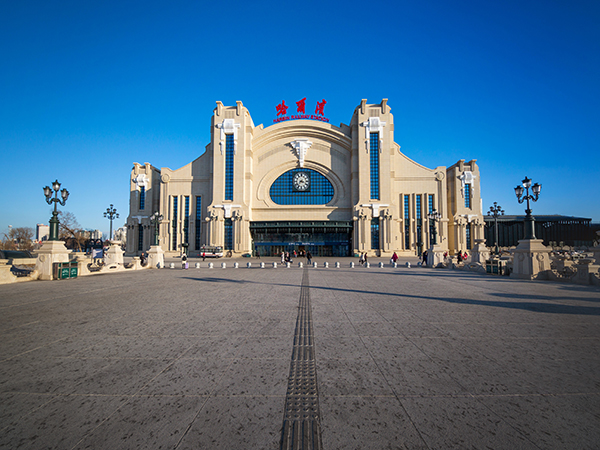
Harbin is unequivocally the second-largest railway hub in Northeast China after Shenyang, a legacy of its historical role in the region's development, notably the Chinese Eastern Railway. The city is served by several major stations, with Harbin Railway Station (downtown) and Harbin West Railway Station (a modern high-speed rail hub) being the most significant, while Harbin East Railway Station handles many conventional train services. This network is the lifeline for regional mobility. Harbin dispatches passenger trains to all corners of Heilongjiang Province, major cities across Northeast China (Jilin, Liaoning), and eastern Inner Mongolia. Crucially, it is integrated into the national high-speed rail grid; bullet trains dramatically shorten travel times to Beijing, Changchun, Shenyang, Dalian, and beyond. Furthermore, direct conventional rail services link Harbin to distant metropolitan centers like Shanghai, Guangzhou, Hankou, Zhengzhou, Jinan, and Tianjin, offering versatile travel options.
► Highway: The Arterial Road Network
Harbin's strategic location is underscored by its convergence of major national highways, forming a radial web that connects it to all parts of the country. Key arteries include:
-
G102 Beijing-Harbin Expressway (Jingha): The vital corridor to North China and the capital.
-
G202 Heihe-Dalian Highway: Linking northernmost Heilongjiang to the Liaodong Peninsula.
-
G221 Harbin-Tongjiang Highway: Connecting to the northeastern frontier.
-
G301 Suifenhe-Manzhouli Highway: A crucial east-west artery across Inner Mongolia and Heilongjiang.
Complementing these are multiple provincial expressways. The city's several long-distance bus terminals operate dozens of routes, providing affordable and extensive coverage to important towns within Heilongjiang and to neighboring provinces like Jilin and Liaoning, serving as an essential transport layer for regional commuters and travelers.
► Water Transport: The Historic River Port
The Port of Harbin, situated on the navigable Songhua River, holds historic and economic significance as one of China's eight major inland river ports and the largest in the Northeast. It comprises dedicated cargo terminals handling bulk goods, containers, and timber, playing a key role in regional logistics. While passenger ferry services have diminished compared to the past, seasonal or scenic river cruises operate, particularly in the warmer months, offering unique vistas of the city. The port's activity, though less prominent than rail or road, remains a component of Harbin's comprehensive transport profile.
City Traffic
► Public Transport: An Extensive Urban Web
Harbin has developed a sophisticated and comprehensive public transport system to meet the needs of its millions of residents and visitors. The backbone consists of a dense network of over 100 regular bus and trolleybus routes, covering virtually every district, suburban area, and major institution. This system is complemented by Bus Rapid Transit (BRT) lines offering higher-speed corridor service. For tourist convenience, dedicated tourist minibus lines connect central areas to major attractions like Sun Island, the Siberian Tiger Park, and the Ice and Snow World. Payment is convenient, utilizing contactless IC cards (like "Cheng Xiang Tong") and popular mobile payment platforms (WeChat Pay, Alipay). Real-time tracking via mobile apps has significantly improved user experience.
► Metro: The Modern Underground Artery
A pivotal addition to Harbin's urban transit is its expanding metro system. Currently, Lines 1, 2, and 3 are operational, forming a fundamental skeleton that connects Harbin West Railway Station, Harbin Railway Station, university zones, major commercial centers (like Zhongyang Street), and populous residential areas. The metro provides a fast, reliable, and weather-proof alternative, especially valuable during the harsh winter months. Further lines are under construction or planning, promising even greater coverage and capacity in the future.
► Taxi and Ride-Hailing: Door-to-Do or Convenience
Taxis remain a ubiquitous and convenient option. The fleet primarily includes models like Volkswagen Jetta and Citroën. Fares are metered: typically, the flag-fall rate starts at 8 or 9 RMB for the first 3 kilometers, with an additional 1.9 to 2.0 RMB per kilometer thereafter. A small fuel surcharge may apply. During night hours (usually after 22:00), rates increase slightly. Ride-hailing services (Didi Chuxing, etc.) are extremely popular, offering competitive pricing, cashless payment, and often greater availability, especially during peak times or in less central locations.
► Cycling and Walking: Seasonal Considerations
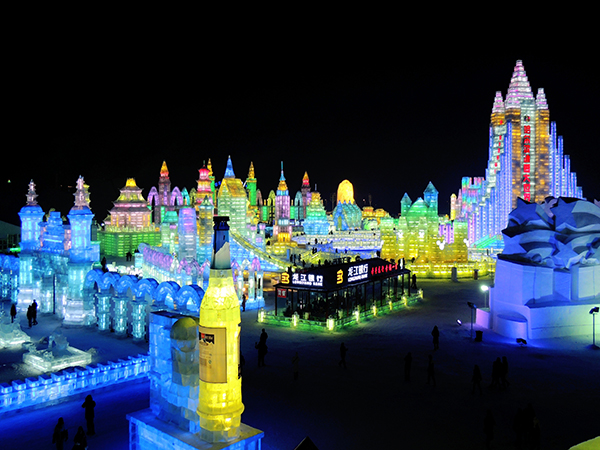
While shared bicycles (both docked and dock-less) are available and used actively in spring, summer, and autumn, their usage plummets during the long, freezing winter when roads are icy. The city center, particularly around the pedestrian-friendly Zhongyang Street and the riverside Flood Control Monument area, is very walkable. However, during the famed Harbin International Ice and Snow Festival, special traffic arrangements and shuttle services are implemented around the festival sites to manage the large influx of visitors.
Harbin’s transportation network is integral to its continued growth as a regional hub for both commerce and tourism. With robust external links and a well-organized city traffic system, the city thrives in both local and international contexts. Whether it's facilitating trade, enabling tourism, or supporting daily commuting, Harbin’s transportation infrastructure underpins the city’s economic and cultural vibrancy.
 English