Guangzhou Metro
Since the inaugural line opened in 1997, making Guangzhou the fourth city in Mainland China to operate a subway system, the Guangzhou Metro has undergone exponential growth, far surpassing its initial plans. The network has evolved into one of the world's most extensive and busiest rapid transit systems. As of the latest data, it comprises over 15 lines in operation, including conventional metro lines, Automated People Mover (APM) systems, and regional express lines, with a total operational length exceeding 650 kilometers. This has dramatically exceeded the 2020 target of 500 km mentioned in earlier plans. Key expansions include lines extending deep into the Foshan metropolitan area, creating a fully integrated cross-city network. The system now efficiently connects all major districts, urban centers, high-speed rail stations, and the Baiyun International Airport. With continuous construction, including new lines and extensions, the network aims to further increase its reach and density, playing a pivotal role in supporting Guangzhou's status as a national central city and easing surface traffic congestion.
Buses, taxis and motorcycles
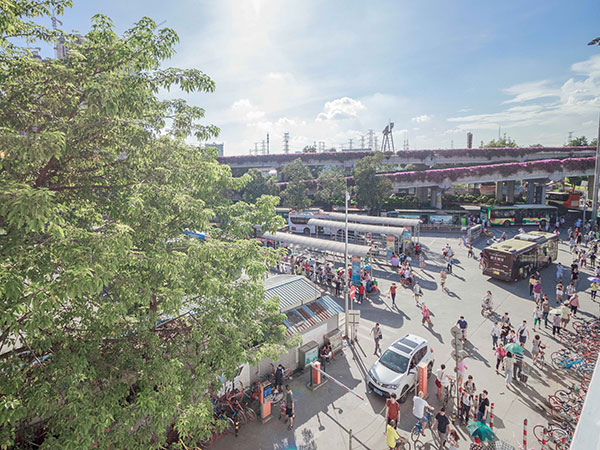
Following the comprehensive motorcycle ban in urban areas initiated in 2007, Guangzhou has rigorously enforced the policy, leading to a more orderly road environment and a significant reduction in related accidents. The public transport focus has intensely shifted towards greening the fleet. The city successfully achieved and surpassed its 2010 target for liquefied petroleum gas (LPG) adoption. Building on this, Guangzhou has been a national pioneer in transitioning to new energy vehicles (NEVs). Today, virtually all of its over 14,000 public buses are electric or hybrid, making it a global leader in electric bus adoption. The majority of the city's taxis are also now electric or LPG-powered. Furthermore, the mobility landscape has been revolutionized by the integration of dockless bike-sharing and ride-hailing app services, which provide crucial first-and-last-mile connectivity. The city has also implemented advanced intelligent transportation systems (ITS) to optimize traffic flow and manage the complex road network more efficiently.
Air Transport
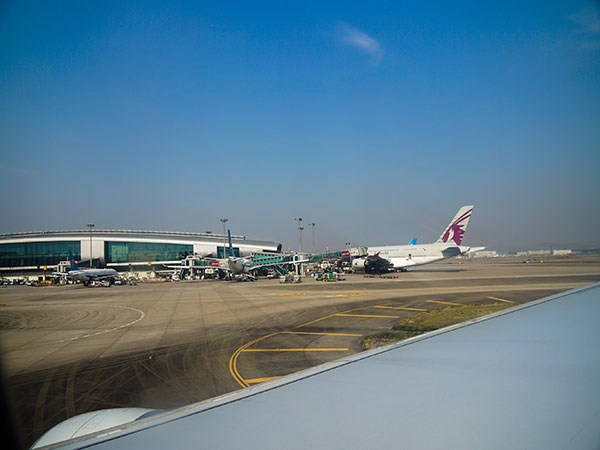
Guangzhou Baiyun International Airport (CAN), since its relocation to Huadu District in 2004, has solidified its position as a premier global aviation hub. It is now one of the three busiest airports in China in terms of both passenger and cargo throughput. The airport's expansion has been strategic and rapid. It currently operates three parallel runways and two massive terminal buildings (T1 and T2). T2, opened in 2018, is an integrated transportation complex connecting directly to the metro and high-speed rail. A third terminal (T3) and additional runways are under planning or construction to accommodate future growth. As the primary hub for China Southern Airlines, the airport offers an extensive network of domestic and international flights, serving as the key aerial gateway to southern China and a vital link within the Guangdong-Hong Kong-Macao Greater Bay Area.
Railway Transport
Guangzhou's railway infrastructure has been transformed by the national high-speed rail (HSR) boom. It remains a critical terminus for major conventional lines like the Beijing-Guangzhou Railway. However, the introduction of the Wuhan-Guangzhou High-Speed Railway in 2009 marked the beginning of a new era. Guangzhou is now at the heart of a sprawling HSR network. Key lines include the Guangzhou-Shenzhen-Hong Kong High-Speed Railway, providing a swift 48-minute journey to Hong Kong West Kowloon Station; the Guangzhou-Zhuhai Intercity Railway; and the Guangzhou-Nanning High-Speed Railway. These lines radiate from major stations like Guangzhou South Railway Station (the country's busiest HSR hub), Guangzhou East, and Guangzhou Station. The city effectively connects to national HSR grids, enabling rapid travel to most major Chinese cities within a few hours, dramatically shrinking regional travel times.
Intercity Tranport to Hongkong
Connectivity within the Greater Bay Area is a top priority, and links to Hong Kong and Macao are seamless and multifaceted. The flagship service is the Guangzhou-Shenzhen-Hong Kong Express Rail Link (XRL), offering the fastest and most direct rail connection. Frequent cross-boundary coaches continue to operate from various points in Guangzhou, providing cost-effective door-to-door services to urban areas in Hong Kong and Macao. For maritime travel, several ferry terminals in Guangzhou, including the Nansha Passenger Port, offer high-speed catamaran services to Hong Kong's China Ferry Terminal, Hong Kong International Airport (via SkyPier), and Macao. The journey from Nansha to Hong Kong now takes approximately 80 minutes. The recently opened Hong Kong-Zhuhai-Macao Bridge also enhances road-based connectivity options via shuttle bus services from Guangzhou.
River and Port Transport
Beyond passenger ferries, Guangzhou's river transport is dominated by its massive freight port operations. The Port of Guangzhou, historically a key Silk Road terminus, is now one of the world's top container ports. Its main deep-water facilities are located in Nansha District, which has developed into a comprehensive logistics and free trade zone hub. The Nansha Port Area handles a vast majority of the city's international container traffic and is a pivotal node in regional shipping lanes. On the passenger front, in addition to cross-boundary services, there are local Pearl River delta ferry services and popular tourist-oriented Pearl River Night Cruise lines, showcasing the city's skyline. The municipal government is also developing integrated waterborne transport, including water bus routes, as part of a comprehensive multi-modal transport strategy.
Transportation tips for visitors
Prefer the Subway
Guangzhou's extensive subway network offers the fastest and most reliable way to explore the city, connecting directly to most attractions and commercial districts.
Leverage Buses and Shared Bikes
Buses are largely electric and provide broad coverage. Combined with shared bikes, they easily cover the “last mile” from subway stations to your destination.
Opt for New Energy Taxis
Most taxis and ride-hailing vehicles are green-license new energy cars, offering convenient travel. Note that motorcycles are prohibited in downtown areas.
High-Speed Rail Connects the Bay Area
Taking the high-speed rail from Guangzhou South Station to Hong Kong West Kowloon Station takes approximately 48 minutes, making it the fastest and most comfortable option for traveling to Hong Kong.
Airport Metro Access
The most convenient way to travel to and from Baiyun International Airport is via the northern extension of Metro Line 3 or Line 9, bypassing road congestion.
Consider Water Buses and Ferries
Beyond night cruises on the Pearl River, experience water buses as public transportation to enjoy unique views of the riverside cityscape.


 Ask a Question
 English