Your China & Yunnan Travel Experts


 Ask a Question
Guangzhou is one of the top ten food paradise in China. Guangzhou's food culture is known throughout the whole China. Every year, Guangzhou will hold gourmet festival and its food culture has a long history. It has numerous traditional and innovative dishes, famous snacks and flavor food. Drinking tea and soup is a major feature of Guangzhou, has also become a unique local culture. Guangzhou dishes are the main representatives of the Cantonese cuisine. Top China Travel has listed some famous restaurant in Guangzhou for your reference, hence, you can have a good choice for your meals during your Guangzhou Tours.
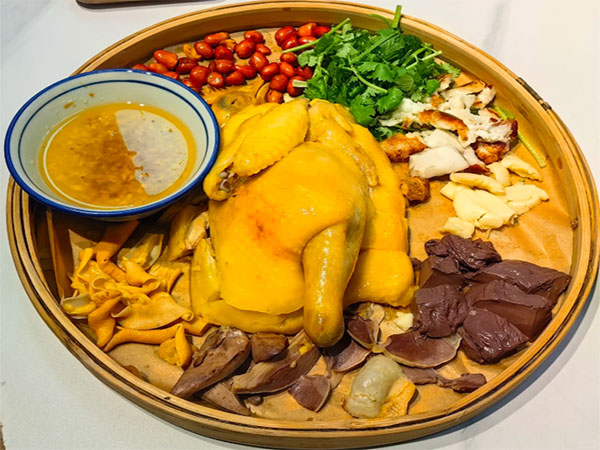
1.White-Cut Chicken (Bái Qiē Jī)
White-Cut Chicken is a classic Cantonese dish deeply rooted in Guangzhou’s culinary tradition. It was named one of “Guangdong’s Top 10 Classic Dishes” in 2018 and listed as a municipal intangible cultural heritage of Guangzhou in 2022. The chicken is prepared using a “three-lift, three-soak” method in boiling water, then simmered gently to keep the meat tender and the bones slightly pink—this ensures a clean, fresh taste that highlights the chicken’s natural flavor. It’s often paired with a zesty ginger-scallion sauce to boost its umami. For the best experience, head to Yutang Chunnuan inside the White Swan Hotel, a 3-Diamond Black Pearl and Michelin 1-Star restaurant known for its premium execution of this classic.
We highly recommend all of the people to drink Liang Cha when they visit Guangzhou. It represents the culture of Guangzhou and people's emphasis on their health to overcome the unbearable weather.
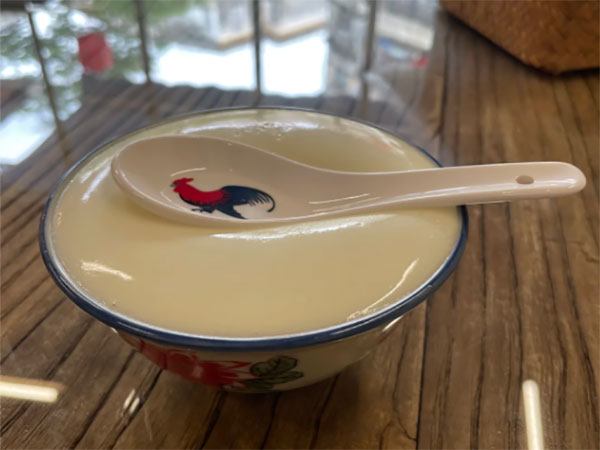
2.Double-Skin Milk (Shuāng Pí Nǎi)
Double-Skin Milk is a beloved Cantonese dessert, traditionally made with water buffalo milk—this milk is richer and creamier than cow’s milk, giving the dessert its signature texture. The preparation involves heating the milk, letting it cool to form a thin “skin” on top, then pouring out the milk (leaving the skin behind), mixing it with egg whites and sugar, and steaming it again to create a second skin. The result is creamy, smooth, and subtly sweet, with a strong, natural milky aroma that’s not overpowering. For the “gold standard” of Double-Skin Milk, visit Nanxin Milk Company at 43-45 Dishifu Road in Liwan District—a legendary spot that’s been perfecting this dessert for decades.
There are various kinds of Tian Pin (dessert), such as Sugar Water with Red or Green Bean Paste, Sesame Paste, Apricot Kernel Paste, Peanut Paste, Egg Milk, and Simmered Egg etc. All kinds of desserts can be found in Beijing road.
3.Roast Goose (Shāo É)
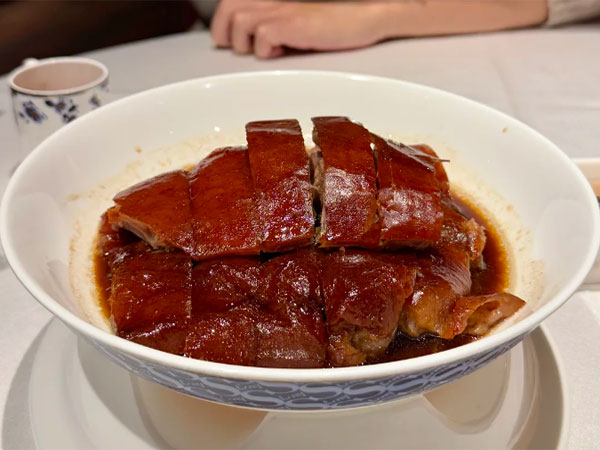
Roast Goose is a signature dish from Xiguan, Guangzhou’s historic western district, and it’s celebrated for its time-honored roasting techniques. Most authentic versions use Magang geese, a local breed that results in ultra-crisp skin—thin enough to resemble glass—and non-greasy, firm meat that stays juicy. It’s typically served with a savory five-spice goose sauce that complements the goose’s richness perfectly. A top spot to try it is Goose Village, a restaurant that has won the Michelin Plate Award for multiple years and specializes in authentic Xiguan-style roast goose.
Having moon cake is the traditional activity in mid-autumn festival (mid-autumn day). Everywhere of China will have moon cake that day and as well as every Chinese no mater at home or abroad.
4.Lài Fěn (Rice Noodle Soup)
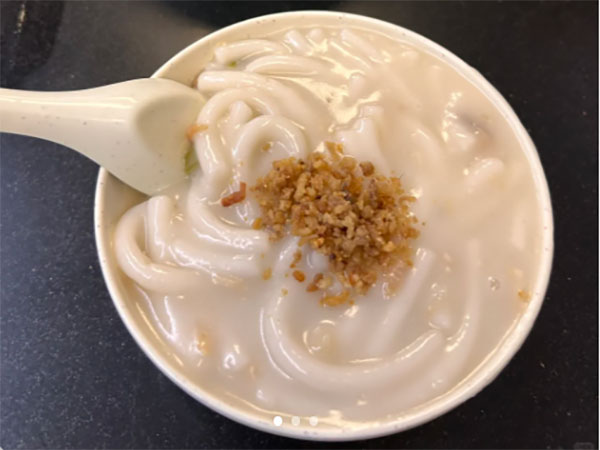
Lài Fěn is a traditional folk dish in Guangdong that has been popular in Xiguan since the Qing Dynasty. Its name comes from its unique cooking method: “lài” means pouring rice batter through a funnel into boiling water, where it forms thick, soft rice noodles. The dish is served in a rich broth simmered with dried shrimp and shiitake mushrooms, and a sprinkle of crispy pork lard crumbs is added at the end to boost aroma and depth. You can find great Lài Fěn at Ling Ji, which has two branches—one at 13 Pantang Road (opposite Renwei Ancestral Temple) and another in Yongqingfang. It’s open from 6:30 AM to 9:00 PM, making it perfect for breakfast or a light dinner.
5.Steamed Rice Rolls (Bù Lā Cháng Fěn)
Steamed Rice Rolls originated in Xiguan during the late Qing Dynasty (early 20th century) and have since become a staple at Cantonese morning tea (yum cha) and street food stalls. The making process is precise: rice batter is spread thin on a cotton cloth and steamed, creating translucent, paper-thin rolls with a silky, smooth texture. They’re often filled with ingredients like shrimp, pork, or vegetables, then drizzled with light soy sauce to enhance their delicate flavor. For a standout bite, visit Fang Ji Chang Fen on Xihua Road—a popular food street—and order their “Yuan Yang Roll,” which mixes shrimp and pork fillings.
6. Beef Offal with Radish (Luó Bo Niú Zá)
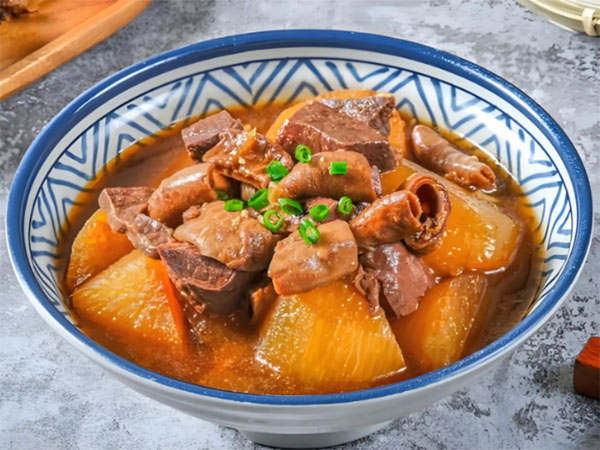
Beef Offal with Radish is a beloved Guangzhou street food that reflects Cantonese cuisine’s philosophy of using every part of an ingredient and mastering heat control. The dish features beef offal—such as tripe and intestines—simmered in a thick, savory broth until it’s tender but not tough. It’s paired with soft, sweet radish that soaks up all the broth’s flavors, creating a hearty, umami-rich bite that’s comforting and satisfying. A popular spot to try it is Auntie’s Beef Offal (Ā Yí Niú Zá), a stall on Beijing Road known for its well-marinated radish that’s just as flavorful as the offal itself.
7.Braised Pigeon (Zhēng Gē)
Braised Pigeon is a signature dish of overseas Chinese-influenced Cantonese cuisine, refined and popularized by restaurants like Qiaomeishi. The preparation is meticulous: pigeons are marinated in a brine made with over 30 spices to infuse them with depth, then air-dried to ensure the skin turns crispy when cooked. The meat inside stays juicy and tender, with a rich, aromatic flavor that’s best enjoyed within 10 minutes of serving—this preserves the precious meat juice. It’s recommended to tear the pigeon by hand instead of using utensils, so you don’t lose any of that moisture. Qiaomeishi Restaurant is the go-to place for this dish, as it’s renowned for its traditional braising techniques.
8.Giant Shrimp Dumplings (Dà Xiā Jiǎo)
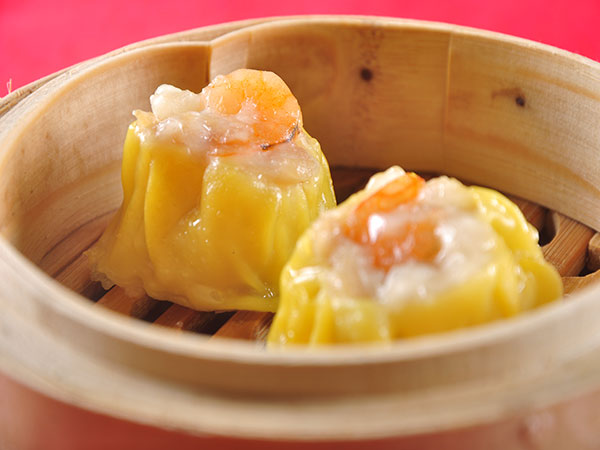
Giant Shrimp Dumplings are a classic dim sum at Cantonese yum cha, and their craftsmanship is even listed as an intangible cultural heritage. The dumpling skins are thin and translucent, yet strong enough to hold three large, bouncy shrimps—this requires skill to ensure the skin doesn’t break while steaming. The filling is fresh and sweet, with a touch of bamboo shoots added for a subtle crunch that balances the shrimp’s tenderness. It’s a symbol of high-quality Cantonese dim sum and a must-try for anyone new to yum cha. Taotaoju, a century-old restaurant with charming Lingnan-style decor, is the perfect spot to enjoy them. Its main branch is at 20 Dishifu Road in Liwan District, and it’s famous for its heritage shrimp dumpling technique.
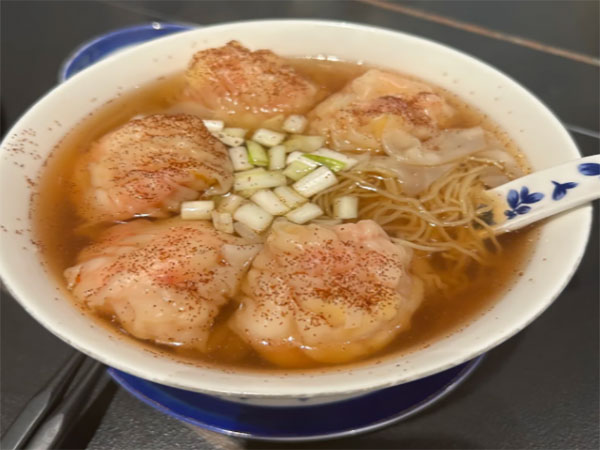
9.Wonton Noodles (Wān Tún Miàn)
 x c
x c
Wonton Noodles rose to popularity in Xiguan in the early 20th century, first sold by street vendors carrying bamboo poles to transport their ingredients. The noodles are made with duck eggs and flour, then kneaded and pressed repeatedly with a thick bamboo pole—this gives them a springy texture and a subtle alkaline taste, while keeping them smooth and chewy even when soaked in broth. The wontons are plump, filled with a mix of pork and shrimp, and served in a clear, savory broth that ties the dish together. A time-honored spot to enjoy this is Baohua Noodle Shop at 163 Baohua Road in Liwan District, a classic spot for authentic Cantonese-style wonton noodles.

 English