Your China & Yunnan Travel Experts


 Ask a Question
The human story around Erhai Lake dates back millennia. Archaeological discoveries, such as the Haigeng and Baiyangcun sites, reveal a sophisticated Neolithic culture as early as 4,000 years ago. The ancestors of the Bai people thrived here, engaging in rice cultivation, animal husbandry, and crafting distinctive painted pottery. This established the region as a cradle of early agricultural civilization in Yunnan.
Strategic integration into broader Chinese empires began in earnest with the Qin Dynasty's push to develop the southwest in the 3rd century BC. However, it was during the Han Dynasty that Dali's geopolitical importance was formally cemented. In 109 BC, Emperor Wu of Han dispatched armies to defeat the local Kunming tribes and established Yeyu County in the Dali region. This act of administrative incorporation was paralleled by a commercial revolution: the official opening of the Southern Silk Road (or Shu-Hindu Road). Dali became a crucial hub on this network, a vital conduit for trade connecting the Chinese heartland with Burma, India, and beyond. Caravans transported silk, tea, and lacquerware southwest, returning with precious stones, ivory, and religious and cultural influences that would leave a lasting imprint.
Following the Three Kingdoms period, where the region (known as Nanzhong) was pacified by Shu Han's chancellor Zhuge Liang, local power coalesced. In the 7th century, six tribes known as the "Six Zhaos" encircled Erhai Lake. The Mengshe Zhao, based in the south (hence "Nanzhao"), with the strategic support of the Tang Dynasty, unified the region in 738 AD, establishing the Nanzhao Kingdom.
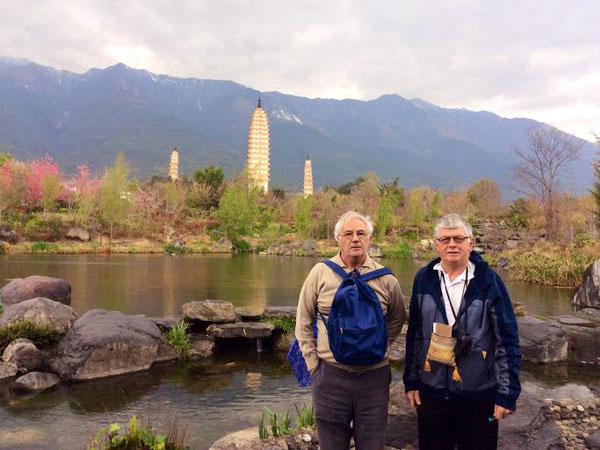
The Nanzhao Kingdom (738-902 AD) grew into a military powerhouse that challenged both the Tang Dynasty and the Tibetan Empire. Its capital was initially at Weishan before moving to Dali. Nanzhao's legacy is one of sophisticated statecraft, a syncretic culture blending Bai, Tibetan, and Tang influences, and monumental architecture, including the still-standing Three Pagodas of Chongsheng Temple. Internal strife eventually led to its collapse, but it set the stage for an even more enduring successor.
In 937 AD, Duan Siping, a former Nanzhao general, founded the Kingdom of Dali. This Buddhist state lasted for 316 years, an extraordinary period of stability and cultural flourishing. The Dali kings were often devout Buddhists, and the kingdom became known as a "Miaoxiang Buddha Kingdom." It maintained complex tributary and trade relations with the Song Dynasty and Southeast Asian states. The kingdom's artistic and religious achievements, from scripture copying to statue carving, reached exceptional heights, deeply embedding Theravada and Tibetan Buddhist traditions into the local Bai culture. The Dali Buddhist Scriptures, produced during this era, are considered national treasures.
The independent history of the Dali Kingdom ended in 1253 with a legendary military campaign. Kublai Khan, the future Yuan Dynasty founder, led his Mongol cavalry in a daring flanking maneuver across the Tibetan plateau, descending upon Dali. The last king, Duan Xingzhi, was captured, and the kingdom was annexed. This conquest was strategic, securing the Mongols' southern flank for their final assault on the Song Dynasty.
In 1274, the Yuan Dynasty established Yunnan Province, with the administrative center initially in Dali before moving to Kunming. This marked the definitive integration of the region into China's provincial system. The Ming Dynasty reinforced control after capturing Dali in 1382, constructing the formidable Dali Ancient City whose walls and layout are largely preserved today. The Ming and subsequent Qing Dynasties implemented the Tusi system (local chieftain governance) alongside direct administration, a policy that recognized local Bai elite power while ensuring imperial sovereignty.
The 20th century brought transformative change. Following the founding of the People's Republic of China, the recognition and institutionalization of the region's unique ethnic identity became a priority. On November 22, 1956, the Dali Bai Autonomous Prefecture was formally established, with Xiaguan (now Dali's modern urban center) designated as its capital.
This status has been instrumental in preserving and promoting Bai culture. Traditional festivals like the Third Month Fair and the Torch Festival have been revitalized. The unique architectural style of Bai homes, with their white walls, blue paintings, and elegant courtyards, is protected. The ancient city of Dali, the historic town of Xizhou, and the tie-dye capital of Zhoucheng have become living museums of Bai heritage.
In the contemporary era, Dali has skillfully navigated modernity. It evolved from a quiet frontier town into a globally renowned destination, attracting travelers with its unique blend of stunning natural scenery, deep historical ambiance, and vibrant, living ethnic culture. The Dali-China Railway and expressway networks have revitalized its role as a regional hub. Today, Dali stands as a compelling testament to resilience and cultural synthesis—a place where the legacy of ancient kingdoms, the spiritual heritage of a Buddhist realm, and the dynamic traditions of the Bai people continue to thrive amidst the timeless beauty of Cangshan and Erhai.

 English