Your China & Yunnan Travel Experts

 Ask a Question
Tibet, a legendary place standing on the roof of the world. There is the "top of the earth" Mount Everest and the Potala Palace, a world cultural heritage. Known as the Water Tower of Asia, it is one of the regions with the best ecological environment quality in the world. Tibet boasts many sacred mountains, holy lakes, grasslands, glaciers, hot springs and rare wildlife.
Tibet is the closest place to the sky. The Mount Everest is high and spectacular, and the Mount Kailash is mysterious. Namcha Barwa is covered with snow all year round, which is covered by the clouds. The Tanggula Mountains, like the back of a dragon, is at the source of the Yangtze River.
There is no sea in Tibet, but the lakes in Tibet have the purest and most beautiful blue in the world. Namtso, the highest saltwater lake in the world, is like a sapphire surrounded by snow-capped mountains. Only when you really see it, will you sigh that the world has this beautiful scenery. Yamdrok in Shannan is as clear and transparent as a diamond. Lake Manasarovar at the foot of Mount Kailash has the ultimate beauty among the sacred mountains and the holy lakes.
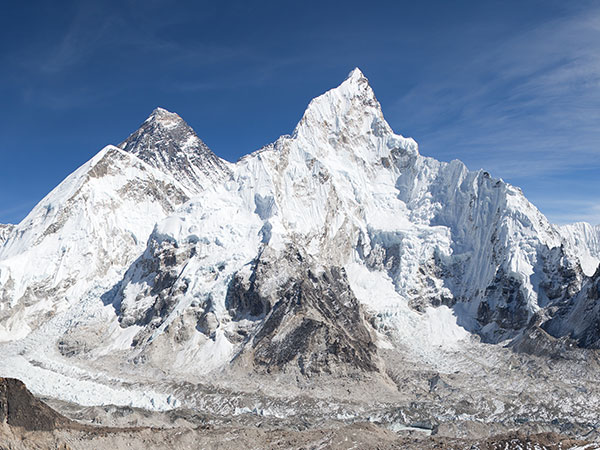 Himalaya Mountains, or Himalayas for short, is the highest mountain range in the world, with its main body lies between China and Nepal, running west to east. It is home to the world's highest peaks, including the mighty Mt. Everest, K2 and Nancha Barwa.
Himalaya is actually a Sanskirt name means "Snow Land" as the whole range is covered by snow all year round. Qomolangma is her Tibetan name which means the 3rd Goddess.
There are about 15,000 glaciers encompassed the Himalaya range, including some famous glaciers that namely the Gangotri and Yamunotri (Uttarakhand), Nubra, Biafo and Baltoro (Karakoram region), Zemu (Sikkim) and Khumbu glaciers (Mount Everest region). All of they stores about 12,000 km3 of freshwater.
Mount Bonri is one of the great Sacred Mountains of Bon Religion which located to the southeast part of Nyingchi, the north bank of grand Brahmaputra River. Local people believes that, it was the very place where Aqiongjiebo the devout disciple of Bon, fought against the Master of Buddhism , Padmasambhava. Aqingjiebo, therefore, became the hero of Bon Religion.
Nowadays, people living nearby still believe that everything in Mount Bonri have their own spirit, they worship the stone, bird and the giant tree standing on the upper level of the mountain.
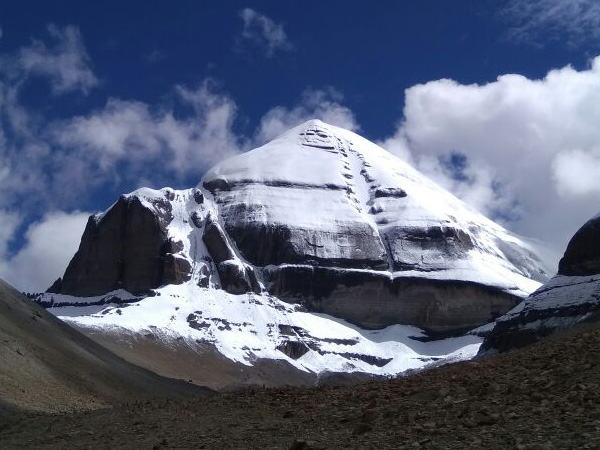 Mount Kailash, or Gangs Rinpoche in Tibetan language, is one of the 5 Sacred Mountains in Tibet, which means "precious jewel of snows".
With an altitude over 6,600m. it is the highest peakof the grand Gangdisê Mountains, which are part of the Transhimalaya in Tibet. It has a pyramid-like peak that piercing straight to the sky.
Every year, hundreds of thousands pilgrims from local and areas/countries nearby would come here for worship, which is a tradition that handed down for thousands of years. Pilgrims of different beliefs believe that circumambulating the Mt. Kailash is the right way to worship the god of the mountain and pray for good fortune and happyness. It would be a 52km long journey. In another word, the devout pilgrims may have to walk 15 hours at least to finish a circumambulation.
Mount Gongbuti is a sacred mountain in Tibet, with a height of over 4,000 meters above sea level. It is said that, the mountain is the birth place of ancient Tibetan People.
Located to the east part of Shanna area, Mount Gongbuti has three main peaks, the Yangga Wuzi, Senben Wuzi and the highest one - Zhukang Zi. There is a story about the Monkey god and his wife Rasetsu female who lived together in this place.
As the legend said, long long ago, the sacred monkey came here to cultivate his mind. He and the Rasetsu female met each other in this mountain and soon got married and have their own lovely children. Therefore, people said that it is the very place gave birth to the ancient Tibetan People.
Mount Haburi, also known as Haiburi Mountain, is located to the east side of Samye Monastery, Shannan, is one of the 4 Sacred Mountains in Tibet. It is said that, this mountain was the rite of Master Padmasambhava long time ago, who tried to exorcist the demons that gathered in the newly built Samye Monastery.
Yamdrok Lake is one of the three sacred lakes in Tibet, and is famous for its dreamy blue-green water. The best place to have a panoramic view of the Yamdrok Lake is the observation deck of Gambala Pass.
In spring, shepherds transport cattle and sheep to islands in the Yamdrok Lake. In summer, the green lake and the blue sky complement each other to form a beautiful picture. In autumn, the ripples on the lake seem to indicate the joy of harvest in the coming year. In winter, Yamdrok Lake is frozen, like a sleeping beauty lying in the warm embrace of Himalayas.
Two million years ago, due to the strong crustal movement, the Qinghai-Tibet Plateau was greatly uplifted, the rock strata were squeezed, and some folds and uplifts became mountains. Some depressions fall and become valleys or intermountain basins. Namtso was formed on the basis of the collapse of crustal tectonic movement and the influence of glacial activity.
Namtso, known as the Heaven Lake, is located in the northern Tibet Plateau, north of the main peak of Tanggula Mountains. It covers an area of 1,961.5 square kilometers, with an altitude of 4,720 meters. It is the highest among the three sacred lakes in Tibet and the second largest saltwater lake in China, whose deepest point is about 55 meters.
Lake Manasarovar is one of the highest freshwater lakes in the world, with an altitude of 4,588 meters. It is regarded as the most sacred lake by Tibetans and enjoys the same reputation as Mount Kailash. The lake is crystal clear, just like a huge sapphire inlaid on the plateau, reflecting the blue sky and white clouds and the surrounding snow-capped mountains, forming a quiet and dreamy landscape.
There are abundant wildlife habitats along the lake, such as black-necked cranes and waterfowl. Lake Manasarovar occupies an important position in religious culture. In the legend, Lake Manasarovar is the nectar given by the Buddha, which attracts a large number of believers to bathe and pray every year to experience the purification and rebirth of the soul.
From $ 2498
From $ 1599
From on request

 English