Your China & Yunnan Travel Experts


 Ask a Question
Chongqing, one of China's four municipalities directly under the central government, stands as a colossal and pivotal metropolis in the southwest. Far more than a modern urban giant, it is an ancient cultural citadel with a history spanning over 3,000 years. It is revered as the cradle of the enigmatic Ba culture, a crucial node on the Yangtze River civilization belt, and a city that has served as the capital of a state or nation on three separate occasions. Through the dynasties, it has borne the names Jiangzhou, Bajun, Chuzhou, Yuzhou, and Gongzhou, each echoing a distinct chapter in its long and layered saga.
Chongqing's human story begins in profound antiquity. Dating back two million years to the early Paleolithic Age, in today's Wushan County, evidence of "Wushan Man" suggests the region hosted some of China's earliest human activity. Later, 200,000 to 300,000 years ago, the "Tongliang Culture" of the late Paleolithic Age further cemented the area's role as a cradle of early civilization.
The emergence of a distinct regional identity, however, is tied to the strategic resource of salt. During the Xia and Shang Dynasties (c. 2070–1046 BCE), the Three Gorges region was a major producer of rock salt. As salt was a crucial hard currency and preservative in the ancient world, its control spurred the rise of the Ba people. This bronze-age culture, known for its distinctive boat-coffin burials, martial prowess, and unique rituals, established its power base in the Chongqing area. The legacy of the Ba Kingdom, which contended and coexisted with the Shu (in Chengdu) and Chu kingdoms, forms the deepest cultural substratum of Chongqing. Its spirit is often symbolized by the legendary white tiger, representing both military ferocity and reverence for the mountainous terrain.
Following the Ba's eventual integration into the Qin state in 316 BCE, the area was formally administered. During the North and South Dynasties period (420–589 CE), the region, known as Bajun, was renamed Chuzhou, reflecting shifting administrative geographies.
A pivotal moment came in 581 CE when Emperor Wen of the Sui Dynasty renamed it Yuzhou. This name gave rise to Chongqing's enduring abbreviated name, "Yu" (渝), still used in its license plate codes and as a common moniker.
The city received its modern and auspicious name, Chongqing (重庆), meaning "Double Celebration," in 1189. The story recounts that Zhao Dun, the Prince of Gong who governed the region, was first enfeoffed as the Prince of Gong and then ascended to the throne as Emperor Guangzong of the Southern Song Dynasty in the same year. To commemorate this "double happiness," he elevated Gongzhou to the status of a prefecture and renamed it Chongqing.
Another brief but significant chapter unfolded in the 14th century during the transition from the Yuan to the Ming Dynasty. In 1363, the rebel leader Ming Yuzhen conquered the region and proclaimed himself emperor of the short-lived Daxia (Great Xia) Kingdom, with Chongqing as its capital. Although his kingdom lasted only nine years before being subdued by the Ming founder Zhu Yuanzhang, it underscored Chongqing's perennial strategic and defensive importance as a fortress city.
Chongqing's modern history was dramatically reshaped in the late 19th century. Following the Chefoo Convention (1876) and the Sino-British "Yantai Treaty" additional article (1890), Chongqing was forcibly opened as a treaty port to British trade, though foreign vessels could not yet navigate the Yangtze gorges to reach it. On March 1, 1891, Chongqing Customs was established near Chaotianmen, marking its official entry into global commerce.
A diplomatic scramble ensued. Britain established its consulate, soon followed by Japan (1896), France (1896), the United States (1896), and later Germany and others, setting up consulates or missions on the scenic ridges of Nanshan and Eling. This influx created the unique "Embassy Row" architecture that still characterizes the city's Yuzhong peninsula. In 1902, French captain François Vignal pioneered the first steamship voyage from Yichang to Chongqing, heralding the age of steam on the Upper Yangtze. This era transformed Chongqing from an inland fortress into a critical commercial gateway, connecting the Chinese hinterland to the world and implanting seeds of industrial and cultural exchange.
The 20th century thrust Chongqing onto the center stage of world history. Following the outbreak of the full-scale Sino-Japanese War in 1937 and the fall of Nanjing, the Nationalist government under Chiang Kai-shek made the momentous decision to retreat up the Yangtze. On November 20, 1937, the move was declared, and on December 1, Chongqing became the Provisional Capital of the Republic of China. Its strategic inland location, protected by formidable mountains and the Three Gorges, made it an impregnable fortress. On September 6, 1940, it was formally designated the wartime capital.
For nearly eight years, Chongqing endured relentless and brutal aerial bombardment by the Japanese military in an attempt to break China's resistance. The city's spirit remained unyielding, its people sheltering in vast networks of caves carved into the bedrock. Simultaneously, it became the political, military, economic, and cultural heart of Free China. Factories, universities, and intellectuals migrated en masse from the coast, transplanting China's industrial and academic lifeline to the Sichuan basin. This period forged Chongqing's modern industrial base and cemented its identity as a city of resilience, sacrifice, and indomitable will.
After liberation in 1949, Chongqing initially functioned as a key city within Sichuan Province. Its administrative status fluctuated but its industrial importance grew, particularly in defense, machinery, and automotive sectors.
The most transformative recent chapter began on March 14, 1997, when the Eighth National People's Congress approved the establishment of Chongqing as China's fourth municipality directly under the central government. This historic decision was driven by the monumental Three Gorges Dam project, requiring the coordinated relocation of over a million people, and the national strategy for "Developing the West."
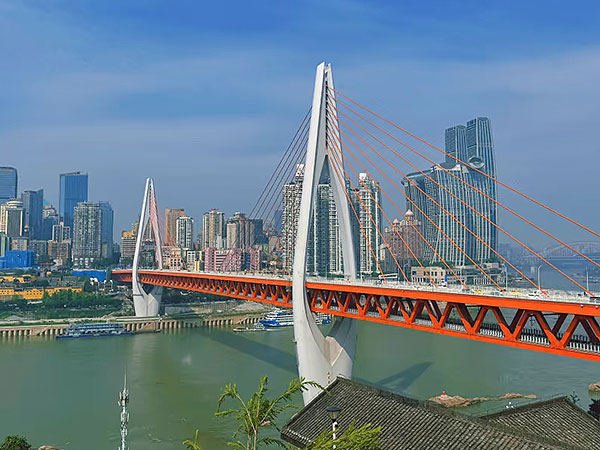
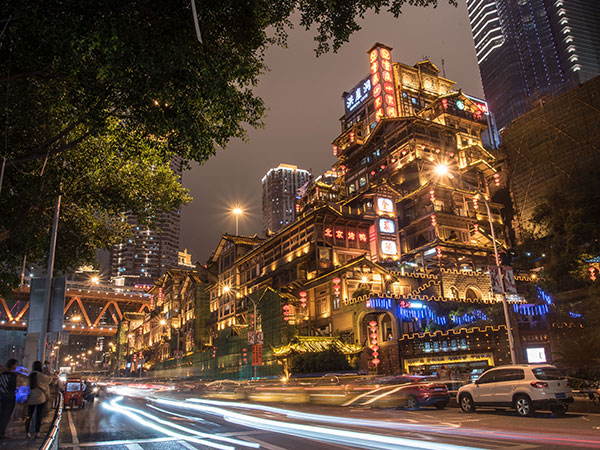
As a municipality, Chongqing's jurisdiction expanded to cover a vast area of 82,400 square kilometers, encompassing not only the urban core but also dozens of counties and districts in the rugged eastern Sichuan basin. This granted it unparalleled administrative and economic autonomy. In the 21st century, it has exploded into one of the world's largest and most dynamic metropolises—a major hub for automotive manufacturing, global electronics supply chains, and inland logistics, symbolized by its vertiginous skyscrapers, iconic riverine skyline, and the mind-bending transportation networks that navigate its mountainous terrain.
From the ancient Ba warriors to wartime defenders and modern-day innovators, Chongqing's history is a continuous narrative of adaptation, resistance, and ascent—a city perpetually shaped by strategic geography, forged in adversity, and now driving confidently into the future as a powerhouse of inland China.

 English