Your China & Yunnan Travel Experts

 Ask a Question
Naxi murals are not a single or isolated form of art. They specifically refer to a distinctive type of religious mural art that emerged in the Lijiang area of Yunnan Province, China, during the Ming and Qing dynasties, mainly from the early Ming Dynasty to the mid-Qing Dynasty (approximately the 14th to the 18th centuries). The core value of Naxi murals lies in their visual integration of multiple religious traditions.
Under the leadership of the Mu family chieftains of the Naxi ethnic group, painters from different regions and ethnic backgrounds—including Naxi, Tibetan, Bai, and Han artists—were invited to participate in mural creation. They creatively depicted deities, doctrines, stories, and symbolic systems from Tibetan Buddhism (Tantric Buddhism), Han Buddhism (Zen Buddhism), Taoism, and the indigenous Dongba religion of the Naxi people on the same walls or within the same temples, forming an unprecedented artistic spectacle.
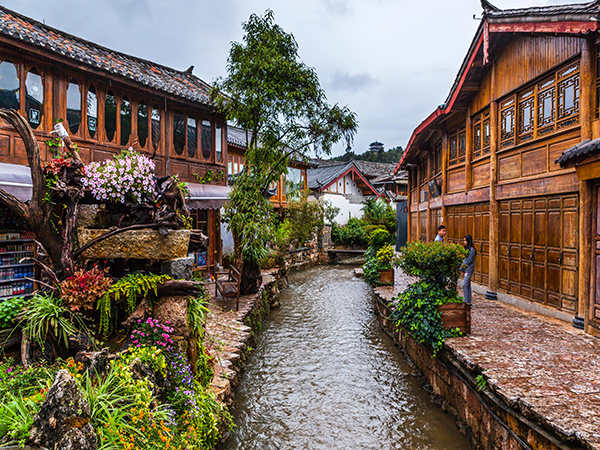
Naxi murals are mainly distributed in Lijiang Old Town and its surrounding areas, especially around the former political and cultural center under the rule of the Mu clan during the Ming Dynasty. Due to historical changes, wars, and natural damage, only a limited number of murals have survived, making the remaining works particularly valuable.
Most important surviving sites include:
Baisha Ancient Town: This area represents the essence of Naxi mural art.
Dabaoji Palace and Liuli Hall: These are the most representative, best-preserved, and artistically significant sites. Among them, The Assembly of Buddhas (also known as The Worshipping Buddha Painting) is regarded as the pinnacle of Naxi mural art. The composition is grand, featuring a large number of figures, and demonstrates a sophisticated fusion of Han, Tibetan, and Naxi painting styles. Dading Pavilion and Wenchang Palace also retain partial mural remains.
Shuhe Ancient Town: Dajue Palace contains surviving Ming Dynasty murals whose artistic style is closely related to those found in Baisha.
Lijiang Old Town and Nearby Areas: Sites such as Guiyi Hall and Yufeng Temple once housed important murals, though their preservation conditions vary. Many works were damaged or lost during periods of historical upheaval.
Recommended Destination: The best place to appreciate Naxi murals is Baisha Ancient Town, with Dabaoji Palace as the top priority. This site offers the most complete and representative examples of Naxi mural art and provides the clearest insight into its artistic and religious fusion.
Learn the Basics in Advance: Before your visit, it is helpful to have a basic understanding of key figures and symbols from Tibetan Buddhism, Chinese Buddhism, and Taoism, such as Sakyamuni Buddha, Guanyin (Avalokitesvara), Manjusri, the Four Heavenly Kings, and the Taoist Three Pure Ones. Familiarity with elements of Dongba culture, including the giant bird Shuqu (a sacred bird figure) and nature deities such as Shu, will greatly enhance your appreciation of the murals.
Observe Carefully and Patiently: Within permitted areas, take time to study the details of the murals—the clothing and expressions of the figures, the ritual objects in their hands, and the background elements such as mountains, clouds, and flowing patterns. These details reveal how different artistic traditions coexist and blend within a single composition.
Respect Preservation Rules: Always follow cultural heritage protection regulations. Do not use flash photography, do not touch the murals, and remain within designated viewing areas to help preserve these precious artworks for future generations.
From $ 264

From $ 662

 English