Guangzhou is a hot city because the summer begins in March. How can they get rid of this horrible weather? Thanks to the Guangzhou traditional herb tea called “Liang Cha”. It can firmly to say that "Liang Cha” is one of the favorite drinking in Guangzhou.
What is "Liang Cha"
Guangdong herbal tea is a traditional herbal beverage deeply rooted in the Lingnan regional culture. It is not a tea made by simply brewing tea leaves, but a functional beverage made from dozens of Chinese herbs such as honeysuckle, chrysanthemum, prunella vulgaris, and measles. It is carefully blended and simmered for a long time. It has long transcended the category of "beverage" and has become an essential part of life for the people of Guangdong to cope with the local climate and regulate their bodies. In 2006, it was even included in the first batch of national intangible cultural heritage lists, carrying the unique Lingnan wisdom of health preservation.
History
Tracing the origins of Guangdong herbal tea is inseparable from the unique natural environment and historical background of Lingnan. Located in the subtropics, Guangdong experiences high temperatures and abundant rainfall year-round, with high humidity. This "humid and hot" climate easily causes discomfort such as dry mouth, heaviness in the body, and sore throat. The ancients categorized these symptoms as "damp-heat diseases." As early as the Eastern Jin Dynasty, the famous physician Ge Hong practiced medicine in Lingnan and discovered that the local people suffered greatly from damp-heat. He then combined local herbal resources to develop a series of herbal formulas centered on clearing heat and detoxifying, removing dampness and turbidity. This became the prototype of Guangdong herbal tea.
During the Ming and Qing dynasties, with the prosperity of commerce and the increase in population movement in the Lingnan region, the demand for herbal tea further expanded. Folk doctors and merchants continuously improved the recipes and innovated the brewing process, gradually forming classic recipes such as "Ban Sha Herbal Tea" and "Twenty-Four Flavors". Many families also passed down the herbal tea recipes from generation to generation, giving rise to a number of well-known herbal tea brands. This allowed herbal tea to gradually move from a medicinal conditioning product into daily life and become a beverage that can be seen everywhere on the streets.
The benefits of herbal tea
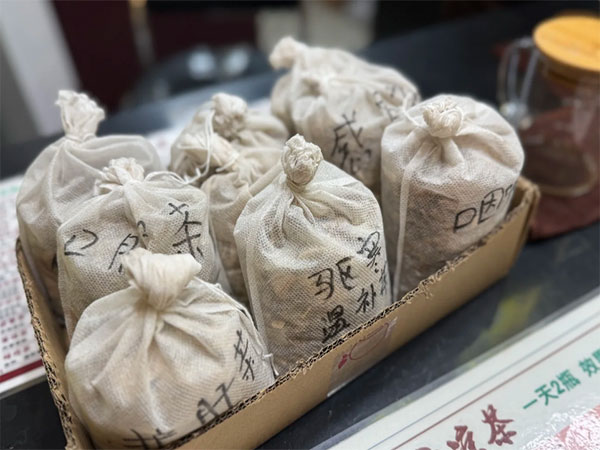
In terms of function, Guangdong herbal tea has always revolved around "symptom-based treatment," with different formulas catering to different bodily needs. Its core efficacy focuses on addressing discomfort caused by the Lingnan climate. The most common effect is "clearing heat and reducing internal fire," such as acne after staying up late, sore throat after eating hot pot, or irritability in hot weather. Drinking a cup of Bansha herbal tea or Xia Sang Ju tea can quickly relieve these symptoms of "internal heat." Secondly, it is "removing dampness and detoxifying." For problems such as fatigue, loss of appetite, and abdominal distension caused by humid weather, herbal teas containing ingredients such as Poria cocos, Coix seed, and Smilax glabra can help expel dampness from the body.
In addition, during the hot summer months, herbal tea can also quench thirst and relieve nausea and fatigue caused by the heat, making the body feel more comfortable. However, it should be noted that herbal tea is essentially a herbal beverage and is not suitable for everyone. For example, people with weak spleen and stomach should drink it with caution.
The taste of herbal tea
Guangdong herbal teas come in a rich variety of flavors, retaining the original taste of traditional herbs while also offering modern adaptations to suit different tastes, catering to diverse preferences. Traditional classic varieties are characterized by their bitterness, such as Ban Sha herbal tea and Twenty-Four Flavor herbal tea. Due to their high concentration of herbs and strong medicinal properties, they have a noticeable bitter taste upon entry, but "a sweet aftertaste follows." Many Cantonese believe that "the more bitter, the more effective," making them suitable for consumption when feeling unwell. Milder varieties, on the other hand, have a milder bitterness, incorporating ingredients like chrysanthemum, honeysuckle, and monk fruit. They offer a light herbal fragrance upon entry and a sweet aftertaste, such as honeysuckle tea and monk fruit tea, making them more palatable for both the elderly and children.Some improved versions add flavorings such as hawthorn and licorice, giving the herbal tea a slightly sour or sweet taste and greatly reducing bitterness. For example, hawthorn chrysanthemum tea and licorice herbal tea are closer to the public's expectations of the taste of "drinks" and are suitable for people who are trying herbal tea for the first time.
Where can I buy herbal tea in Guangzhou?
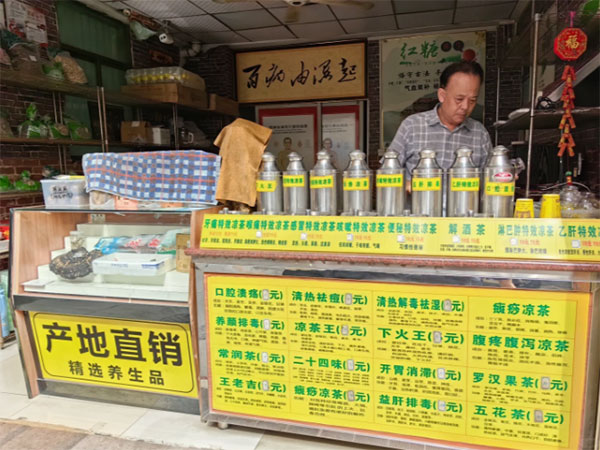
In Guangzhou, buying herbal tea is very convenient, with various channels catering to different needs. The most distinctive local options are the traditional street-side herbal tea stalls. These shops are mostly established brands with decades of history, such as Huang Zhenlong, Ping An Tang, and Jin Hulu. The shops are small but full of local charm, with pots of boiling herbal tea constantly simmering. You can choose from categories like "bansha" (a traditional Chinese medicine treatment) or "dampness-removing tea," which the vendor will serve in small cups for you to drink while hot. In the old city areas of Yuexiu and Liwan, you can find these herbal tea stalls on almost every old street.
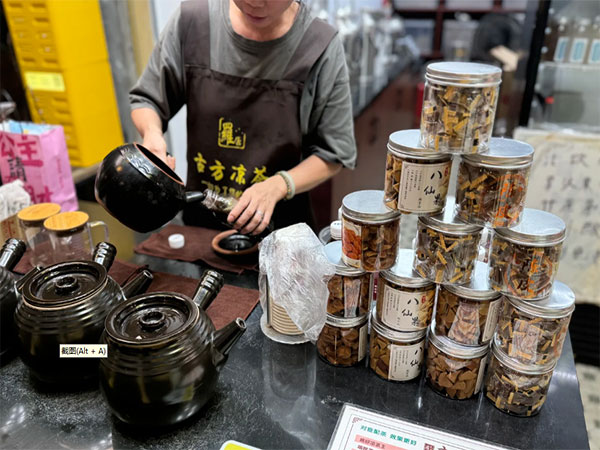
If convenience is the priority, chain convenience stores and supermarkets are good choices. Their shelves are full of canned and boxed pre-packaged herbal teas, such as Wanglaoji and Jiaduobao, as well as boxed Xia Sang Ju tea and honeysuckle tea, which are ready to drink and perfect for grabbing a can while shopping. In addition, many Chinese medicine shops also sell herbal tea bags, which contain a combination of dried herbs. You can buy them and brew them at home in a clay pot, which allows you to control the concentration and enjoy the fun of making your own herbal tea.

 Ask a Question


 English